Research Article - Onkologia i Radioterapia ( 2026) Volume 20, Issue 8
Spectrum and Age Distribution of Selected Urological Emergencies in A Tertiary Emergency Center: A Two-Year Retrospective Study from Kosovo
Donat Cuni, Flatra Fetahu and Xhevdet Cuni*Xhevdet Cuni, Department of Medicine, College, Kosovo, Email: drxhevdetcuni@gmail.com
Received: 14-Jul-2026, Manuscript No. OAR-26-194815; , Pre QC No. OAR-26-194815 (PQ); Editor assigned: 17-Jul-2026, Pre QC No. OAR-26-194815 (PQ); Reviewed: 31-Jul-2026, QC No. OAR-26-194815; Revised: 10-Aug-2026, Manuscript No. OAR-26-194815 (R); Published: 17-Aug-2026
Abstract
Background: Urological emergencies are time-critical disorders in which the diagnostic pathway must rapidly distinguish ischemic, traumatic, infectious, and obstructive conditions. Diagnostic imaging can define the location and extent of injury, identify complications, and support treatment planning when imaging is clinically appropriate.
Objective: To describe the frequency and age distribution of selected urological emergencies treated at a tertiary emergency center in Prishtina, Kosovo, and to examine how the observed age patterns inform the selection and timing of diagnostic imaging within multidisciplinary emergency care.
Materials and methods: This retrospective descriptive study included selected urological emergencies managed at the Surgical Emergency Unit of the Emergency Center, University Clinical Center of Kosovo, from January 2022 through December 2023. Among 89 accident-related injury presentations, 12 patients had associated urological trauma. During the same period, 16 patients with Fournier’s gangrene and 10 with testicular torsion were identified. Frequencies and age ranges were summarized by diagnostic category. Because individual-level data were incomplete, no inferential statistical analysis was performed.
Results: Urological trauma was identified in 12 of 89 accident-related injuries (13.5%). Renal injuries requiring nephrectomy accounted for 5 cases (41.7%), urinary bladder avulsion for 3 (25.0%), testicular trauma for 2 (16.7%), and retroperitoneal hematoma for 2 (16.7%). Fournier’s gangrene occurred in 16 patients aged 41–72 years, whereas testicular torsion occurred in 10 patients aged 9–16 years. The selected emergencies comprised 38 patients overall.
Conclusions: The diagnostic categories demonstrated distinct age distributions, with testicular torsion concentrated in children and adolescents and Fournier’s gangrene occurring in older adults. The findings support age-adapted diagnostic pathways in which clinically indicated imaging is integrated with rapid specialist assessment and definitive treatment. The study provides descriptive evidence relevant to emergency radiological triage and multidisciplinary urological care, but it does not evaluate radiotherapy or oncological treatment.
Keywords
Urological emergencies; Diagnostic imaging; Emergency radiology; Urological trauma; Renal trauma; Bladder injury; Fournier’s gangrene; Testicular torsion; Doppler ultrasonography; Computed tomography; Kosovo
Introduction
Urological emergencies require rapid differentiation of conditions that may cause irreversible tissue injury, hemorrhage, infection, or organ loss. In tertiary emergency practice, imaging is not an isolated diagnostic step; it is part of a coordinated pathway linking clinical assessment, radiological interpretation, operative decision-making, and postoperative care.
Traumatic injuries may involve the kidneys, urinary bladder, urethra, and external genital organs. Cross-sectional imaging is particularly relevant when renal or retroperitoneal injury is suspected, while the imaging findings may help determine whether conservative management, intervention, or operative exploration is appropriate in a clinically stable patient.
Bladder injury is frequently associated with high-energy pelvic trauma. In patients with appropriate clinical indications, cystographic assessment can demonstrate bladder disruption and help distinguish injury patterns requiring operative repair from those suitable for catheter-based management [1,2].
Testicular trauma can threaten vascular supply and tissue viability. Ultrasonography with Doppler assessment can provide information about perfusion and structural disruption, although urgent surgical assessment remains essential when rupture or major vascular compromise is suspected.
Fournier’s gangrene is a rapidly progressive necrotizing infection of the perineal and genital tissues. Imaging may help define the extent of deep fascial involvement in selected clinically stable patients, but radiological assessment must not delay urgent surgical debridement when clinical findings strongly indicate necrotizing infection.
Testicular torsion is caused by twisting of the spermatic cord with impaired testicular perfusion [3]. Doppler ultrasonography may support diagnosis by demonstrating altered blood flow, but a high clinical suspicion requires an expedited surgical pathway and imaging should not create avoidable delay.
Published data describing the age distribution of selected urological emergencies in Kosovo are limited. This study therefore evaluates the local distribution of selected conditions and places the findings in the context of age-adapted diagnostic imaging [4]. Because the dataset contains no cancer diagnoses, radiotherapy procedures, or oncology outcomes, the manuscript should be considered primarily a diagnostic-radiology/emergency-urology contribution rather than a radiotherapy study.
Materials and Methods
Study design and setting
This retrospective descriptive observational study was undertaken at
the Surgical Emergency Unit of the Emergency Center, University Clinical Center of Kosovo (UCCK), Prishtina, Kosovo. The observation period covered January 2022 to December 2023.
UCCK functions as a tertiary referral institution and provides emergency surgical and specialist services to patients referred from different parts of Kosovo. Management of severe trauma and complex emergency presentations involves multidisciplinary cooperation among emergency physicians, surgeons, urologists, radiologists, anesthesiologists, and intensive-care specialists. The study was reported in accordance with the STROBE principles [5].
Study population
Patients with selected traumatic and non-traumatic urological emergencies managed during the study period were included in the descriptive analysis. Within the trauma component, 89 patients presented with accident-related injuries, of whom 12 had associated urological injuries.
The traumatic categories comprised renal injury requiring nephrectomy, urinary bladder avulsion, testicular trauma, and retroperitoneal hematoma. Patients treated for Fournier’s gangrene or testicular torsion during the same period were also included.
Age assessment
Age was recorded for each diagnostic category. Patients with renal injury requiring nephrectomy were aged 23–64 years, whereas those with urinary bladder avulsion were aged 19–67 years. Testicular trauma occurred in patients aged 18–26 years, and retroperitoneal hematoma in patients aged 36–45 years. Fournier’s gangrene occurred in patients aged 41–72 years, while testicular torsion occurred in patients aged 9–16 years.
Individual patient-level ages were not available in a form that permitted further inferential analysis. Accordingly, age was reported as a range for each diagnostic group rather than as a mean with standard deviation or a median with interquartile range.
Data collection
Information was retrospectively extracted from institutional emergency and surgical records. Available variables included age, diagnostic category, case frequency, and major surgical intervention where documented. The primary study outcome was the descriptive frequency and age distribution of the selected urological emergencies.
Statistical analysis
Categorical data were summarized as numbers and percentages, while age was expressed as a range within each diagnostic category. The proportion of accident-related cases with associated urological trauma was calculated using the 89 accident-related injuries as the denominator. Given the limited sample size and incomplete individual-level dataset, no inferential statistical tests were undertaken.
Ethical considerations
The study was conducted in accordance with the Declaration of Helsinki. Ethical approval and/or a waiver of individual informed consent should be obtained from the responsible institutional ethics committee in accordance with applicable institutional and national requirements.
Results
During the two-year observation period, 89 patients were treated for accident-related injuries in the emergency surgical unit. Twelve patients (13.5%) had associated urological trauma. In addition, 16 patients were treated for Fournier’s gangrene and 10 for testicular torsion, giving 38 patients in the selected emergency cohort.
Traumatic urological emergencies
Five patients (41.7%) had renal injuries requiring nephrectomy, with ages ranging from 23 to 64 years. Urinary bladder avulsion was identified in 3 patients (25.0%), aged 19–67 years. Testicular trauma occurred in 2 patients (16.7%), aged 18–26 years, and retroperitoneal hematoma occurred in 2 patients (16.7%), aged 36–45 years are shown in Table 1.
| Urological injury | No. of patients | Percentage | Age range |
| Renal injury requiring nephrectomy | 5 | 41.7% | 23–64 years |
| Urinary bladder avulsion | 3 | 25.0% | 19–67 years |
| Testicular trauma | 2 | 16.7% | 18–26 years |
| Retroperitoneal hematoma | 2 | 16.7% | 36–45 years |
| Total | 12 | 100% | 18–67 years |
Tab. 1. Distribution of traumatic urological injuries according to age.
Renal injury requiring nephrectomy was the most frequent traumatic urological category, representing 41.7% of the 12 traumatic urological cases. The overall distribution and age ranges are shown.
Fournier’s gangrene
Sixteen patients were treated for Fournier’s gangrene during the study period. Their ages ranged from 41 to 72 years, making this the largest diagnostic category among the selected emergencies.
Testicular torsion
Ten patients with testicular torsion were treated, with an age range of 9-16 years are shown in Table 2.
| Emergency condition | No. of patients | Percentage of total (n=38) | Age range |
| Renal injury requiring nephrectomy | 5 | 13.2% | 23-64 years |
| Urinary bladder avulsion | 3 | 7.9% | 19-67 years |
| Testicular trauma | 2 | 5.3% | 18-26 years |
| Retroperitoneal hematoma | 2 | 5.3% | 36-Â45 years |
| Fournier’s gangrene | 16 | 42.1% | 41-72 years |
| Testicular torsion | 10 | 26.3% | 9-16 years |
| Total | 38 | 100% | 9-72 years |
Tab. 2. Overall distribution of selected urological emergencies.
Overall, 38 patients with the selected urological emergencies were identified. Testicular torsion affected the youngest patients, whereas Fournier’s gangrene occurred in an older adult group. The traumatic categories were observed across adult age ranges are shown Figures 1 and 2.
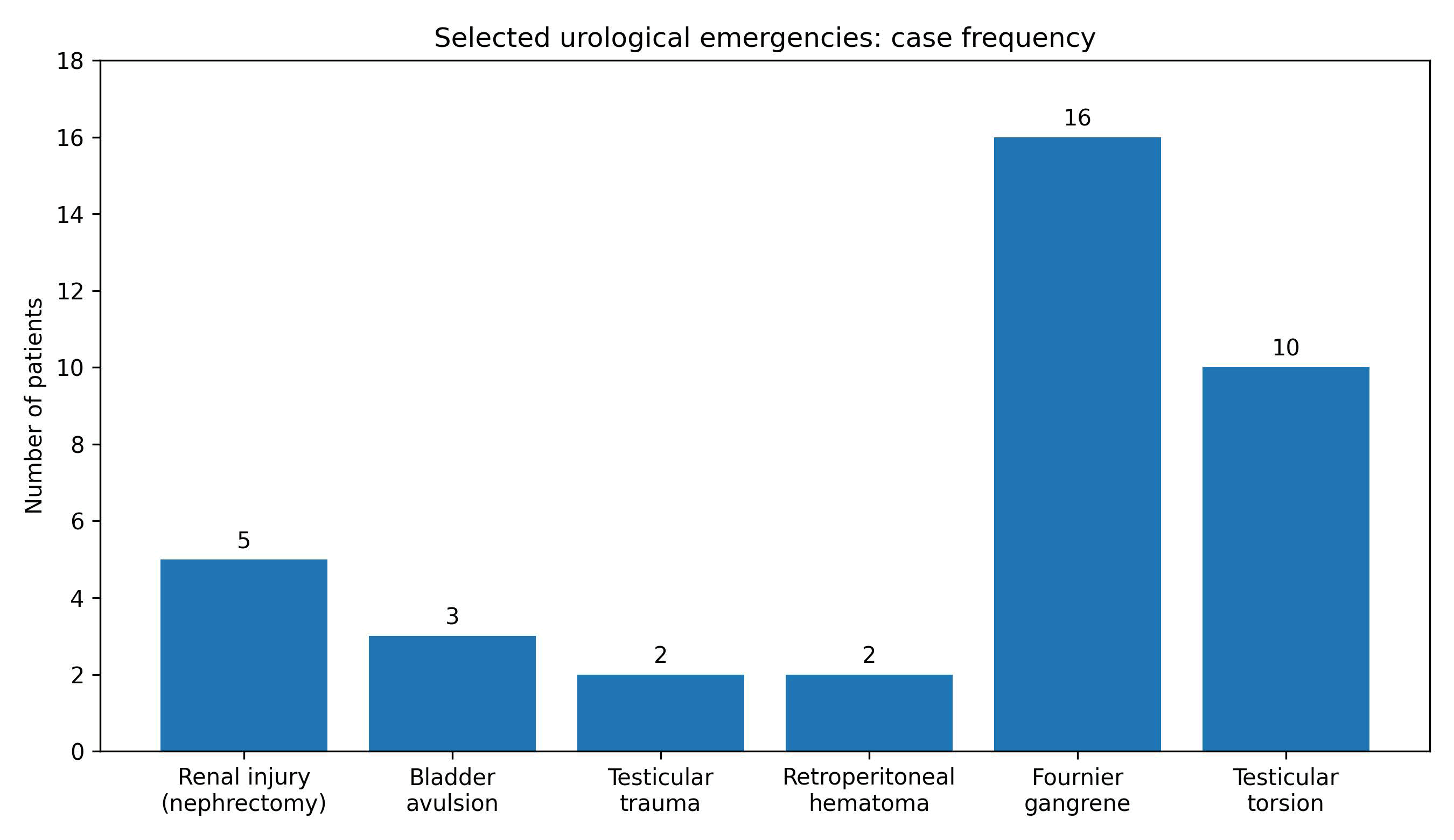
Fig. 1. Frequency of the selected urological emergencies in the study cohort (n=38).
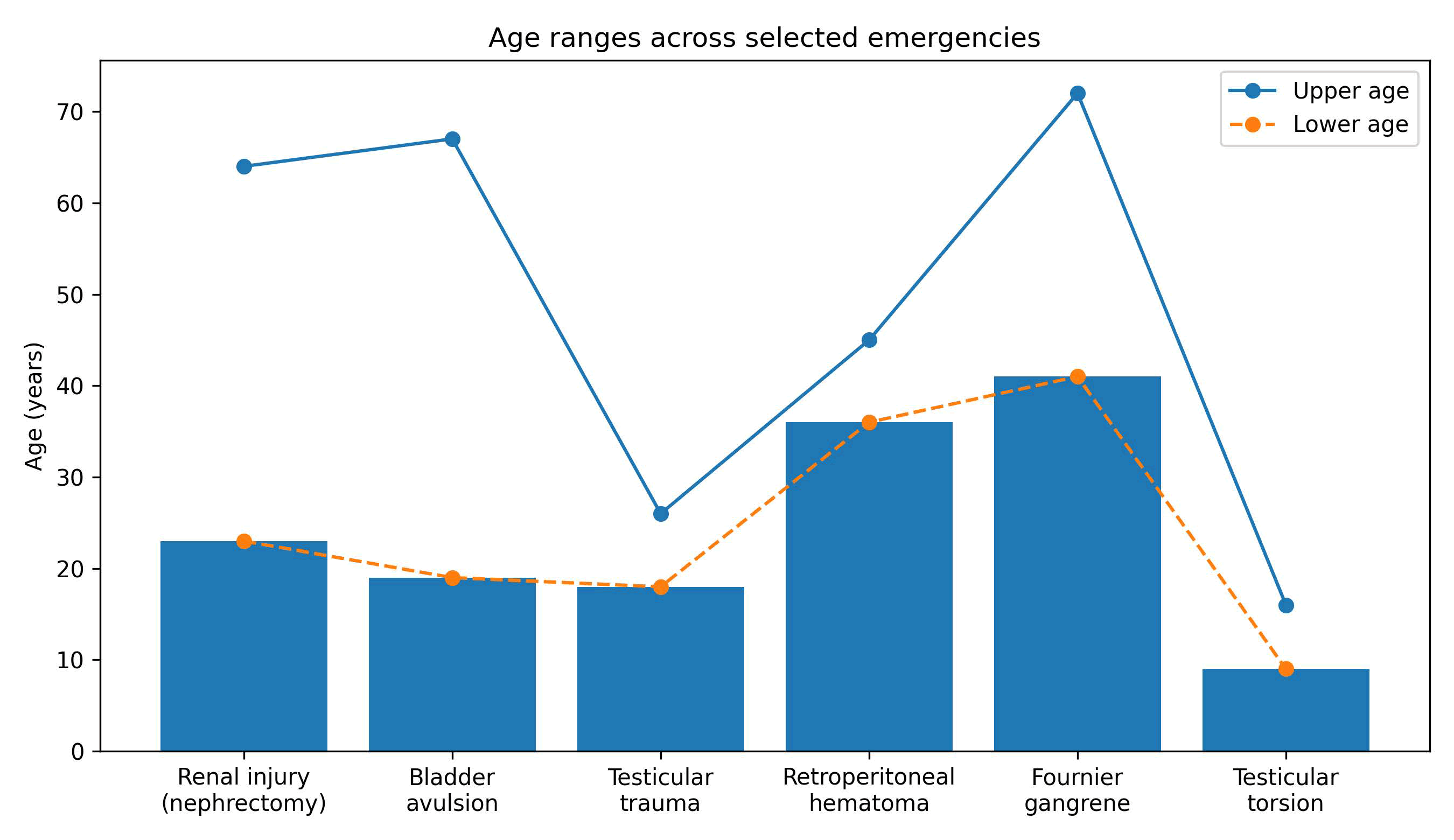
Fig. 2. Reported age ranges for the selected urological emergency categories.
Discussion
This two-year retrospective analysis demonstrates substantial age variation among selected urological emergencies managed at a tertiary center in Kosovo. From a diagnostic-imaging perspective, the findings emphasize that imaging pathways should be adapted to the clinical syndrome and age group rather than applied uniformly. Imaging is most useful when it answers a specific clinical question and is integrated with the urgency of definitive treatment.
Urological trauma and imaging
Urological trauma was identified in 12 of 89 accident-related injury presentations (13.5%). Renal injuries requiring nephrectomy formed the largest traumatic subgroup. In hemodynamically stable patients, contrast-enhanced cross-sectional imaging can characterize renal injury and associated retroperitoneal findings, helping clinicians assess the extent of damage and plan management [6]. The present dataset does not include individual imaging findings or injury grades, so the study cannot assess imaging sensitivity, specificity, or management concordance.
The present dataset does not contain sufficient individuallevel information regarding injury grade, hemodynamic status, mechanism, cross-sectional imaging findings, or the precise indications for nephrectomy. Consequently, the reasons for renal removal cannot be further categorized. The five nephrectomies nevertheless indicate that the study center managed a subset of severe traumatic presentations.
The proportion of nephrectomy in this selected cohort should therefore not be interpreted as a general estimate of current renal trauma practice. Rather, it may reflect referral of severe cases to a tertiary emergency service, where diagnostic imaging and multidisciplinary surgical decision-making are particularly important.
Urinary bladder trauma and radiological assessment
Three patients had urinary bladder avulsion, with ages ranging from 19 to 67 years. In selected trauma presentations, cystography can demonstrate extravasation and define the pattern of bladder disruption. The imaging result should be interpreted alongside pelvic injury, hematuria, hemodynamic status, and other associated lesions [7]. Because individual imaging reports were not retained in the study dataset, no conclusions can be drawn regarding modality performance.
Intraperitoneal bladder injuries generally require operative repair because urine leakage into the peritoneal cavity may produce significant inflammatory and infectious complications [8]. The cases in this series reinforce the need for timely recognition of bladder injury in patients with severe pelvic or abdominal trauma, particularly when other injuries may initially dominate the clinical picture.
Testicular trauma and Doppler assessment
Two patients aged 18–26 years sustained testicular trauma. Doppler ultrasonography is useful for evaluating testicular perfusion and structural abnormalities when the patient is sufficiently stable for imaging. Nevertheless, suspected rupture or major vascular compromise requires prompt urological assessment and may require surgical exploration. The small number of cases prevents any agespecific outcome inference.
Because only two cases were recorded, this study cannot establish age-specific risk factors or treatment-outcome associations for testicular trauma.
Retroperitoneal hematoma and cross-sectional imaging
Two patients aged 36-45 years had retroperitoneal hematoma. Such bleeding may accompany renal, vascular, pelvic, or other abdominal trauma and may not be clinically obvious initially. In appropriate patients, contrast-enhanced CT scan delineate the hematoma, associated organ injury, and possible active bleeding. The present study does not contain sufficient imaging detail to evaluate these features retrospectively.
Management depends on the mechanism and severity of injury, physiological status, associated lesions, imaging findings, and suspected bleeding source. The present dataset does not permit further analysis of these determinants.
Fournier’s gangrene and imaging in emergency triage
Fournier’s gangrene was the largest selected diagnostic category, with 16 of 38 patients (42.1%) aged 41–72 years. The diagnosis is primarily clinical and requires urgent surgical management. CT or other imaging may be considered in selected patients when the diagnosis or anatomical extent is uncertain, but imaging should complement rather than delay debridement [9]. The study did not systematically record imaging modality, radiological findings, microbiology, number of debridements, intensive-care admission, or mortality.
The concentration of cases among adults and older adults is clinically relevant for emergency assessment. Imaging, when obtained, should complement rather than delay definitive surgical management in patients with a high clinical suspicion of necrotizing infection.
The relatively large number of Fournier’s gangrene cases may relate to the referral role of UCCK. However, the study did not systematically record comorbidities, microbiological findings, extent of tissue involvement, number of debridements, intensive-care admission, reconstruction, complications, or mortality. Therefore, associations with recognized risk factors cannot be determined from these data.
Testicular torsion and vascular imaging
Ten patients aged 9–16 years were treated for testicular torsion. This age concentration is consistent with the importance of acute scrotal assessment during childhood and adolescence. Doppler ultrasonography can contribute to evaluation of testicular blood flow, but clinical suspicion remains central and definitive treatment should not be postponed for unnecessary imaging [10]. The available data do not permit analysis of imaging turnaround time or testicular salvage rates.
Testicular torsion is time dependent because prolonged interruption of blood flow increases the risk of irreversible ischemic damage. Doppler ultrasonography can provide useful diagnostic information, but when clinical suspicion is high, diagnostic procedures should not create avoidable delay in definitive surgical management.
The concentration of torsion cases in children and adolescents underscores the importance of rapid assessment of acute scrotal pain in this age group. Early recognition and appropriate coordination between emergency, radiology, and urology services are essential.
Age distribution and implications for diagnostic imaging
The selected conditions showed clinically meaningful age patterns: testicular torsion occurred at 9–16 years, testicular trauma at 18–26 years, retroperitoneal hematoma at 36-45 years, Fournier’s gangrene at 41–72 years, renal injury requiring nephrectomy at 23–64 years, and bladder avulsion at 19-67 years. These distributions support age-aware diagnostic triage. In children and adolescents with acute scrotal symptoms, Doppler ultrasound may be considered when it can be obtained without delaying treatment. In adult trauma, CTbased assessment may be important for renal, retroperitoneal, and selected bladder injuries. In suspected Fournier’s gangrene, imaging should be reserved for situations in which it adds useful anatomical information without delaying surgery.
The study also demonstrates an important limitation for radiological research: The available dataset records diagnostic categories and age but does not retain standardized imaging findings. Future prospective studies should record imaging modality, indication, acquisition timing, key radiological findings, clinical decision impact, operative correlation, and patient outcomes. Such a dataset would permit meaningful evaluation of diagnostic pathways and their relationship to treatment.
From an institutional perspective, tertiary emergency services require coordinated access to appropriate imaging, urological expertise, surgical treatment, anesthesia, and critical-care support. The present study highlights these requirements but does not directly evaluate imaging performance, radiotherapy, oncological treatment, or imaging-guided cancer therapy.
Conclusion
Selected urological emergencies managed at this tertiary emergency center demonstrated distinct age distributions. Among 89 accidentrelated injury presentations, 12 patients (13.5%) had associated urological trauma, while 16 patients had Fournier’s gangrene and 10 had testicular torsion. The observed age patterns provide a practical basis for age-adapted emergency diagnostic pathways.
Clinically indicated diagnostic imaging can support anatomical characterization and treatment planning in renal, bladder, retroperitoneal, testicular, and selected necrotizing infections. However, imaging should remain subordinate to clinical urgency when immediate surgery is required. The study does not provide evidence concerning radiotherapy, cancer imaging, or oncological outcomes; prospective work incorporating standardized radiological data would be needed to address those questions.
Ethics Approval and Consent to Participate
The study was conducted in accordance with the principles of the Declaration of Helsinki. Ethical approval and/or waiver of individual informed consent should be obtained from the responsible institutional ethics committee according to applicable institutional and national regulations.
Consent for Publication
Not applicable.
Competing Interests
The authors declare that they have no competing interests.
Funding
No specific funding was received for this study.
Authors’ Contributions
DC contributed to study conception, data collection, data interpretation, and manuscript preparation. FF contributed to data collection, literature review, and manuscript preparation. XC contributed to study supervision, interpretation of findings, and critical revision of the manuscript. All authors approved the final version of the manuscript.
Data Availability
The datasets generated and/or analyzed during the current study are available from the corresponding author on reasonable request, subject to institutional and ethical restrictions.
Acknowledgments
The authors acknowledge the medical and surgical staff of the Emergency Center and the relevant departments of the University Clinical Center of Kosovo for their contribution to the management of the patients included in the study.
References
- European Association of Urology. EAU Guidelines on Urological Trauma. Arnhem, The Netherlands: EAU Guidelines Office; 2026.
- Chernyadyev SA, Ufimtseva MA, Vishnevskaya IF, Bochkarev YM. Fournier's gangrene: Literature review and clinical cases. Urology. 2018; 114:1-7.
[Crossref] [Google Scholar] [PubMed]
- European Association of Urology. EAU Guidelines on Paediatric Urology. Chapter: Acute Scrotum. Arnhem, The Netherlands: EAU Guidelines Office; 2026.
- von Elm E, Altman DG, Egger M, Pocock SJ, Gotzsche PC, et al. The Strengthening the Reporting of Observational Studies in Epidemiology (STROBE) statement: Guidelines for reporting observational studies. PLoS Med. 2007; 85:867-872.
[Crossref] [Google Scholar] [PubMed]
- Vandenbroucke JP, von Elm E, Altman DG, Gotzsche PC, Mulrow CD, et al. Strengthening the Reporting of Observational Studies in Epidemiology (STROBE): Explanation and elaboration. PLoS Med. 2007; 4.
[Crossref] [Google Scholar] [PubMed]
- Huayllani MT, Cheema AS, McGuire MJ, Janis JE. Practical review of the current management of Fournier's gangrene. Plast Reconstr Surg Glob Open. 2022; 10.
[Crossref] [Google Scholar] [PubMed]
- Ersay A, Yilmaz G, Akgun Y, Celik Y. Factors affecting mortality of Fournier's gangrene: Review of 70 patients. ANZ J Surg. 2007; 77:43-48.
[Crossref] [Google Scholar] [PubMed]
- Yanar H, Taviloglu K, Ertekin C, Guloglu R, Zorba U, et al. Fournier's gangrene: 50 years of experience of a referral hospital. World J Surg. 2006; 30:1750-1754.
- Ta A, D'Arcy FT, Hoag N, D'Arcy JP, Lawrentschuk N. Testicular torsion and the acute scrotum: Current emergency management. Med J Aust. 2015; 202.
[Crossref] [Google Scholar] [PubMed]
- European Association of Urology. EAU Guidelines on Urological Trauma: Urogenital Trauma Guidelines. Arnhem, The Netherlands: EAU Guidelines Office; 2026.