Case Report - Onkologia i Radioterapia ( 2026) Volume 20, Issue 4
Metastatic pulmonary calcification in end-stage kidney disease presenting as extensive bilateral pulmonary infiltrates with minimal respiratory symptoms: A case report
Tan Quoc Nguyen1, Ngoc Nga Truong Thi2, Van Hai Nguyen3*, Minh Thuy Doan4 and Huong Giang Pham Thi52Radiology Department, Lanh Binh Thang general hospital, Ho Chi Minh City, Vietnam
3Faculty of Clinical Medicine, Vietnam University of Traditional Medicine, Ha Noi, Vietnam
4Faculty of Clinical Medicine, Vietnam University of Traditional Medicine, Ha Noi, Vietnam
5Faculty of Clinical Medicine, Vietnam University of Traditional Medicine, Ha Noi, Vietnam
Van Hai Nguyen, Faculty of Clinical Medicine, Vietnam University of Traditional Medicine, Ha Noi, Vietnam, Email: dr.hai06@gmail.com
Received: 01-Apr-2026, Manuscript No. OAR-26-188883; , Pre QC No. OAR-26-188883 (PQ); Editor assigned: 03-Apr-2026, Pre QC No. OAR-26-188883 (PQ); Reviewed: 21-Apr-2026, QC No. OAR-26-188883; Revised: 27-Apr-2026, Manuscript No. OAR-26-188883 (R); Published: 30-Apr-2026
Abstract
Background: Metastatic pulmonary calcification (MPC) is an uncommon but under-recognized complication of end-stage kidney disease. Because chest radiography often shows diffuse bilateral pulmonary opacities, MPC may be mistaken for pulmonary oedema, infection, miliary tuberculosis, or malignancy, especially when the radiological abnormalities appear extensive. Case Report: A 62-year-old man with stage 5 chronic kidney disease on maintenance haemodialysis three times weekly underwent routine chest imaging. He had no cough, dyspnoea, chest pain, or fever, and oxygen saturation on room air was 98%. Serial chest radiographs over 16 months demonstrated persistent and slowly progressive diffuse bilateral pulmonary infiltrates. Chest computed tomography revealed diffuse ground-glass opacities, centrilobular ground-glass nodules with punctate high-attenuation foci in both lungs, and widespread vascular and soft-tissue calcifications with diffuse skeletal sclerosis. No thoracoabdominal lymphadenopathy or primary malignancy was identified. Acid-fast bacilli smear was negative. Arterial blood gas analysis showed preserved oxygenation with metabolic alkalosis, explaining the absence of respiratory symptoms despite marked imaging abnormalities. The combination of chronic kidney failure, haemodialysis, characteristic CT findings, systemic calcification, and clinicoradiological dissociation supported the diagnosis of MPC. Conclusion: MPC should be considered in patients with end-stage kidney disease who present with extensive bilateral pulmonary opacities that are disproportionate to their mild or absent respiratory symptoms. Chest CT plays a key role in identifying characteristic calcific pulmonary lesions and avoiding misdiagnosis and unnecessary treatment.
Introduction
Metastatic pulmonary calcification (MPC) refers to calcium salt deposition in otherwise normal lung parenchyma and is most commonly associated with chronic kidney disease, dialysis-related mineral imbalance and hyper parathyroid states [1-3]. The condition is probably underdiagnosed because many patients are asymptomatic or have only mild respiratory complaints, while chest radiography may show non-specific bilateral air-space or interstitial opacities that overlap with infection, pulmonary oedema, and tuberculosis and diffuse metastatic disease [4]. Recognition is clinically important because the diagnosis depends heavily on correlating imaging findings with the metabolic background and the often striking discordance between radiological extent and clinical severity [1-3].
Metastatic pulmonary calcification occupies an unusual position among thoracic complications of chronic kidney disease because the burden of imaging abnormalities may be striking while the clinical presentation remains deceptively mild. In daily practice, bilateral pulmonary opacities in a patient receiving hemodialysis usually trigger concern for volume overload, opportunistic infection, pulmonary haemorrhage, or even disseminated malignancy. However, MPC follows a different path biologic mechanism. Instead of reflecting inflammatory exudate or tumour infiltration, the radiological abnormalities arise from precipitation of calcium salts within the alveolar septa, alveolar epithelial basement membranes, bronchiolar walls, and small pulmonary vessels under conditions that favour extra skeletal mineral deposition [1-4]. This distinction is clinically relevant because the therapeutic implications are fundamentally different. Misinterpretation of MPC may lead to repeated antibiotic exposure, anti-tuberculous treatment, unnecessary bronchoscopy, or prolonged malignancy work-up, whereas appropriate recognition redirects attention toward the metabolic milieu of kidney failure and dialysis-related mineral imbalance [5].
Another reason MPC deserves broader awareness is that its true prevalence is probably higher than the number of diagnosed cases suggests. Historical autopsy studies have shown pulmonary calcium deposition in a meaningful proportion of patients with chronic renal failure, yet only a minority was diagnosed during life. The discrepancy is understandable. Symptoms are often absent or non-specific, pulmonary function may remain relatively preserved, and chest radiography frequently lacks the specificity needed to confidently distinguish calcific deposition from more common diffuse lung diseases [6, 7]. Even when CT is performed, the diagnosis can be overlooked if the interpreter is not alerted to the patient’s renal background, dialysis status, or evidence of systemic calcification elsewhere in the body. Thus, MPC is not merely a rare curiosity; it is an under-recognized diagnostic pattern at the intersection of thoracic imaging, nephrology, and metabolic bone-mineral disorder [1-4].
In patients with end-stage kidney disease, several mechanisms converge to promote metastatic calcification. Chronic phosphate retention, fluctuating calcium balance, secondary hyperparathyroidism, vitamin D-related treatment effects, and recurrent alkalotic states during or between dialysis sessions may all facilitate precipitation of calcium salts in tissues that are otherwise structurally normal [3]. The lungs are particularly susceptible because local acid-base conditions, especially in relatively well-ventilated regions, can favour calcific deposition. This helps explain why extensive pulmonary calcification may develop even when the degree of respiratory impairment appears modest. Once established, the imaging pattern may evolve slowly, creating a scenario in which serial radiographs show persistent or progressive infiltrates over months despite a stable clinical condition. Such clinic radiological dissociation is one of the most useful clues to diagnosis and is vividly illustrated in the present patient [1-4].
From an imaging perspective, CT has substantially improved recognition of MPC. Reported patterns include diffuse or patchy ground-glass opacity, fluffy or confluent air-space opacity, upper-lung-predominant parenchymal abnormality, and poorly defined centrilobular nodules containing punctate or dense calcific foci. The findings are often bilateral and may coexist with calcification in the chest wall vessels, aorta, heart valves, tracheobronchial tree, kidneys, abdominal vasculature, and skeleton. When these associated extra skeletal or vascular calcifications are present, they provide an important contextual framework that shifts diagnostic reasoning away from infection or malignancy and toward a systemic metabolic process. In the current case, the chest CT findings became far more convincing when interpreted alongside extensive calcification in the thoracic and abdominal aorta, intracranial vessels, soft tissues, and diffuse skeletal sclerosis on additional imaging.
We describe a patient with end-stage kidney disease on regular hemodialysis in whom extensive bilateral pulmonary infiltrates raised concern for severe pulmonary pathology, but CT findings and clinical context established the diagnosis of MPC.
CASE DESCRIPTION
A 62-year-old man with stage 5 chronic kidney disease on maintenance hemodialysis three times weekly underwent routine chest radiography. He reported no cough, dyspnea, chest pain, or fever, and his oxygen saturation on room air was 98%. Despite the absence of respiratory symptoms, serial chest radiographs obtained over the follow-up period demonstrated persistent diffuse bilateral pulmonary opacities with slow radiological progression [Figure 1].
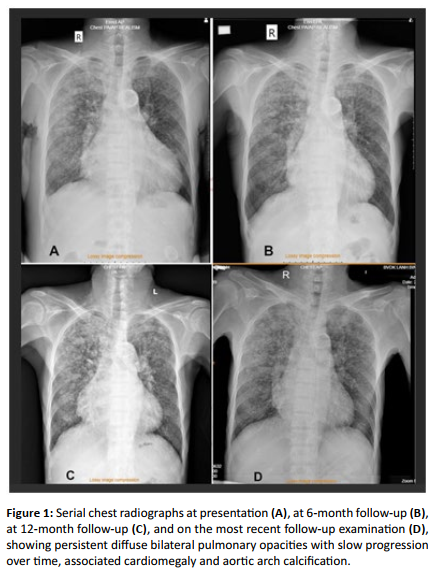
Figure 1: Serial chest radiographs at presentation (A), at 6-month follow-up (B), at 12-month follow-up (C), and on the most recent follow-up examination (D), showing persistent diffuse bilateral pulmonary opacities with slow progression over time, associated cardiomegaly and aortic arch calcification.
Because the radiographic abnormalities appeared extensive and were disproportionate to the benign clinical presentation, further imaging was performed. Chest computed tomography obtained during the initial cross-sectional evaluation and on subsequent follow-up showed diffuse bilateral ground-glass opacities and numerous centrilobular ground-glass nodules containing punctate high-attenuation foci in both lungs, with greater conspicuity of the calcific nodules on the later examination, findings highly suggestive of metastatic pulmonary calcification [Figure 2A–C]. Additional sagittal reconstructions demonstrated marked calcification of the thoracic aorta and diffuse skeletal sclerosis involving the thoracic spine [Figure 2D, E].
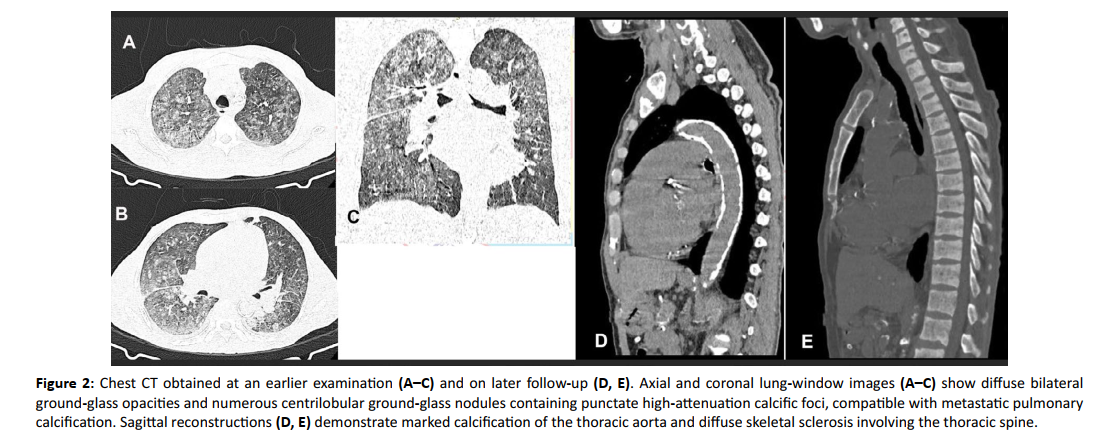
Figure 2: Chest CT obtained at an earlier examination (AâC) and on later follow-up (D, E). Axial and coronal lung-window images (AâC) show diffuse bilateral ground-glass opacities and numerous centrilobular ground-glass nodules containing punctate high-attenuation calcific foci, compatible with metastatic pulmonary calcification. Sagittal reconstructions (D, E) demonstrate marked calcification of the thoracic aorta and diffuse skeletal sclerosis involving the thoracic spine.
Abdominal CT revealed extensive calcification of the abdominal aorta and its major branches, together with generalized osseous sclerosis, supporting a systemic calcific process rather than isolated pulmonary disease Figure 3]. Head and neck CT further demonstrated intracranial vascular calcification, calvarial thickening/sclerosis, and additional vascular-soft tissue calcifications, again consistent with widespread extra skeletal calcification [Figure 4]. No thoracoabdominal lymphadenopathy or primary malignancy was identified on imaging.
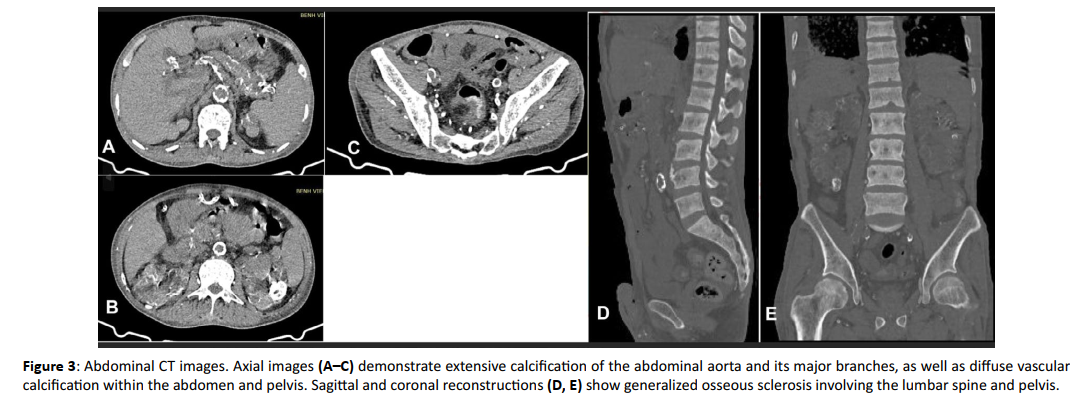
Figure 3: Abdominal CT images. Axial images (AâC) demonstrate extensive calcification of the abdominal aorta and its major branches, as well as diffuse vascular calcification within the abdomen and pelvis. Sagittal and coronal reconstructions (D, E) show generalized osseous sclerosis involving the lumbar spine and pelvis.
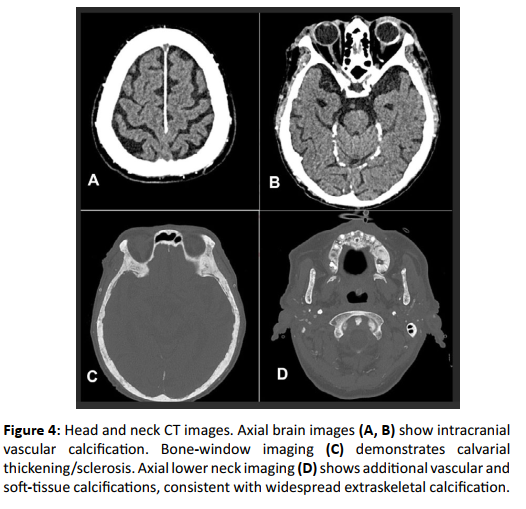
Figure 4: Head and neck CT images. Axial brain images (A, B) show intracranial vascular calcification. Bone-window imaging (C) demonstrates calvarial thickening/sclerosis. Axial lower neck imaging (D) shows additional vascular and soft-tissue calcifications, consistent with widespread extraskeletal calcification.
Laboratory evaluation supported advanced chronic kidney dysfunction. Initial blood tests showed a white blood cell count of 2.90 K/µl, haemoglobin of 100.8 g/l, platelet count of 95 K/µl, urea of 10.38 mmol/l, estimated glomerular filtration rate of 15.3 ml/min/1.73 m², and C-reactive protein of 4.43 mg/l. On later reassessment, the white blood cell count was 3.8 K/µl, haemoglobin 128 g/l, platelet count 118 K/µl, ionized calcium 1.31 mmol/l, urea 10.07 mmol/l, creatinine 398.24 µmol/l, and estimated glomerular filtration rate 13.98 ml/min/1.73 m². Acid-fast bacilli smear was negative.
Arterial blood gas analysis showed preserved oxygenation despite the marked radiological abnormalities. At the earlier assessment, pH was 7.485, pCOâ 36.2 mmHg, bicarbonate 27.3 mmol/l, and pOâ 102 mmHg. On repeat testing, pH was 7.536, pCOâ 31.9 mmHg, bicarbonate 27.0 mmol/l, and pOâ 119 mmHg on room air. These findings indicated persistent alkalosis with normal-to-high arterial oxygen tension, explaining the lack of clinically significant respiratory compromise.
Given the combination of end-stage kidney disease, chronic haemodialysis, characteristic pulmonary calcific changes on chest CT, widespread systemic vascular and soft-tissue calcification, negative tuberculosis testing, and absence of evidence of malignancy, a diagnosis of metastatic pulmonary calcification was made.
DISCUSSION
Metastatic pulmonary calcification (MPC) is an uncommon but probably under-recognized complication of chronic kidney disease, particularly in patients with end-stage renal disease receiving long-term haemodialysis [8, 9]. It results from abnormal calcium-phosphate metabolism leading to deposition of calcium salts in otherwise normal lung parenchyma. Although MPC has been described in association with primary hyperparathyroidism, vitamin D excess, bone destruction, and malignancy, chronic renal failure remains one of the most important clinical settings in which it occurs. In dialysis patients, persistent mineral imbalance, secondary hyperparathyroidism, and recurrent alkalotic states may together create a favorable environment for extra-osseous calcification.
This case illustrates several classic but easily overlooked features of MPC. First, the patient had dramatic and persistent bilateral pulmonary opacities on chest radiography, yet almost no respiratory symptoms and preserved gas exchange. This mismatch is a major diagnostic clue. In MPC, calcium deposition often predominantly affects the alveolar epithelial basement membranes, alveolar septa and small vessels, but pulmonary function may remain relatively preserved until disease is advanced [2, 3].
Second, plain radiography was non-specific and could readily have led to misdiagnosis as pulmonary oedema, atypical infection, military tuberculosis or diffuse pulmonary metastases. CT was decisive. The combination of diffuse ground-glass attenuation, centrilobular nodules and multiple tiny calcified foci in both lungs, particularly in a patient with chronic renal failure, is highly suggestive of MPC [1, 3]. The accompanying widespread calcification in the aorta, abdominal vessels, soft tissues and skull, together with diffuse skeletal sclerosis, further supported a systemic disorder of mineral metabolism rather than primary pulmonary infection or malignancy.
Third, the biochemical milieu was compatible with ongoing extra-osseous calcification. Patients on chronic haemodialysis may develop MPC because of long-standing calcium-phosphate imbalance, secondary hyperparathyroidism and intermittent alkalosis. Alkaline conditions favour precipitation of calcium salts, especially in tissues such as the lungs where local pH may be relatively high [2, 4, 10]. In our patient, repeated arterial blood gas analyses showed alkalosis with elevated bicarbonate and preserved oxygenation, providing a plausible contributor to calcific deposition.
Histological confirmation was not pursued because the diagnosis was strongly supported by the clinical and imaging pattern and invasive sampling was unlikely to alter management. In everyday practice, recognizing MPC is valuable mainly because it prevents unnecessary antimicrobial therapy, anti-tuberculous treatment or oncological work-up when the clinical context already points to metabolic calcification.
The present case offers several additional lessons beyond the classic description of MPC. One important point is the diagnostic value of longitudinal imaging. A single chest radiograph showing diffuse bilateral pulmonary opacity has a very broad differential diagnosis, and in isolation it rarely permits a confident diagnosis of metastatic calcification. By contrast, radiographs obtained over months in this patient demonstrated persistence and slow progression rather than the fluctuating pattern expected with pulmonary oedema or the more clinically active course expected with infection. This temporal behaviour supported a chronic depositional process. Serial imaging is particularly helpful in dialysis populations, where repeated chest radiographs are often available for comparison and may reveal that apparently dramatic infiltrates have actually evolved insidiously over a prolonged interval [11].
A second practical issue is differential diagnosis. In patients with kidney failure, diffuse pulmonary opacities can reflect several competing possibilities, including fluid overload, uraemic lung, diffuse alveolar haemorrhage, bacterial or fungal infection, military tuberculosis, pneumocystis pneumonia, drug-related lung injury, and metastatic malignancy. The distinction is not always straightforward on radiography alone. Features that favored MPC in our patient included the absence of fever or inflammatory respiratory symptoms, repeatedly preserved oxygen saturation, negative acid-fast bacilli testing, lack of lymphadenopathy or a primary neoplasm on thoracoabdominal imaging, and the presence of punctate calcific foci within centrilobular ground-glass nodules on CT [3, 5]. The associated systemic vascular and soft-tissue calcifications were also highly informative because they indicated a generalized mineral deposition disorder rather than an isolated thoracic process.
A third point concerns the relationship between biochemical status and symptom burden. MPC is often conceptually linked to elevated calcium-phosphate product and secondary hyperparathyroidism, but in reality the diagnosis should not be excluded simply because serum calcium at one point in time is not dramatically abnormal. Patients on chronic haemodialysis may experience repeated fluctuations in calcium, phosphate, bicarbonate, and pH over long periods, and tissue deposition is the cumulative consequence of this metabolic environment rather than a snapshot laboratory value from a single admission [9]. Our patient had persistent alkalosis on arterial blood gas analysis with normal-to-high arterial oxygen tension, a combination that helps explain why extensive calcific deposition could coexist with minimal symptoms. The preserved gas exchange also underscores that radiological severity does not necessarily equate to acute respiratory compromise in MPC.
Another notable aspect of this case is the breadth of extra skeletal involvement demonstrated on CT. Calcification affected not only the lungs but also the thoracic and abdominal aorta, major abdominal branches, intracranial vessels, and soft tissues, accompanied by generalized osseous sclerosis. This broader imaging phenotype reinforced the metabolic nature of the disease process. For radiologists, actively searching for extraskeletal calcification outside the lungs can be extremely helpful when MPC is under consideration. Recognition of a multisystem calcific pattern increases diagnostic confidence and may spare the patient from invasive investigations. In our case, histological confirmation was not pursued because the integration of renal history, CT morphology, systemic calcification, and negative evaluation for alternative causes already provided a coherent and persuasive clinic radiological diagnosis [12].
The decision not to obtain lung biopsy merits specific comment. Histology remains the theoretical reference standard for many diffuse parenchymal lung diseases, but tissue confirmation is not always necessary or desirable. Patients with end-stage kidney disease often have multiple comorbidities, vascular calcification, anemia, platelet abnormalities, or other factors that increase the risk of invasive procedures. When imaging findings are characteristic and the clinical context is strongly supportive, the diagnostic yield of biopsy may be outweighed by procedural risk and by the limited likelihood that pathology would meaningfully alter management. In such settings, a multidisciplinary clinic radiological diagnosis is both practical and defensible. This approach is consistent with real-world management, where the main clinical value lies in avoiding misclassification of MPC as infection, oedema, or malignancy [13].
The therapeutic implications of recognizing MPC are equally important. There is no single universal treatment directed at pulmonary calcification itself; rather, management focuses on correcting the underlying metabolic drivers. In patients with kidney failure, this may include tighter control of calcium-phosphate balance, optimization of dialysis adequacy and dialysate composition, management of secondary hyperparathyroidism, careful review of calcium-containing binders or vitamin D therapy, and, in selected cases, consideration of parathyroid intervention or renal transplantation depending on the broader clinical scenario [2-4], [9]. Although our case report was centred on diagnosis rather than longitudinal therapeutic response, identifying MPC has clear clinical utility because it redirects care away from unnecessary antimicrobial or oncologic strategies and toward nephrology-based metabolic optimization.
From an educational standpoint, this report also highlights the importance of clinic radiological dissociation as a diagnostic principle. Medicine often trains clinicians to regard dramatic imaging findings as evidence of severe disease, yet MPC reminds us that this assumption can be misleading. Here, the lungs appeared extensively abnormal on serial radiographs and CT, but the patient had no cough, dyspnoea, chest pain, fever, or clinically significant hypoxaemia. This contrast should not be dismissed as incidental; rather, it is one of the strongest clues to the diagnosis. When radiological severity is out of proportion to symptoms in a patient with advanced kidney disease, the possibility of MPC deserves deliberate consideration before more common diagnoses are accepted at face value [1-3].
Finally, this case contributes to the growing modern literature emphasizing that CT, rather than plain radiography, is the pivotal modality for recognizing MPC during life. Earlier reports often described the diagnosis retrospectively or at autopsy because chest radiographic findings were too non-specific. With contemporary multidetector CT, subtle punctate calcific foci within centrilobular ground-glass nodules and the coexistence of widespread vascular and soft-tissue calcification can now be appreciated much more clearly [1, 3, 10]. The present patient exemplifies how modern imaging can convert an apparently confusing picture of diffuse bilateral infiltrates into a coherent diagnosis when interpreted within the metabolic context of end-stage kidney disease and haemodialysis.
A further important point illustrated by this case is the marked clinic radiological dissociation that often characterizes metastatic pulmonary calcification. Despite extensive bilateral pulmonary abnormalities on serial radiographs and CT, the patient remained essentially asymptomatic from a respiratory perspective, with preserved oxygen saturation and no clinically significant hypoxemia on arterial blood gas analysis. This discordance between the dramatic radiological extent of disease and the relatively benign clinical presentation is a valuable diagnostic clue. In daily practice, diffuse pulmonary infiltrates of this magnitude would commonly prompt concern for pulmonary edema, diffuse infection, military tuberculosis, hemorrhage, or malignancy. However, when imaging findings are out of proportion to symptoms, particularly in a patient with end-stage kidney disease on long-term hemodialysis, a metabolic process such as metastatic pulmonary calcification should be strongly considered. Failure to recognize this pattern may lead to unnecessary investigations, inappropriate antimicrobial therapy, or even invasive diagnostic procedures that are unlikely to change management [3, 5].
This case also emphasizes the central value of CT in narrowing the differential diagnosis. While chest radiography is useful for detecting the presence and temporal progression of diffuse pulmonary opacities, it lacks specificity and may not reveal the calcific nature of the lesions. By contrast, CT can demonstrate the characteristic combination of ground-glass opacities, centrilobular ground-glass nodules, and punctate high-attenuation foci, thereby suggesting calcium deposition within the lung parenchyma. In the present patient, these pulmonary findings were accompanied by widespread extra skeletal calcification involving the thoracic and abdominal vasculature, soft tissues, and skull, as well as diffuse skeletal sclerosis. Such a multisystem imaging pattern strongly supports a chronic systemic disorder of mineral metabolism rather than a primary pulmonary inflammatory or neoplastic process. Accordingly, interpretation of the thoracic findings in isolation would have been less informative than integrated analysis of the whole-body imaging manifestations [3, 12].
Another noteworthy issue is the likely contribution of persistent or recurrent alkalosis to the pathogenesis of pulmonary calcium deposition. In patients receiving maintenance hemodialysis, abnormal calcium-phosphate homeostasis, secondary hyperparathyroidism, and intermittent alkalotic states may together promote metastatic calcification. Alkaline conditions increase the tendency of calcium salts to precipitate in normal tissues, especially in the lungs, where local acid-base conditions may favor such deposition. In this patient, repeated blood gas analyses consistently showed alkalosis with preserved oxygenation, providing a physiologic explanation for why the imaging appearance was striking while respiratory impairment remained minimal. This observation reinforces the concept that metabolic and biochemical factors are not merely background features, but active determinants of disease expression [3, 10].
This case has practical implications for clinical decision-making. Recognition of metastatic pulmonary calcification is important not only for diagnosis but also for avoiding overtreatment and redirecting attention toward the underlying metabolic disorder. In such patients, management should focus on optimizing dialysis adequacy, controlling calcium-phosphate imbalance, and monitoring for progression of systemic calcification, rather than pursuing prolonged empiric treatment for infection or malignancy in the absence of supporting evidence. Greater awareness of this entity among radiologists, nephrologists, and pulmonologists may therefore improve diagnostic confidence and reduce unnecessary interventions, particularly in patients with extensive pulmonary infiltrates but minimal respiratory symptoms.
This case was considered worthy of report not only because the pulmonary abnormalities were extensive, but also because the patient remained almost entirely free of respiratory symptoms despite serial progression on radiography. Such marked disparity between radiological extent and clinical severity creates a frequent diagnostic trap. In many institutions, diffuse bilateral infiltrates in a dialysis patient are initially approached from the perspective of pulmonary oedema or atypical infection, especially when chest radiographs appear alarming. By documenting the longitudinal radiographic course, the characteristic CT morphology, the preserved oxygenation, and the systemic calcific background, this report aims to reinforce a practical teaching point: when extensive pulmonary opacities in end-stage kidney disease appear out of proportion to symptoms, MPC should move high on the differential diagnosis.
CONCLUSION
Metastatic pulmonary calcification should be suspected in patients with end-stage kidney disease who show extensive bilateral pulmonary infiltrates on imaging but have absent or mild respiratory symptoms. Chest CT is essential for identifying characteristic calcified centrilobular nodules and associated systemic calcification. Awareness of this entity can prevent misdiagnosis and inappropriate treatment.
DISCLOSURE
CONFLICT OF INTEREST
The authors declare no conflict of interest.
PATIENT CONSENT
Written informed consent was obtained from the patient for publication of this case report and the accompanying images.
ACKNOWLEDGMENTS
None.
REFERENCES
- Toussie D, Azour L, Garrana S, Platt S, Osei K, et al. Pulmonary Calcification and Ossification: Pathogenesis, CT Appearance, and Specific Disorders. Radiographics. 2025;45:e240110.
- Chan ED, Morales DV, Welsh CH, McDermott MT. Calcium deposition with or without bone formation in the lung. Am J Respir Crit Care Med. 2002;165:1654-1669.
- Belem LC, Zanetti G, Souza AS, Hochhegger B, Guimaraes MD, et al. Metastatic pulmonary calcification: state-of-the-art review focused on imaging findings. Respir Med. 2014;108:668-676.
- Belem LC, Souza CA, Souza AS, Escuissato DL, Hochhegger B, et al. Metastatic pulmonary calcification: high-resolution computed tomography findings in 23 cases. Radiol Bras. 2017;50:231-236.
- Loh TC, Pang YK, Liam CK, Chew MF. Metastatic pulmonary calcification mimicking pulmonary tuberculosis: A case report. Respirol Case Rep. 2022;10:e01030.
- Amin SB, Slater R, Mohammed TL. Pulmonary calcifications: a pictorial review and approach to formulating a differential diagnosis. Curr Probl Diagn Radiol. 2015;44:267-276.
- Bendayan D, Barziv Y, Kramer MR. Pulmonary calcifications: a review. Respir Med. 2000;94:190-193.
- Takefuji H, Komagamine J. Metastatic pulmonary calcification in a haemodialysis patient. BMJ Case Rep. 2025;18.
- Patil C, Lavanya P, Mangalagiri N, Bommanagari D. Pulmonary Metastatic Calcifications Secondary to Chronic Renal Failure. Cureus. 2025;17:e84862.
- Kirschbaum B. Effect of high bicarbonate hemodialysis on ionized calcium and risk of metastatic calcification. Clin Chim Acta. 2004;343:231-236.
- Maeda T, Connolly M, Modrak J, Perillo I. Metastatic pulmonary calcification in a renal transplant recipient. Respir Med Case Rep. 2024;50:102043.
- Fajol A, Faul C. Soft tissue calcifications in chronic kidney disease-beyond the vasculature. Pflugers Arch. 2025;477:1037-1059.
- Torres P. Metastatic pulmonary calcification: contribution of imaging to noninvasive diagnosis. Radiol Bras. 2017;50:VII-VIII.