Lifestyle factors and substance use in gastrointestinal cancers among indigenous populations of Northeast India: A systematic review
Abstract
Author(s): E. Santhana Krishnan, Jyothinath Kothapalli*, Lavanya Prathap, Manne Munikumar and Bhagothula Sowjanya
Background: Gastrointestinal cancers is a hazardous global health concern, with outrage incidence rates in Asia. In India, the Northeast region particularly Arunachal Pradesh reports disproportionately high burdens of stomach and oesophageal cancers compared to the national average. Indigenous communities in this region have unique lifestyle practices, dietary habits, and patterns of substance use (betel quid/areca nut chewing, tobacco, traditional alcohol, smoked/salted foods) that may influence cancer risk. To systematically review available evidence on lifestyle and substance use factors associated with GI cancers in Northeast India, with emphasis on indigenous populations of Arunachal Pradesh.
Methods: Following PRISMA guidelines, PubMed, PMC, Google Scholar, and NCDIR databases were searched up to September 2025. Eligible studies included registry analyses, observational studies, and systematic reviews/meta-analyses addressing lifestyle or substance exposures and GI cancers in Northeast India. Data were extracted on study design, exposures, outcomes, and effect estimates.
Results: Fourteen studies met inclusion criteria, including cancer registry reports, hospital based case control approaches, community surveys, and meta-analyses. Regional registry data reveal GI cancers are dominant cancer type in West Arunachal (23.2% of male cancers; 14.6% of female cancers). Substance use especially betel quid/areca, tobacco, and alcohol was significantly more common among GI cancer cases in hospital-based studies. Consumption of smoked and salted foods was consistently implicated in gastric cancer risk.
Conclusion: Lifestyle practices and substance use appear to contribute substantially to the GI cancer burden in Northeast India, particularly among indigenous populations of Arunachal Pradesh. However, most evidence is observational and hospital-based, with limited adjustment for confounders such as Helicobacter pylori. High-quality population-based cohort and intervention studies are urgently needed to quantify risks and inform culturally tailored prevention strategies.
Share this article

Editors List
-
RAOUi Yasser
Senior Medical Physicist
-
Ahmed Hussien Alshewered
University of Basrah College of Medicine, Iraq
-
Sudhakar Tummala
Department of Electronics and Communication Engineering SRM University – AP, Andhra Pradesh
-
Alphonse Laya
Supervisor of Biochemistry Lab and PhD. students of Faculty of Science, Department of Chemistry and Department of Chemis
- Fava Maria Giovanna
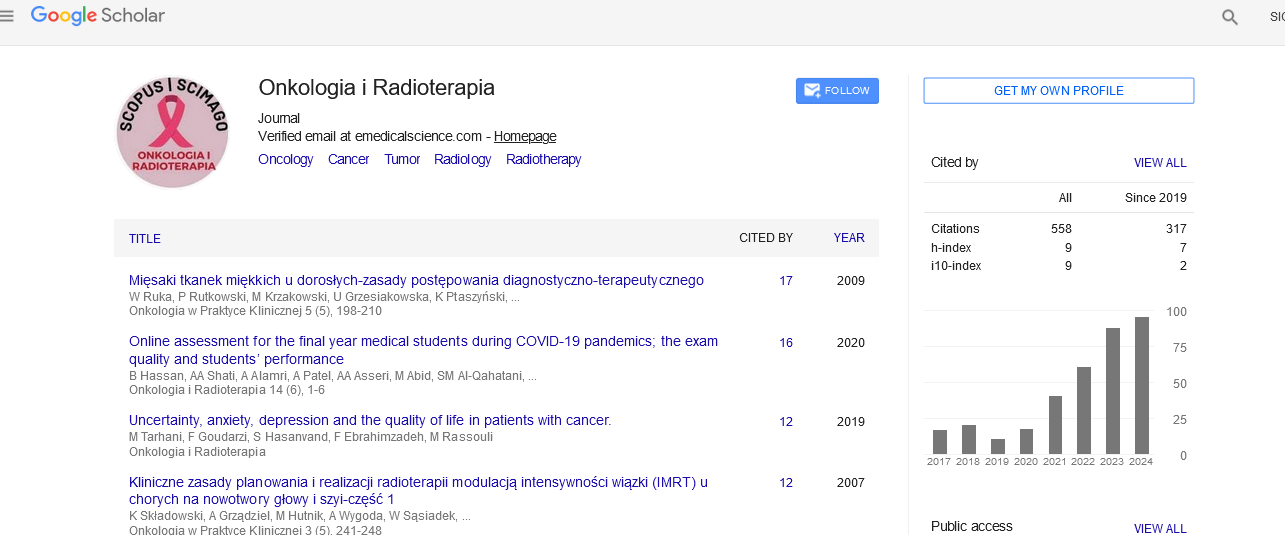
Google Scholar citation report
Citations : 650
Onkologia i Radioterapia received 650 citations as per Google Scholar report
Onkologia i Radioterapia peer review process verified at publons

Indexed In
- Directory of Open Access Journals
- Scimago
- SCOPUS
- EBSCO A-Z
- MIAR
- Euro Pub
- Google Scholar
- Medical Project Poland
- PUBMED
- Cancer Index
- Gdansk University of Technology, Ministry Points 20