Impact of the CDK4/6 Inhibitor Line of Use on Progression-Free Survival in HR+/HER2? Metastatic Breast Cancer: Real-Life Experience in Morocco
Abstract
Author(s): Diango Keita*, Mehdi Alem, Mounir Belcadi, Abir Oufrid, Sara Nejjari, Lamiae Amaadour, Karima Oualla, Zineb Benbrahim, Samia Arifi and Nawfel Mellas
Introduction Hormone receptor–positive (HR+) and human epidermal growth factor receptor 2–negative (HER2−) metastatic breast cancer represents the most common molecular subtype. The introduction of cyclin-dependent kinase 4 and 6 (CDK4/6) inhibitors in combination with endocrine therapy has profoundly changed the therapeutic paradigm. However, real-world data from low- and middle-income countries remain limited, and the optimal timing for CDK4/6 inhibitor initiation is still debated, particularly following the publication of the SONIA trial. Methods We conducted a retrospective cohort study at the Department of Medical Oncology of Hassan II University Hospital in Fez. Forty-one patients with de novo or recurrent HR+/HER2− metastatic breast cancer treated with palbociclib or ribociclib in combination with endocrine therapy between January 2018 and December 2024 were included. CDK4/6 inhibitors were administered in either the first-line or second-line setting. The primary endpoint was progression-free survival (PFS). Secondary endpoints included overall survival (OS), objective response rate (ORR), clinical benefit rate (CBR, defined as partial response or stable disease ≥ 24 weeks), safety, and tolerability. Cox proportional hazards models were used for univariate and multivariate analyses of prognostic factors. Results The median age was 55.2 years (range, 31–92). CDK4/6 inhibitors were administered as first-line therapy in 63.4% of patients and as second-line therapy in 36.6%. The median progression-free survival was 29.2 months (95% CI: 23.5–34.9), while the median overall survival had not been reached at the time of analysis. A partial response was observed in 48.78% of patients, and the clinical benefit rate was high. Patients treated in the first-line setting showed a longer progression-free survival compared with those treated in the second line (29.2 vs. 10.4 months); however, this difference was not statistically significant (p = 0.248). Toxicities were mainly hematological, dominated by grade 3–4 neutropenia (58.5%). Conclusion In this real-world cohort, the combination of CDK4/6 inhibitors with endocrine therapy demonstrated meaningful clinical efficacy with manageable toxicity. Firstline use of CDK4/6 inhibitors may provide a relevant clinical benefit in resourcelimited settings. Further prospective studies adapted to local realities are needed to optimize therapeutic sequencing strategies.
References
Stone Market in New Jersey Stone Market in New Mexico Stone Market in New Hampshire Stone Market in North Dakota Stone Market in OklahomaShare this article

Editors List
-
RAOUi Yasser
Senior Medical Physicist
-
Ahmed Hussien Alshewered
University of Basrah College of Medicine, Iraq
-
Sudhakar Tummala
Department of Electronics and Communication Engineering SRM University – AP, Andhra Pradesh
-
Alphonse Laya
Supervisor of Biochemistry Lab and PhD. students of Faculty of Science, Department of Chemistry and Department of Chemis
- Fava Maria Giovanna
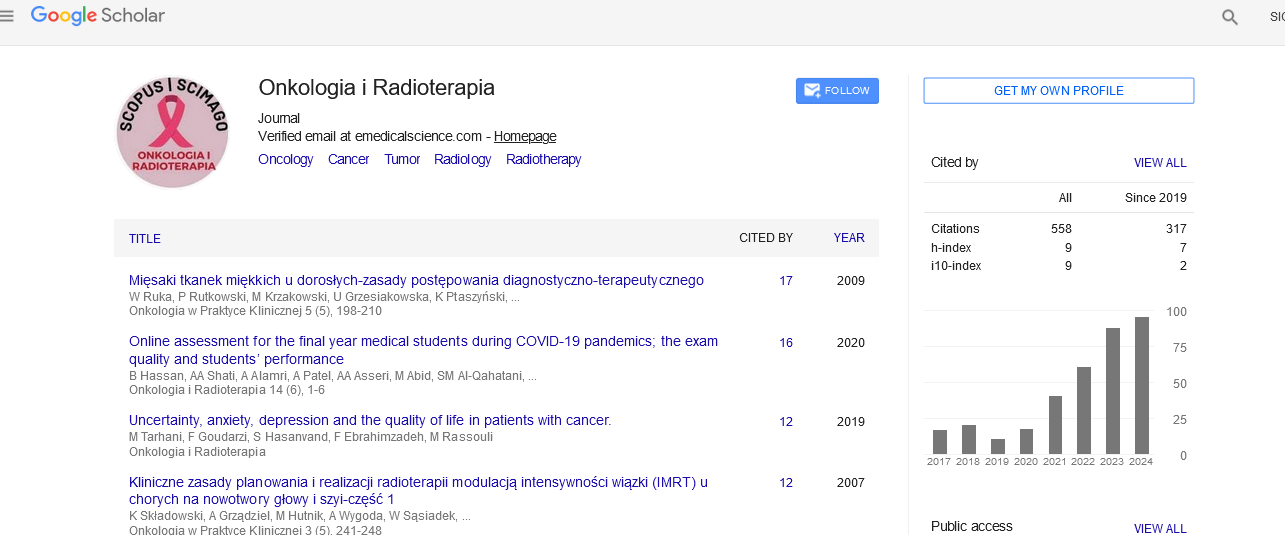
Google Scholar citation report
Citations : 650
Onkologia i Radioterapia received 650 citations as per Google Scholar report
Onkologia i Radioterapia peer review process verified at publons
Indexed In
- Directory of Open Access Journals
- Scimago
- SCOPUS
- EBSCO A-Z
- MIAR
- Euro Pub
- Google Scholar
- Medical Project Poland
- PUBMED
- Cancer Index
- Gdansk University of Technology, Ministry Points 20