Case Study - Onkologia i Radioterapia ( 2026) Volume 20, Issue 5
Trastuzumab Deruxtecan in HER2-Expressing Digestive Cancers: A Retrospective Real-World Study from Institut Gustave Roussy
Chaymae CHBIHI1*, Alice BOILEVE4, Nouhaila CHAREF2, Samia EL HAKYM1, Hafssa EL HILALI1, Sara NEJJARI1, Abir OUFRID1, Diango KEITA1, Lamiae AMAADOUR1,3, Karima OUALLA1,3, Zineb BENBRAHIM1,3, Samia ARIFI1,3 and Nawfel MELLAS1,32Department of Epidemiology and Public Health, Faculty of Medicine, Fez, Morocco
3Faculty of Medicine, Pharmacy and Dental Medicine of Fez, University of Sidi Mohamed Ben Abdellah, Fez, Morocco
4Department of Digestive Oncology, Gustave Roussy, Villejuif, France
Chaymae CHBIHI, Department of Medical Oncology, Hassan II University Hospital, Fez, Morocco, Email: chaymae.chbihi@gmail.com
Received: 02-May-2026, Manuscript No. OAR-26-189617; , Pre QC No. OAR-26-189617; Editor assigned: 04-May-2026, Pre QC No. OAR-26-189617; Reviewed: 18-May-2026, QC No. OAR-26-189617; Revised: 23-May-2026, Manuscript No. OAR-26-189617; Published: 30-May-2026
Abstract
Background: Trastuzumab deruxtecan (T-DXd) is a HER2-targeting antibody-drug conjugate that has demonstrated significant efficacy in HER2-positive gastric cancer in clinical trials. However, real-world evidence across the broader spectrum of digestive malignancies remains limited. This study aimed to evaluate the effectiveness and safety of T-DXd in HER2-expressing digestive cancers in routine clinical practice. Methods: We conducted a retrospective, single-center study including 19 patients treated with T-DXd at Institut Gustave Roussy between January 2020 and June 2025. Eligible patients had HER2-positive digestive malignancies (IHC 3+ or IHC 2+/ ISH+). The primary endpoints were objective response rate (ORR) and progression- free survival (PFS). Secondary endpoints included overall survival (OS), disease control rate (DCR), and safety. Results: Gastric cancer was the most frequent primary site (78.9%), followed by esophageal (10.5%), biliary tract (5.3%) and pancreatic (5.3%). The ORR was 47.4% and the DCR was 63.2%. Median PFS was 4.21 months (95% CI: 1.51–6.67), and median OS was 4.76 months (95% CI: 1.51–6.67). HER2 status conversion was observed in 84.2% of patients. The most common adverse events were asthenia (73.7%), diarrhea (36.8%), and anemia (36.8%). Grade ≥3 adverse events included asthenia (9/19), diarrhea (3/19), and anemia (3/19). Interstitial lung disease occurred in 2 patients (10.5%), with one grade ≥3 event. Conclusion: In this real-world cohort of heavily pretreated patients with HER2- expressing digestive cancers, T-DXd demonstrated clinical activity consistent with pivotal trials, although with shorter survival due to the advanced disease context. The safety profile was manageable with appropriate monitoring, particularly for interstitial lung disease.
Introduction
Digestive cancers represent a major global health burden, accounting for 4.78 million new cases and 3.24 million deaths worldwide in 2022, representing 23.9% and 33.2% of all cancers, respectively [1]. Projections to 2050 estimate 9.06 million new cases (+85%) and 6.42 million deaths (+93%) compared to 2022 [2]. Despite progress in prevention and treatment, a significant proportion of patients are diagnosed at advanced or metastatic stages, limiting curative options.
Human epidermal growth factor receptor 2 (HER2) is a well-established oncogenic driver in several gastrointestinal malignancies, particularly gastric and gastroesophageal junction cancers, where overexpression or amplification occurs in approximately 10–20% of cases [3]. HER2 positivity is also documented in colorectal (3–5%), biliary (5–10%), esophageal (10–15%), and pancreatic cancers (<4%) [4,5]. HER2 positivity is associated with aggressive tumor behavior and adverse prognosis, supporting its role as a therapeutic target.
The addition of trastuzumab to chemotherapy significantly improved survival in HER2-positive advanced gastric cancer, as demonstrated in the ToGA trial [6]. However, less than half of patients respond, and most eventually develop resistance, highlighting the need for more effective therapies beyond first-line treatment [7,8].
Trastuzumab deruxtecan (T-DXd) is a next-generation antibody–drug conjugate composed of an anti-HER2 monoclonal antibody linked to a topoisomerase I inhibitor payload. Its high drug-to-antibody ratio and membrane-permeable payload enable a bystander effect, potentially overcoming HER2 heterogeneity [9]. Clinical trials such as DESTINY-Gastric01 and DESTINY-Gastric02 have demonstrated significant efficacy of T-DXd in HER2-positive gastric cancer [10,11]. More recently, studies including DESTINY-CRC02, DESTINY-PanTumor02, and DESTINY-Gastric04 have expanded its potential role across multiple HER2-expressing solid tumors, including colorectal, biliary tract, and pancreatic cancers [12–14].
Despite these advances, real-world evidence remains limited, particularly in heterogeneous gastrointestinal populations. This study aims to evaluate the effectiveness and safety of T-DXd in routine clinical practice across multiple digestive tumor types treated at Institut Gustave Roussy.
MATERIALS AND METHODS
Study Design and Setting
This was a retrospective, descriptive, single-center study conducted at the Department of Digestive Oncology, Institut Gustave Roussy, Paris, including 19 patients treated with trastuzumab deruxtecan (T-DXd) between January 1, 2020, and June 30, 2025.
The study was conducted in accordance with the principles of the Declaration of Helsinki and institutional regulations. Due to its retrospective nature and the use of anonymized data, formal informed consent was waived.
Categorical variables were described using frequencies and percentages, while continuous variables were expressed as means with ranges. Given the small cohort size, no formal comparative analyses were undertaken, and results were interpreted descriptively.
Patient Selection
Eligible patients met all the following criteria:
- Age ≥18 years
- Histologically confirmed digestive cancer
- At least one cycle of trastuzumab deruxtecan
- Documented HER2-positive status before treatment initiation
Patients were included if HER2 positivity was found at diagnosis or during disease evolution, provided it was confirmed by new biopsy or pathological reassessment. All patients had received at least one prior line of systemic therapy, with T-DXd most often used in second line or beyond, generally after trastuzumab-based treatment.
HER2 Assessment
HER2 status was determined from tumor samples analyzed by immunohistochemistry (IHC). In cases of equivocal results (IHC 2+), in situ hybridization (ISH) was performed to confirm HER2 gene amplification.
HER2 positivity was defined as IHC 3+, or IHC 2+ with confirmed gene amplification by ISH, according to institutional and international guidelines for digestive cancers.
Treatment Administration
Trastuzumab deruxtecan was administered intravenously at the standard dose of 5.4 mg/kg every three weeks (21-day cycle), according to approved dosing recommendations and institutional practice. Treatment was continued until radiological progression, unacceptable toxicity, medical decision to stop, or patient refusal.
Dose reductions, temporary interruptions, or administration delays were performed according to toxicity management guidelines and clinical judgment.
STUDY OBJECTIVES
Primary objectives:
Progression-free survival (PFS)
Objective response rate (ORR)
Secondary objectives:
Overall survival (OS)
Disease control rate (DCR)
Safety profile
Statistical Analysis
Data entry and statistical analysis were performed using SPSS version 27.0. The significance threshold was set at p < 0.05.
Categorical variables were expressed as frequencies and percentages, while continuous variables were described using means with ranges.
Tumor response was evaluated according to RECIST 1.1 criteria. PFS was defined as the time from T-DXd initiation to disease progression or death from any cause. OS was defined as the time from treatment initiation to death or last follow-up.
Survival curves were estimated using the Kaplan-Meier method. Living patients without an event were censored at the date of last follow-up.
RESULTS
Patient Characteristics
A total of 19 patients were included in the study. The mean age at diagnosis was 58.8 years (range, 37–77), with a predominance of male patients (78.9%).
Most patients had a good performance status, with an ECOG score of 0–1 in 84.2% of cases. Gastric cancer was the most frequent primary tumor site.
Baseline patient characteristics are summarized in [Table 1].
| Characteristics | Value n (%) |
|---|---|
| Mean age (years) | 59±10.07 |
| Sex | |
| male | 15 (78 .9%) |
| female | 4 (21.1%) |
| ECOG Performance Status | |
| 0-1 | 16 (84.2%) |
| ≥2 | 3 (15.8%) |
| Primary Tumor Site | |
| -Gastric | 15 (78.9%) |
| -Esophageal | 2 (10.5%) |
| - Biliary tract | 1 (5.3%) |
| - Pancreatic | 1 (5.3%) |
| -Colorectal | 0 |
| HER2 Status at T-DXd Initiation | |
| -IHC 3+ | 15 (78.9%) |
| - IHC 2+/ISH+ | 3 (15.8%) |
| -HER2 low | 1 (5.3%) |
| - HER2 conversion at progression* | 16 (84.2%) |
| Line of Therapy for T-DXd | |
| Second line | 4 (21.1%) |
| Third line or beyond | 15 (78.9%) |
Table 1: Baseline Characteristics
*HER2 conversion refers to patients who developed a different HER2 status at disease progression compared to initial diagnosis.
Survival Outcomes
In the overall study population, the median overall survival (OS) was 4.76 months (95% CI: 1.51–6.67). The mean OS was 6.25 months (95% CI: not applicable due to small sample size).
Regarding progression-free survival (PFS), the median PFS was 4.21 months (95% CI: 1.51–6.67). The mean PFS was 6.25 months.
Kaplan–Meier survival curves for both PFS and OS are presented in Figures 1 and 2, respectively, illustrating the survival distributions within the study cohort. [Figure 1,Figure 2]
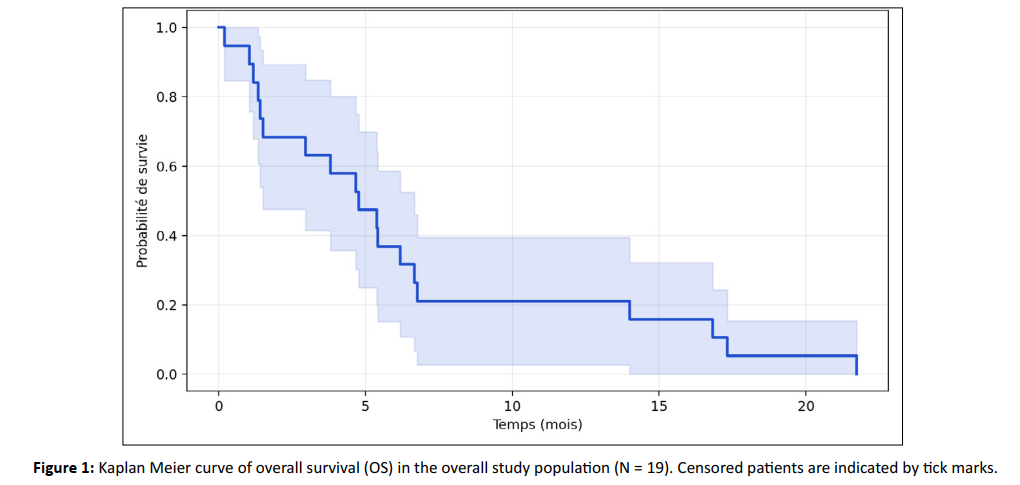
Figure 1: Kaplan Meier curve of overall survival (OS) in the overall study population (N = 19). Censored patients are indicated by tick marks.
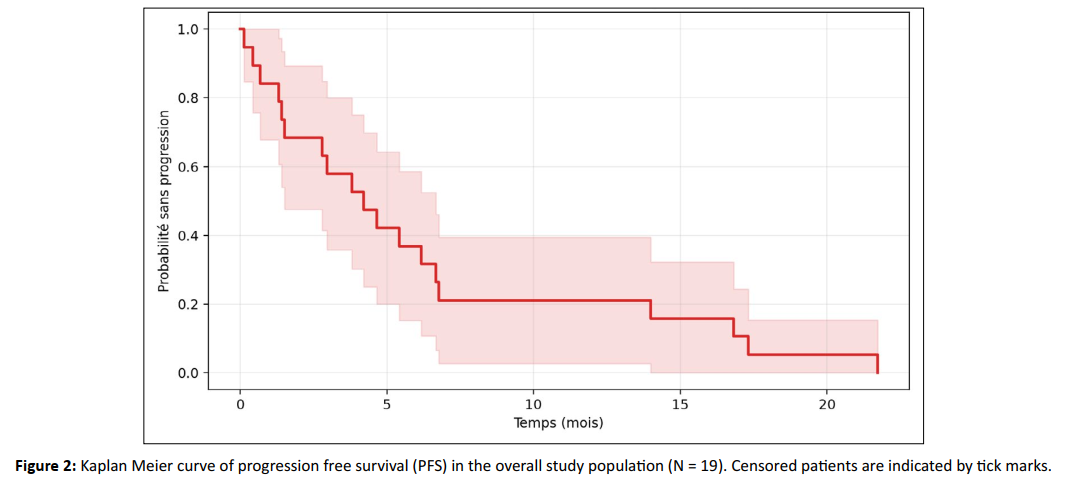
Figure 2: Kaplan Meier curve of progression free survival (PFS) in the overall study population (N = 19). Censored patients are indicated by tick marks.
Tumor Response
Tumor response was evaluated according to RECIST version 1.1 criteria. In the overall study population, the objective response rate (ORR) was 47.4%, and the disease control rate (DCR) was 63.2%. [Table 2]
| Response | N (%) |
|---|---|
| Complete response | 2 (10.5%) |
| Partial response | 7 (36.8%) |
| Stable disease | 3 (15.8%) |
| Progressive disease | 7 (36.8%) |
Table 2: Tumor response according to RECIST version 1.1 criteria (N = 19).
Subgroup Analysis of Survival Outcomes
Exploratory subgroup analyses were performed to evaluate survival outcomes according to baseline clinical characteristics, including age, sex, ECOG performance status, primary tumor site, HER2 expression level, and line of therapy.
Given the limited sample size and the absence of statistically significant differences, these analyses should be considered exploratory and hypothesis-generating. The results of the subgroup analyses are summarized in [Table 3].
| Mean PFS (months) | Mean OS (months) | |
|---|---|---|
| Age (years) | ||
| <65 years | 7.3 | 7.4 |
| ≥65 years | 3.98 | 4.5 |
| Sex | ||
| male | 5.96 | 6.24 |
| female | 7.37 | 7.38 |
| ECOG Performance Status | ||
| 0-1 | 6.93 | 7.1 |
| ≥2 | 2.62 | 3.18 |
| Primary Tumor Site | ||
| -Gastric | 5.76 | 5.97 |
| -Esophageal | 5.49 | 6.08 |
| - Biliary tract | 4.67 | 4.67 |
| - Pancreatic | 16.8 | 16.8 |
| HER2 Status at T-DXd Initiation | ||
| -IHC 3+ | 5.23 | 5.4 |
| - IHC 2+/ISH+ | 11.07 | 11.4 |
| Line of Therapy for T-DXd | ||
| Second line | 5.99 | 6.28 |
| Third line or beyond | 6.32 | 6.54 |
Table 3: Mean Progression-Free Survival (PFS) and Overall Survival (OS) According to Patient Subgroups
Safety
The safety of trastuzumab deruxtecan (T-DXd) was assessed in all patients. Adverse events (AEs) were collected retrospectively and graded according to CTCAE version 5.0.
The most common AEs were asthenia, diarrhea, anemia, nausea, and neutropenia, mostly grade 1–2 and manageable. Grade ≥3 AEs occurred less frequently, primarily asthenia, diarrhea, anemia, and neutropenia.
Two treatment-related deaths were reported, and four patients required dose reductions due to severe toxicities. One case of clinically significant cardiac toxicity was observed (grade 1-2). [Table 4]
| Event | Any Grade N (%) | Grade ≥3 (%) |
|---|---|---|
| Asthenia | 14 | 9 |
| Diarrhea | 7 | 3 |
| Anemia | 7 | 3 |
| Nausea | 4 | 2 |
| Neutropenia | 3 | 2 |
| Thrombocytopenia | 2 | 1 |
| Interstitial lung disease / pneumonitis | 2 | 1 |
| Cardiac toxicity | 1 | 0 |
| Vomiting | 1 | 1 |
| Treatment-related death | 2 | 2 |
Table 4: Safety Profile of Trastuzumab Deruxtecan
DISCUSSION
In this real-world cohort of 19 heavily pretreated patients with HER2-expressing digestive cancers, trastuzumab deruxtecan (T-DXd) demonstrated an objective response rate (ORR) of 47.4% and a disease control rate (DCR) of 63.2%. Median progression-free survival (PFS) was 4.21 months and median overall survival (OS) was 4.76 months.
Comparison with Pivotal Trials
Our results are globally concordant with the DESTINY-Gastric01 trial, which reported an ORR of 51.3%, a median PFS of 5.6 months, and a median OS of 12.5 months in HER2-positive gastric cancer patients treated with T-DXd in third line or beyond [10]. They are also consistent with DESTINY-Gastric02, which reported an ORR of 41.8% in a Western population [11].
However, the survival outcomes in our series are shorter, particularly median OS (4.76 months versus 12.5 months in DESTINY-Gastric01). This difference is likely explained by several factors. First, 78.9% of our patients received T-DXd in third line or beyond, which is comparable to DESTINY-Gastric01, but our population was more heterogeneous, including biliary and pancreatic cancers with generally poorer prognoses [4,5]. Second, real-world patients are often more heavily pretreated and have more comorbidities than those selected for clinical trials [7,8]. Third, the small sample size (n=19) may have influenced the survival estimates.
Activity Beyond Gastric Cancer
Although our series included only one biliary tract cancer and one pancreatic cancer, both showed clinical activity. The patient with biliary tract cancer had a mean PFS of 4.67 months and mean OS of 4.67 months. The patient with pancreatic cancer had a mean PFS of 16.82 months and mean OS of 16.82 months. These observations suggest that T-DXd may have activity beyond gastric cancer, although larger studies are needed to confirm this finding [4,5].
No colorectal cancer cases were observed in our series, which prevented evaluation of T-DXd in this population.
HER2 Heterogeneity and Conversion
A striking finding in our series is the HER2 status conversion observed in 84.2% of patients (16/19) during tumor evolution. This high rate underscores the intratumoral heterogeneity of HER2 expression and the importance of re-biopsy at progression [15,16]. Patients who were initially HER2-positive may become HER2-negative after treatment, and conversely, patients initially HER2-negative may become HER2-positive. This phenomenon has major therapeutic implications: it justifies systematic HER2 reassessment at disease progression before considering anti-HER2 therapies [16].
Subgroup Analysis
Exploratory subgroup analyses showed more favorable mean PFS and OS in patients under 65 years (7.30 and 7.40 months, respectively) compared to those aged 65 years or older (3.98 and 4.50 months). Patients with an ECOG performance status of 0–1 also had better outcomes (mean PFS 6.93 months, mean OS 7.10 months) than those with ECOG ≥2 (mean PFS 2.62 months, mean OS 3.18 months). Women appeared to have slightly better survival than men, although the small sample size precludes definitive conclusions [3].
Regarding HER2 expression level, patients with IHC 2+/ISH+ had better mean PFS (11.07 months) and mean OS (11.38 months) than those with IHC 3+ (5.23 and 5.40 months, respectively). The single HER2-low patient also showed prolonged survival (mean PFS 14.00 months, mean OS 14.00 months). These findings, although based on very small numbers, suggest that T-DXd may be active across different levels of HER2 expression, potentially due to its bystander effect [9].
Safety Profile
The safety profile in our cohort was generally consistent with published data from DESTINY-Gastric01 and DESTINY-Gastric02 [10,11]. However, two notable differences were observed.
First, asthenia was particularly frequent (73.7%) and severe (grade ≥3 in 9 out of 19 patients). This high rate may reflect the heavily pretreated nature of our population, as well as the advanced disease stage at the time of T-DXd initiation [7,8].
Second, interstitial lung disease (ILD) occurred in 2 patients (10.5%), which is within the range reported in clinical trials (8–12%) [10,12,13]. One ILD case was grade ≥3. No ILD-related deaths occurred in our series. This complication requires particular vigilance, with systematic clinical monitoring, regular chest imaging, and early corticosteroid intervention as recommended in recent consensus guidelines [17].
Dose reduction was necessary in 4 patients (21.1%), and two treatment discontinuations were directly related to toxicity. These findings confirm that T-DXd requires careful toxicity monitoring despite its clinical efficacy.
Study Limitations
This study has several inherent limitations. The small sample size (n=19) limits statistical power, particularly for subgroup analyses. The retrospective, single-center design introduces potential selection bias. The heterogeneity of tumor types (gastric cancer dominated at 78.9%) limits conclusions for other localizations. There was no control group for direct comparison with chemotherapy or other anti-HER2 therapies. Radiological assessment lacked centralized independent review, which may have introduced measurement bias. Finally, retrospective safety data collection may underestimate low-grade toxicities.
Despite these limitations, this study provides valuable real-world data on the effectiveness and safety of T-DXd in HER2-expressing digestive cancers, complementing the evidence from clinical trials.
Clinical Implications
Our findings support the use of T-DXd in patients with HER2-expressing digestive cancers, particularly those with gastric cancer who have progressed after at least one prior line of therapy including trastuzumab [6,10]. The high rate of HER2 status conversion (84.2%) highlights the importance of tumor re-biopsy at progression to identify patients who may benefit from T-DXd [15,16]. The safety profile, although manageable, requires particular attention to asthenia and interstitial lung disease [17].
Future Perspectives
Several questions remain to be addressed in future studies. First, the optimal timing of T-DXd administration (second line versus third line or beyond) needs to be further evaluated. Second, the activity of T-DXd in HER2-low digestive cancers warrants dedicated studies. Third, combination strategies, particularly with immunotherapy, may enhance the efficacy of T-DXd. Fourth, predictive biomarkers beyond HER2 expression are needed to better select patients who will benefit from T-DXd. Finally, larger prospective multicenter studies are required to confirm our findings, particularly in rare digestive cancer types such as biliary tract and pancreatic cancers [4,5].
CONCLUSION
In conclusion, this real-world study confirms the clinically meaningful activity of trastuzumab deruxtecan in HER2-expressing digestive cancers, with an objective response rate of 47.4% and a disease control rate of 63.2%. The high rate of HER2 status conversion (84.2%) highlights the importance of tumor heterogeneity and supports systematic re-biopsy at disease progression. The observed survival outcomes, although shorter than those reported in pivotal trials, reflect the heavily pretreated and heterogeneous nature of real-world populations. These findings support the integration of T-DXd into therapeutic strategies for HER2-positive digestive cancers and warrant further prospective, multicentre studies to optimise patient selection, the sequence of therapy, and the management of toxicities, particularly interstitial lung disease.
REFERENCES
- Li M, Hu M, Jiang L, et al. Global trends and epidemiological shifts in gastrointestinal cancers: insights from the past four decades. Cancer Commun (Lond). 2025;45(7):774-788.
- Danpanichkul P, Suparan K, Tothanarungroj P, et al. Gastrointestinal cancer statistics in 2022 and projection to 2050: GLOBOCAN estimates across 185 countries. Cancer. 2026;132(1):e70245.
- Lei Y, Liu Y, Wang H, et al. Molecular features influencing clinical outcome of advanced HER2-positive gastric cancer receiving trastuzumab plus chemotherapy. Ann Med. 2025;57(1):2581815.
- Vaghi C, Mauri G, Gori V, et al. Targeting HER2 in Metastatic Colorectal Cancer: Current Therapies, Biomarker Refinement, and Emerging Strategies. Drugs. 2026;86(1):37-57.
- Jones L, Kumar M, Ross A, et al. HER-2 directed therapies across gastrointestinal tract cancers - A new frontier. Cancer Treat Rev. 2024;129:102789.
- Bang YJ, Van Cutsem E, Feyereislova A, et al. Trastuzumab in combination with chemotherapy versus chemotherapy alone for treatment of HER2-positive advanced gastric or gastro-oesophageal junction cancer (ToGA): a phase 3, open-label, randomised controlled trial. Lancet. 2010;376(9742):687-697.
- Huang D, Wu Y, Chen J, et al. Efficacy and safety of antibody-drug conjugates for HER2-expressing advanced gastric and gastroesophageal junction adenocarcinoma: a systematic review and meta-analysis. Front Pharmacol. 2025;16:1668511.
- Jubashi A, Akiyama Y, Tanaka T, et al. Trastuzumab deruxtecan in the treatment of HER2-positive gastric cancer: a comprehensive review. Future Oncol. 2025;21(30):4043-4056.
- Ogitani Y, Aida T, Hagihara K, et al. DS-8201a, a novel HER2-targeting antibody-drug conjugate with a novel DNA topoisomerase I inhibitor, demonstrates a promising antitumor efficacy with differentiation from T-DM1. Clin Cancer Res. 2016;22(20):5097-5108.
- Shitara K, Bang YJ, Iwasa S, et al. Trastuzumab deruxtecan in previously treated HER2-positive gastric cancer (DESTINY-Gastric01). N Engl J Med. 2020;382(25):2419-2430.
- Van Cutsem E, Di Bartolomeo M, Smyth EC, et al. Trastuzumab deruxtecan in patients with HER2-positive gastric or gastroesophageal junction cancer (DESTINY-Gastric02): a single-arm, phase 2 trial. Lancet Oncol. 2023;24(3):e130-e140.
- Siena S, Di Bartolomeo M, Raghav K, et al. Trastuzumab deruxtecan in patients with HER2-positive advanced colorectal cancer (DESTINY-CRC02): primary results from a multicentre, randomised, phase 2 trial. Lancet Oncol. 2024;25(9):1147-1162.
- Meric-Bernstam F, Makker V, Oaknin A, et al. Efficacy and safety of trastuzumab deruxtecan in patients with HER2-expressing solid tumors: results from the DESTINY-PanTumor02 study. Nat Med. 2024;30(8):2284-2294.
- Shitara K, Van Cutsem E, GümüÅ M, et al. Trastuzumab Deruxtecan versus Ramucirumab plus Paclitaxel in HER2-Positive Advanced Gastric Cancer: Results from the Phase 3 DESTINY-Gastric04 Trial. N Engl J Med. 2025;393(4):336-348.
- Chao J, Fuchs CS, Shitara K, et al. HER2 heterogeneity and its implications for antibody drug conjugate therapy in gastrointestinal cancers. Front Oncol. 2022;12:876543.
- Ock CY, Kim S, Nam SY, et al. Intratumoral heterogeneity of HER2 expression in gastric cancer: implications for resistance to trastuzumab. Gastric Cancer. 2016;19(4):1043-1051.
- Powell CA, Modi S, Iwata H, et al. Management of interstitial lung disease associated with trastuzumab deruxtecan: a consensus guideline from the American Thoracic Society and the European Respiratory Society. J Thorac Oncol. 2025;20(1):42-58.