Research Article - Onkologia i Radioterapia ( 2026) Volume 20, Issue 2
The impact of smoking in bladder cancer risk - retrospective analysis
Donat Çuni1, Flatra Fetahi1*, Xhevdet Çuni1 and Edi Çuni22Alma Mater Europea Campus College “Rezonanca”, Prishtina, Kosovo
Flatra Fetahi, University of Prishtina, Prishtina, Kosovo, Email: flatra.fetahu@hotmail.com
Received: 01-Feb-2026, Manuscript No. OAR-26-187248; , Pre QC No. OAR-26-187248 (PQ); Editor assigned: 04-Feb-2026, Pre QC No. OAR-26-187248 (PQ); Reviewed: 20-Feb-2026, QC No. OAR-26-187248; Revised: 25-Feb-2026, Manuscript No. OAR-26-187248 (R); Published: 28-Feb-2026
Abstract
Background: Cigarette smoking is the most important modifiable risk factor for bladder cancer and is associated with increased incidence, recurrence, and disease progression.
Objective: To evaluate the association between smoking exposure and clinicopathological characteristics of bladder cancer in a single-center cohort.
Methods: This retrospective observational study included 54 patients diagnosed with bladder cancer and treated at the Clinic of Urology, Prishtina, between January 2000 and March 2026. Demographic data, smoking history, diagnostic procedures, treatment modalities, and histopathological findings were analyzed.
Results: All patients were chronic smokers, most of whom initiated smoking during early adolescence. The cohort was predominantly male (92.6%), with a mean age of 63 years. High-grade and muscle-invasive tumors were frequently observed. All patients underwent transurethral resection of bladder tumor (TUR-B), while patients with aggressive disease underwent radical cystectomy.
Conclusion: Smoking is strongly associated with both the development and aggressive biological behavior of bladder cancer. Early initiation and prolonged exposure significantly increase risk, emphasizing the importance of smoking cessation strategies.
Keywords
Bladder cancer; Smoking; Urothelial carcinoma; TUR-B; Radical cystectomy
INTRODUCTION
Cigarette smoking is the strongest and most consistently identified risk factor for bladder cancer, accounting for nearly half of all cases in developed countries. In addition to increasing disease incidence, smoking has been associated with more aggressive tumor biology, higher recurrence rates and increased risk of disease progression. Tobacco-derived carcinogens, including aromatic amines and polycyclic aromatic hydrocarbons, are excreted in urine, resulting in prolonged urothelial exposure and promoting genetic instability and malignant transformation [1-3]. Epidemiological evidence indicates a three- to fourfold increased risk of bladder cancer among smokers, with a long latency period [2]. Both smoking intensity and duration demonstrate a dose–response relationship [4]. Molecular mechanisms include DNA adduct formation and mutations in tumor suppressor genes [2].Smoking also influences prognosis. In non–muscle-invasive bladder cancer [NMIBC], smoking is associated with increased recurrence and progression risks [5-7]. Smoking cessation has been shown to improve outcomes, although residual risk persists [7,8].
Materials and Methods
Study design: this is a retrospective observational cohort study.
Study population: A total of 54 patients diagnosed with bladder cancer and treated at the Clinic of Urology, Prishtina, between January 2000 and March 2026 were included. All patients were managed by the same surgical team, ensuring consistency in clinical approach.
DATA COLLECTION
The following variables were analyzed:
- Smoking history (initiation age, chronic exposure),
- Sociodemographic characteristics,
- Diagnostic imaging,
- Treatment modalities,
- Histopathological findings.
Diagnostic evaluation
Patients underwent:
- Abdominal ultrasound examination
- Cystoscopy procedure
- Contrasted CT program.
Pathophysiology:
Tumors were classified according to:
- WHO classification
- TNM staging system
Treatment protocol: all patients initially underwent transurethral resection of bladder tumor (TUR-BT). Radical cystectomy was performed in 19 patients based in pathohistological findings and after written informed consent.
RESULTS
Patient’s data:
Male: 50 (92.6%) / Female: 4 (7.4%)
Mean age: 63 years (range 39–85 y.o.)
All patients reported long-term tobacco use, with initiation commonly at 14–15 years of age.
Socialdemographic characteristics:
- Lower education: 34 patients / Higher education: 20 patients
- Urban: 23 patients / Rural: 31 patients
Diagnostic findings:
- Complete imaging (US + cystoscopy + CTU): 31 patients
- US + cystoscopy only: 23 patients
Treatment findings:
All patients underwent TUR-BT.
Histopathological findings:
- Predominantly urothelial carcinoma in 23 ptts: high-grade tumors (pT1 G3, pT2 G3).
- 1 ptt: Urothelial carcinoma associated with sarcomatoid differentiation (pT2 G3).
- Urothelial carcinoma in 30 ptts (Ta,T1 Low grade)
A total of 19 ptts with aggressive disease (high-grade and muscle-invasive tumors) underwent radical cystectomy after providing written informed consent [Figure 1-5].
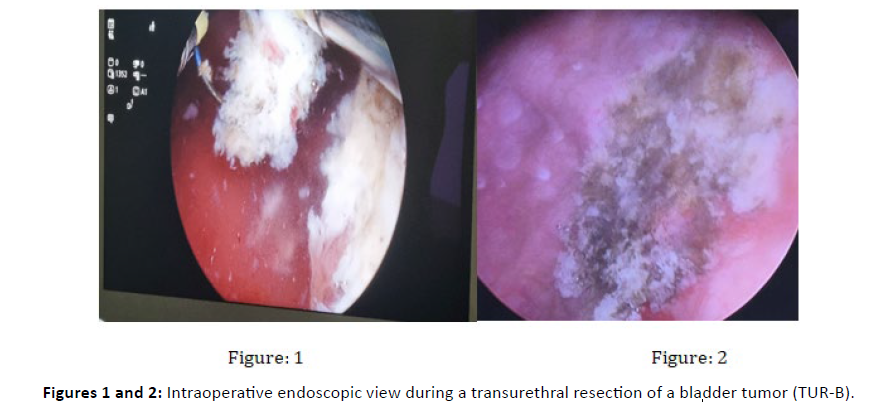
Figure 1 and 2: Intraoperative endoscopic view during a transurethral resection of a bladder tumor (TUR-B).
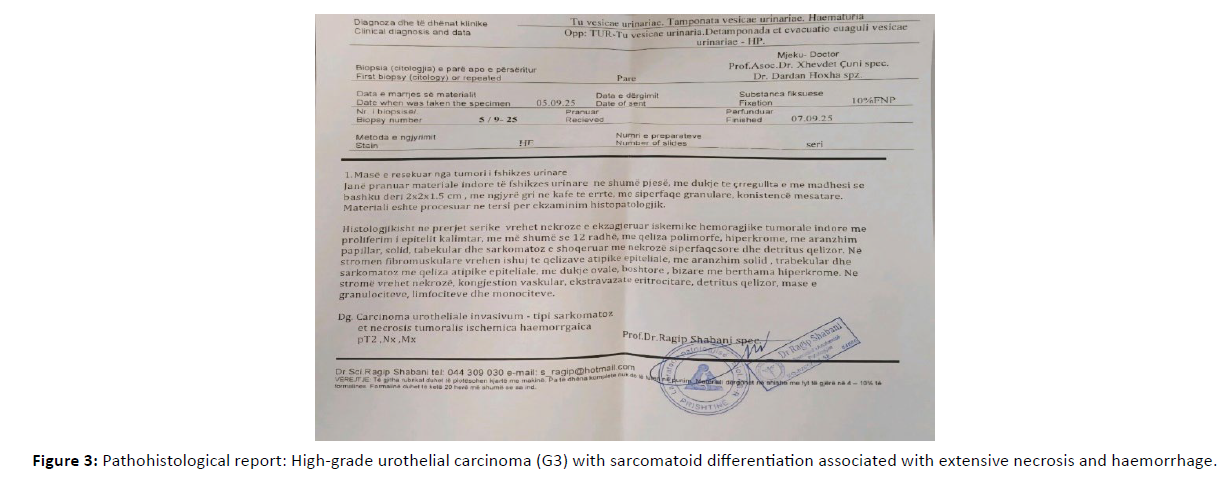
Figure 3: Pathohistological report: High-grade urothelial carcinoma (G3) with sarcomatoid differentiation associated with extensive necrosis and haemorrhage.
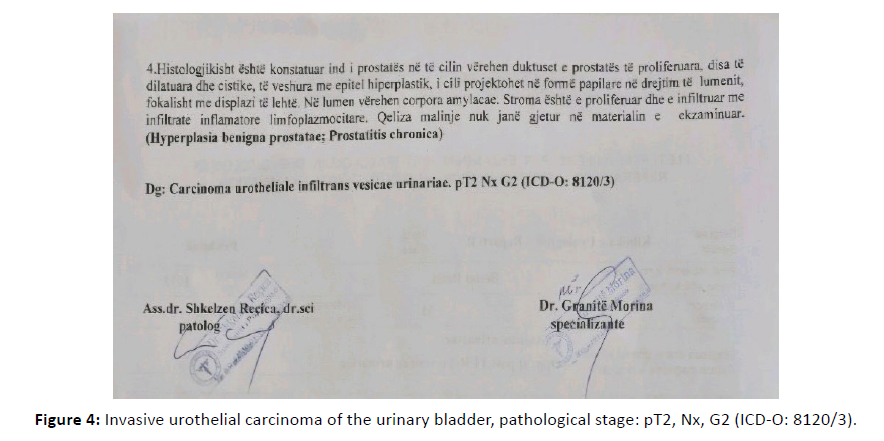
Figure 4: Invasive urothelial carcinoma of the urinary bladder, pathological stage: pT2, Nx, G2 (ICD-O: 8120/3).
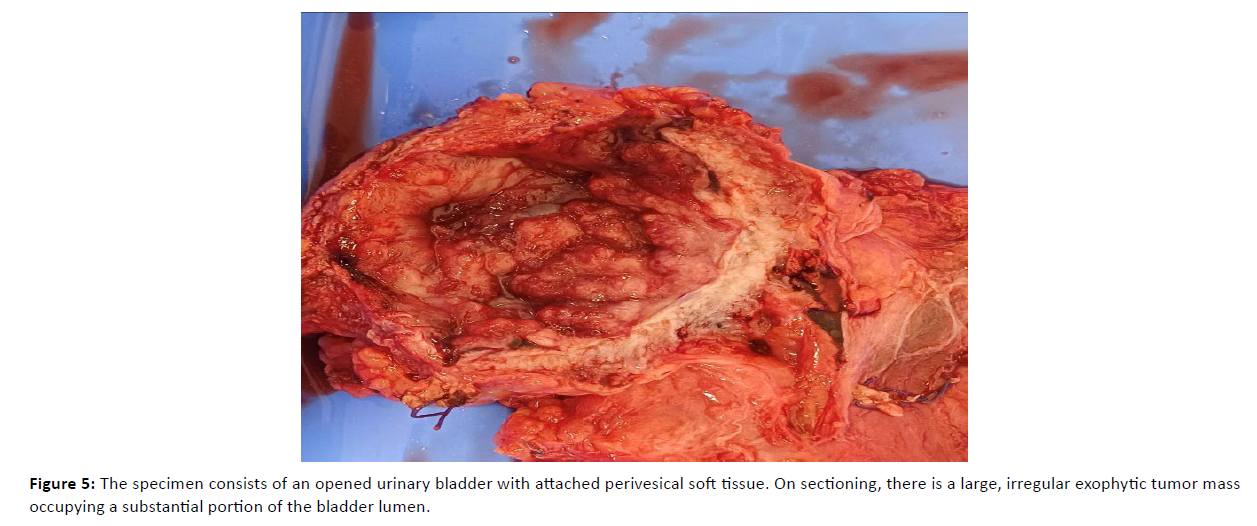
Figure 5: The specimen consists of an opened urinary bladder with attached perivesical soft tissue. On sectioning, there is a large, irregular exophytic tumor mass occupying a substantial portion of the bladder lumen.
DISCUSSION
Our study confirms a strong association between smoking and bladder cancer, consistent with epidemiological data demonstrating a three- to fourfold increased risk [1-3]. A key finding is the early initiation of smoking, supporting previous studies showing increased susceptibility to carcinogens during adolescence [4,5]. Smoking was also associated with aggressive tumor characteristics, including high-grade and invasive disease. This aligns with previous findings that smoking contributes to tumor progression and worse outcomes [2,3,6]. Rink et al. demonstrated that smoking predicts recurrence and progression in NMIBC [6], while meta-analyses confirm these associations [7]. Smoking cessation remains crucial. Evidence shows that quitting reduces recurrence risk [6,8], although risk does not fully normalize.
STRENGTHS
- Single-center consistency
- Uniform surgical management
- Long observation period
LIMITATIONS
- Retrospective design
- Small sample size
- Self-reported smoking data
- Lack of environmental exposure analysis
CONCLUSION
Smoking is a major risk factor for the development and progression of bladder cancer. Our findings highlight the impact of early initiation and prolonged exposure on tumor aggressiveness. Despite study limitations, the results emphasize the importance of smoking cessation as a key component of bladder cancer management and prevention strategies.
References
- Freedman ND, Silverman DT, Hollenbeck AR, Schatzkin A, Abnet CC. Association Between Smoking and Risk of Bladder Cancer Among Men and Women. JAMA. 2011; 306:737–745.
[Crossref], [Google Scholar], [PubMed]
- Burger M, Catto JWF, Dalbagni G. Epidemiology and Risk Factors of Urothelial Bladder Cancer. Eur Urol. 2013; 63:234–241.
[Crossref], [Google Scholar], [PubMed]
- Cumberbatch MGK, Rota M, Catto JWF, La Vecchia C. The Role of Tobacco Smoke in Bladder and Kidney Carcinogenesis: A Comparison of Exposures and Meta-analysis of Incidence and Mortality Risks. Eur Urol. 2016; 70:458–466.
[Crossref], [Google Scholar], [PubMed]
- Brennan P, Bogillot O, Cordier S. Cigarette smoking and bladder cancer in men: A pooled analysis of 11 case-control studies. Int J Cancer. 2000; 86:289–294.
[Crossref], [Google Scholar]
- Zeegers MPA, Tan FES, Dorant E, van den Brandt PA. The impact of characteristics of cigarette smoking on urinary tract cancer risk. Cancer. 2000; 89:630–639.
[Crossref], [Google Scholar]
- Rink M, Xylinas E, Babjuk M. Impact of smoking on oncologic outcomes of upper tract urothelial carcinoma after radical nephroureterectomy. J Urol. 2012; 188:124–130.
[Crossref], [Google Scholar], [PubMed]
- Malats N. J Cancer Res Clin Oncol. 2023.
- Crivelli JJ, Xylinas E, Kluth LA. Effect of Smoking on Outcomes of Urothelial Carcinoma: A Systematic Review of the Literature. Eur Urol. 2014; 65:742–754.
[Crossref], [Google Scholar], [PubMed]