Review Article - Onkologia i Radioterapia ( 2026) Volume 20, Issue 3
The Double-Faced Nature of Nanomaterials: The Latest Developments and Outlook on Janus Nanoparticles
S. Alexandar1, Samson Isarel Deta2, Hari Veluru3, Kommu Pradeep4, Vamseekrishna Gorijavolu5, A Tejasri6 and Dileep Kumar Garnipudi7*2Professor, Department of Pharmacy, Komar University, Iraq
3Associate Professor, Pharmacology, MB School of Pharmaceutical Sciences, Mohan Babu University, A Rangam Peta, Tirupati, Andhra Pradesh, India
4Assistant Professor, Faculty of health and sciences, Villa College, Maldives
5Professor, Department of pharmaceutical Analysis, School of pharmacy, Dr. RVR NRIIT Deemed to Be University, Agiripalli, Vijayawada Rural, India
6Assistant Professor, Department of Pharmaceutical Chemistry, School of Pharmacy, Anurag University, India
7Research Scholar, MB School of Pharmaceutical Sciences, Mohan Babu University, A Rangam Peta, Tirupati, AndhraPradesh, India
Dileep Kumar Garnipudi, Research Scholar, MB School of Pharmaceutical Sciences, Mohan Babu University, A Rangam Peta, Tirupati, AndhraPradesh, India, Email: dileepkumargarnipudi@gmail.com
Received: 08-Dec-2025, Manuscript No. OAR-25-176481; , Pre QC No. OAR-25-176481 (PQ); Editor assigned: 11-Dec-2025, Pre QC No. OAR-25-176481 (PQ); Reviewed: 19-Mar-2026, QC No. OAR-25-176481; Revised: 25-Mar-2026, Manuscript No. OAR-25-176481 (R); Published: 31-Mar-2026
Abstract
Janus nanoparticles (JNPs) are a kind of nanomaterial that has two or more distinct physical or chemical properties on different parts of the same particle. They are named after the Roman god Janus, who possessed two faces. JNPs have unique advantages in medication delivery, catalysis, self-assembly, diagnostics, and other areas since their structure and composition are not always the same. This study looks at the most recent developments in the creation, characterization, and use of Janus nanoparticles. We also discuss about the issues and possibilities that lay ahead for research and growth, as well as how they can accomplish so many various things.
Keywords
Metastatic Pulmonary Calcification; Chronic Kidney Disease; Haemodialysis; Diffuse Pulmonary Infiltrates; Metabolic Alkalosis
INTRODUCTION
Janus nanoparticles are anisotropic particles with two or more chemically or physically distinct regions within the same structure. Named after the two-faced Roman god Janus, they differ from conventional isotropic nanoparticles because they can combine varied surface chemistries, compositions, wettability, magnetic properties, optical behavior, or biological functions in one nanoscale system [1, 2]. This asymmetry gives them orientation-dependent interactions and enables multifunctional performance that is difficult to achieve with uniformly functionalized nanoparticles [2â3]. The concept of Janus particles gained attention after de Gennes introduced the idea of “Janus grains,” and research has since expanded due to their unique interfacial behavior, self-assembly ability, and multifunctionality [2â4]. Janus nanoparticles may be polymeric, inorganic, or hybrid organic-inorganic and they can exist in spherical, dumbbell-like, cylindrical, disk-like, or more complex forms [2]. Their dual architecture allows different parts of the same particle to perform separate functions, making them useful in drug delivery, bio sensing, catalysis, imaging, emulsion stabilization, and environmental applications [1â3].
Recent advances in synthesis methods, including seeded growth, phase separation, masking, Pickering emulsion techniques, template-assisted synthesis, microfluidics, and self-assembly, have improved control over Janus nanoparticle morphology and functionality [1â3],[5]. These developments have enabled the preparation of polymeric, magnetic, and hybrid Janus systems for applications such as bio-imaging, cancer therapy, Theranostics, sensing, catalysis, pollutant removal, and oil-water separation [5â8].
Despite their advantages, Janus nanoparticles still face challenges related to scalable synthesis, reproducibility, size uniformity, long-term stability, toxicity, and biocompatibility [1, 3, 7]. Therefore, this review discusses their structure, synthesis, characterization, applications, limitations, and future prospects as multifunctional nanomaterials.
Structural and Functional Classification
Janus nanoparticles can be classified based on their geometry, composition, functional domains, surface properties, and applications. Structurally, they may be spherical, dumbbell like, snowman-shaped, rod-like, disc-like, core shell-like, or branched. Binary Janus nanoparticles contain two distinct regions, while ternary or higher-order systems contain three or more functional domains. This structural separation allows different parts of the same particle to perform different roles, such as drug loading, targeting, imaging, magnetic guidance, or catalytic activity [9, 11].
Based on composition, Janus nanoparticles may be polymeric, metallic, magnetic, mesoporous, carbon-based, metal oxide, or hybrid organic-inorganic systems. Magnetic Janus nanoparticles often contain FeâOâ for magnetic separation or guidance, while mesoporous and hybrid systems are useful for drug delivery, catalysis, and environmental applications [10, 11]. Functionally, Janus nanoparticles may show hydrophilic-hydrophobic, magnetic-nonmagnetic, optical therapeutic or catalytic support behaviour. Their amphiphilic nature makes them especially useful for Pickering emulsions, oil-water separation, controlled release, and interfacial catalysis [12â15] [Table 1], [Figure 1].
| Classification basis | Major types | Key feature |
|---|---|---|
| Geometry | Spherical, dumbbell-like, rod-like, disc-like, branched | Based on particle shape and domain arrangement |
| Number of domains | Binary, ternary, higher-order | Contains two or more functional regions |
| Composition | Polymeric, metallic, magnetic, mesoporous, hybrid | Based on materials used in each domain |
| Surface property | Hydrophilic–hydrophobic, magnetic–nonmagnetic, charged–neutral | Each side shows different surface behavior |
| Biomedical function | Drug delivery, imaging, targeting, antibacterial therapy | Combines therapeutic and diagnostic roles |
| Environmental function | Oil–water separation, demulsification, pollutant removal | Uses amphiphilic or magnetic properties |
| Catalytic function | Dual-site or tandem catalysts | Spatially separated active sites improve reactions |
Table 1: Classification of Janus Nanoparticles
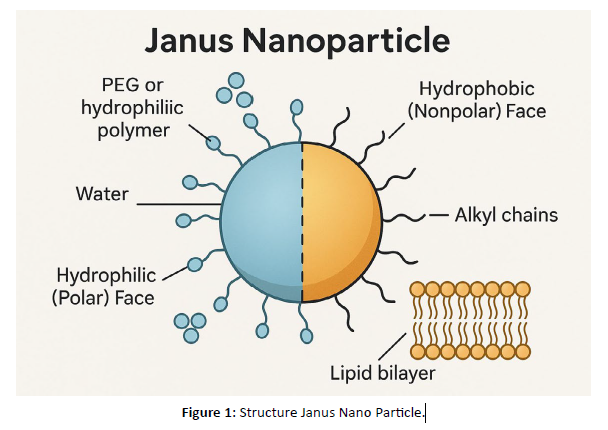
Figure 1: Structure Janus Nano Particle.
Synthesis Approaches
The synthesis of Janus nanoparticles is more complex than conventional nanoparticle preparation because two or more distinct domains must be formed within the same particle. Effective synthesis requires control over particle size, shape, surface chemistry, interfacial energy, and spatial separation of functional regions. Common methods include phase separation, masking and selective functionalization, Pickering emulsion techniques, seed-mediated growth, microfluidic synthesis, template-assisted fabrication, self-assembly, and electro hydrodynamic co-jetting [16â18].
Phase separation is widely used for polymeric Janus nanoparticles, where ifmmiscible polymers or phases separate during droplet solidification or solvent evaporation. Masking and Pickering emulsion methods allow selective modification of one side of a particle, making them useful for amphiphilic Janus systems [19,20]. Seed-mediated growth is commonly used for inorganic and hybrid Janus nanoparticles, where a second material grows asymmetrically on a preformed seed [21]. Microfluidic and template-assisted methods provide better control over size, shape, and compartmentalization, while self-assembly and electro hydrodynamic co-jetting are useful for soft, polymeric, and biomedical Janus systems [22â25] [Table 2].
| Synthesis approach | Principle | Main advantage |
|---|---|---|
| Phase separation | Immiscible phases separate during particle formation | Simple and useful for polymeric Janus nanoparticles |
| Masking and selective functionalization | One side is protected while the exposed side is modified | Provides controlled surface asymmetry |
| Pickering emulsion method | Particles are positioned at oil–water or wax–water interfaces | Useful for amphiphilic Janus particles |
| Seed-mediated growth | A second material grows asymmetrically on a seed particle | Suitable for inorganic, magnetic, and plasmonic systems |
| Microfluidic synthesis | Controlled flow creates compartmentalized particles | Offers precise control over size and structure |
| Template-assisted synthesis | Templates guide sequential deposition or polymerization | Useful for Janus rods and wires |
| Self-assembly | Amphiphilic molecules or polymers organize into asymmetric particles | Useful for soft and biocompatible systems |
| Electrohydrodynamic co-jetting | Two polymer solutions are co-jetted under an electric field | Produces biphasic particles with nanoscale anisotropy |
Table 2: Major Synthesis Approaches for Janus Nanoparticles
Characterization Techniques
Characterization of Janus nanoparticles requires multiple analytical methods because their key feature is not only nanoscale size but also asymmetric structure. A single technique is usually not enough to confirm true Janus morphology. Therefore, microscopy, spectroscopy, surface analysis, particle-size analysis, and functional testing are commonly used together to study morphology, elemental distribution, surface chemistry, crystallinity, charge, stability, and application-specific behaviour.
TEM and SEM are widely used to observe particle size, shape, surface morphology, and domain separation. EDS or EDX elemental mapping helps confirm whether different elements are located in separate regions of the same particle, while XPS, FTIR, and XRD are used to analyses surface composition, functional groups, and crystalline phases [26, 27]. DLS and zeta potential analysis provide information about hydrodynamic size, size distribution, surface charge, and colloidal stability; although they should be combined with microscopy because they cannot independently prove Janus asymmetry [27, 28]. For biomedical and functional Janus systems, CLSM, fluorescence microscopy, VSM, contact-angle analysis, and application-specific tests are used to evaluate cellular uptake, imaging ability, magnetic response, wettability, catalytic activity, drug release, or pollutant removal [29â31].
Applications of Janus Nanoparticles
Janus nanoparticles are useful in many fields because their two different domains can perform separate but complementary functions. In biomedical systems, their anisotropic structure can help combine drug loading, targeting, imaging, and stimuli-responsive release in one platform. Anisotropic drug delivery systems are especially attractive because their shape, surface chemistry, and compartmentalized structure can influence cellular uptake, circulation, and therapeutic performance [32]. Janus nanoparticles have also been explored for antibacterial therapy, where hydrophilic and hydrophobic compartments can carry different therapeutic agents for combined treatment effects [33].
In catalysis and energy-related applications, Janus nanoparticles are valuable because their different surfaces can act at interfaces or provide separated active sites. For example, photic-responsive Janus nanoparticles have been reported as interfacial catalysts for efficient biodiesel preparation [34]. In environmental applications, Janus structures are useful for oil-water separation, emulsification, pollutant adsorption, and photocatalytic degradation. A solar-driven Nano cellulose Janus aerogel showed dual functions for oil-water separation and degradation of organic pollutants [35].
Janus nanoparticles are also important in sensing, imaging, and advanced responsive materials. Plasmonic Janus particles can show optical, magnetic, and photo thermal responses, making them useful for bio sensing, phototherapy, and nanoscale manipulation [36]. Their amphiphilic nature also makes them effective stabilizers for emulsions and self-assembled structures, which is useful in nanofabrication, coatings, delivery systems, and smart materials [37].
CHALLENGES AND LIMITATIONS
Although Janus nanoparticles show strong potential in biomedical, catalytic, environmental, and interfacial applications, their practical use is still limited by several scientific and technical challenges. One major limitation is synthesis control. Janus nanoparticles require precise control over particle size, morphology, surface chemistry, and domain separation, but many fabrication methods are still complex, multistep, and difficult to reproduce on a large scale [38, 39]. Reliable large-scale preparation is especially important because current methods do not always allow systematic production of Janus particle libraries with different compositions and morphologies for property screening [38].
Another important challenge is colloidal stability and long-term performance. Janus nanoparticles are often used in complex media such as biological fluids, oil-water interfaces, wastewater, or catalytic reaction systems. In these environments, aggregation, loss of surface functionality, uncontrolled protein adsorption, or changes in wettability can reduce their performance. For biomedical applications, long-term aqueous stability is particularly important, and surface modification is often required to maintain dispensability and preserve Janus character [38]. Recent biomedical reviews also identify biocompatibility, stability, and scalability as major barriers for clinical translation of Janus particles [40].
Toxicity, biodegradability, and environmental safety are also major concerns. Some Janus nanoparticles contain inorganic metals, synthetic polymers, or non-degradable components that may cause unknown biological or ecological effects. For this reason, more attention is being given to biocompatible, biodegradable, and sustainable Janus materials. Green chemistry-based design, recovery, recycling, and reuse are important future requirements, especially for environmental and biomedical applications [41]. In addition, the number of studies on environmentally friendly and sustainable Janus particle applications is still smaller than the broader literature on Janus particle synthesis and general applications, showing that sustainability remains an underdeveloped area [41].
Finally, application-specific translation remains difficult. For drug delivery, imaging, and bio-sensing, Janus nanoparticles must show safety, reproducibility, controlled biodistribution, and clear advantages over conventional Nano-carriers. For catalysis and environmental remediation, they must remain active, recoverable, reusable, and cost-effective under real operating conditions. Therefore, future research should focus not only on designing more complex Janus structures, but also on improving scalable synthesis, reproducibility, safety evaluation, regulatory readiness, and real-world performance testing [39â42].
CONCLUSION
Janus nanoparticles represent an important class of advanced nanomaterials because they combine two or more different structural, chemical, or functional domains within a single particle. This dual-faced nature gives them properties that are not usually possible in conventional isotropic nanoparticles, including directional interactions, selective surface activity, multifunctionality, and improved performance at biological, catalytic, and environmental interfaces. Their ability to integrate functions such as drug loading, targeting, imaging, magnetic response, catalytic activity, and amphiphilic behaviour makes them highly valuable for applications in medicine, bio-sensing, catalysis, energy systems, oil-water separation, pollutant removal, and smart material design.
Recent developments in synthesis methods, including phase separation, seed-mediated growth, Pickering emulsion techniques, masking, template-assisted fabrication, microfluidics, and self-assembly, have improved the control of Janus nanoparticle morphology and composition. At the same time, advanced characterizations techniques such as TEM, SEM, EDX mapping, XPS, DLS, zeta potential analysis, XRD, FTIR, CLSM, and VSM have made it possible to better understand their asymmetric structure and functional behaviour. However, important challenges remain, especially in scalable production, reproducibility, long-term stability, toxicity evaluation, biocompatibility, cost, and real-world validation.
Overall, Janus nanoparticles provide a promising platform for the development of next-generation multifunctional nanomaterials. Future research should focus on greener and scalable synthesis, safer biodegradable materials, improved surface stability, reliable in vivo and environmental safety studies, and stronger translation from laboratory research to clinical and industrial applications. With continued progress in material design, computational modelling, and application-specific testing, Janus nanoparticles are expected to play a significant role in targeted therapy, diagnostics, sustainable catalysis, environmental remediation, and intelligent responsive systems. This conclusion is aligned with the scope of your uploaded manuscript on Janus nanoparticles.
REFERENCES
- Li Y, Liu F, Demirci S, Dey UK, Rawah T, et al. Two sides of the coin: Synthesis and applications of Janus particles. Nanoscale. 2025;17:88-112. Crossref, Google Scholar
- Hu J, Zhou S, Sun Y, Fang X, Wu L. Fabrication, properties and applications of Janus particles. Chemical Society Reviews. 2012;41:4356-4378. Crossref, Google Scholar
- Zhang J, Grzybowski BA, Granick S. Janus particle synthesis, assembly, and application. Langmuir. 2017;33:6964-6977. Crossref, Google Scholar
- Jiang S, Chen Q, Tripathy M, Luijten E, Schweizer KS, et al. Janus particle synthesis and assembly. Advanced Materials. 2010;22:1060-1071. Crossref, Google Scholar
- Fan X, Yang J, Loh XJ, Li Z. Polymeric Janus nanoparticles: Recent advances in synthetic strategies, materials properties, and applications. Macromolecular Rapid Communications. 2019;40:1800203. Crossref, Google Scholar
- Madadi M, Khoee S, Bulte JWM. Magnetite-based Janus nanoparticles, their synthesis and biomedical applications. WIREs Nanomedicine and Nanobiotechnology. 2023;15:e1908. Crossref, Google Scholar
- Gharehbaba AM, Omidi Y, Barar J, Eskandani M, Adibkia K. Innovative horizons in cancer therapy, imaging, and sensing with Janus nanoparticles: A comprehensive review. TrAC Trends in Analytical Chemistry. 2024;178:117822. Crossref, Google Scholar
- Vafaeezadeh M, Thiel WR. Task-specific Janus materials in heterogeneous catalysis. Angewandte Chemie International Edition. 2022;61:e202206403. Crossref, Google Scholar
- Zhang L, Chen Y, Li Z, Li L, Saint-Cricq P, et al. Tailored synthesis of octopus-type Janus nanoparticles for synergistic actively-targeted and chemo-photothermal therapy. Angewandte Chemie International Edition. 2016;55:2118-2121. Crossref, Google Scholar
- Zong J, Li Y, Zhou X, Yu J, Xu Y, et al. Partial silica encapsulation of FeâOâ nanoparticles in reverse emulsion by internal energy modulation. Chemistry of Materials. 2021;33:8460-8468. Crossref, Google Scholar
- Yu Y, Lin R, Yu H, Liu M, Xing E, et al. Versatile synthesis of metal-compound based mesoporous Janus nanoparticles. Nature Communications. 2023;14:4249. Crossref, Google Scholar
- Wang H, Xie S, Huang S, Zhang H, Xiao M, et al. Amphiphilic Janus nanoparticles with controlled composition and wettability for Pickering emulsion with controllable movement and release. Colloids and Surfaces A. 2024;702:135030. Crossref, Google Scholar
- Chen X, Fan Q, Li K, Li W, Wang L, et al. Amphiphilic Janus nanoparticles for nitric oxide synergistic photodynamic eradication of MRSA biofilms. Biomaterials Science. 2024;12:964-977. Crossref, Google Scholar
- Xu Y, Cheng L, Wang Y, Jia H. Facile synthesis of novel magnetic Janus graphene oxide for efficient and recyclable demulsification of crude oil-in-water emulsion. Molecules. 2024;29:3307. Crossref, Google Scholar
- Cui Z, Zhao P, Wang H, Li C, Peng W, et al. Tandem effect promotes MXene-supported dual-site Janus nanoparticles for high-efficiency nitrate reduction to ammonia and energy output through Zn-nitrate battery. Advanced Functional Materials. 2024;34:2410941. Crossref, Google Scholar
- Zhang X, Fu Q, Duan H, Song J, Yang H. Janus nanoparticles: From fabrication to (bio)applications. ACS Nano. 2021;15:6147-6191. Crossref, Google Scholar
- Lattuada M, Hatton TA. Synthesis, properties and applications of Janus nanoparticles. Nano Today. 2011;6:286-308. Crossref, Google Scholar
- Song Y, Chen S. Janus nanoparticles: Preparation, characterization, and applications. Chemistry—An Asian Journal. 2014;9:418-430. Crossref, Google Scholar
- Xie H, She ZG, Wang S, Sharma G, Smith JW. One-step fabrication of polymeric Janus nanoparticles for drug delivery. Langmuir. 2012;28:4459-4463. Crossref, Google Scholar
- Perro A, Meunier F, Schmitt V, Ravaine S. Production of large quantities of “Janus” nanoparticles using wax-in-water emulsions. Colloids and Surfaces A. 2009;332:57-62. Crossref, Google Scholar
- Jin C, Qu Y, Wang M, Li J, Guo R. Aqueous solution-based FeâOâ seed-mediated route to hydrophilic FeâOâ–Au Janus nanoparticles. Langmuir. 2016;32:4595-4601. Crossref, Google Scholar
- Yang S, Guo F, Kiraly B, Mao X, Lu M, et al. Microfluidic synthesis of multifunctional Janus particles for biomedical applications. Lab on a Chip. 2012;12:2097-2102. Crossref, Google Scholar
- Huang X, Mutlu H, Dong W, Theato P. Polymeric Janus nanorods via anodic aluminum oxide templating. Soft Matter. 2023;19:5663-5667. Crossref, Google Scholar
- Walther A, Müller AHE. Janus particles: Synthesis, self-assembly, physical properties, and applications. Chemical Reviews. 2013;113:5194-5261. Crossref, Google Scholar
- Roh KH, Martin DC, Lahann J. Biphasic Janus particles with nanoscale anisotropy. Nature Materials. 2005;4:759-763. Crossref, Google Scholar
- Kudryavtseva V, Sukhorukov GB. Features of anisotropic drug delivery systems. Advanced Materials. 2024;36:2307675. Crossref, Google Scholar
- Chen X, Fan Q, Li K, Li W, Wang L, et al. Amphiphilic Janus nanoparticles for nitric oxide synergistic photodynamic eradication of MRSA biofilms. Biomaterials Science. 2024;12:964-977. Crossref, Google Scholar
- Li M, Zhang R, Jia C, Liu Z, Liu Y, et al. Novel photic responsive Janus nanoparticles: Interfacial catalysts for efficient preparation of biodiesel. Fuel. 2024;375:132671. Crossref, Google Scholar
- Chen X, Fan Q, Li K, Li W, Wang L, et al. A solar-driven nanocellulose Janus aerogel with excellent floating stability and dual functions of oil–water separation and photocatalytic degradation of organic pollutants. International Journal of Biological Macromolecules. 2024;278:134698. Crossref, Google Scholar
- Koya AN, Sapunova A, Sanamreddy NR, Zou Y, Ma Q, et al. Plasmonic Janus particles: A perspective on optical manipulation and biomedical applications. Journal of Applied Physics. 2025;137:210901. Crossref, Google Scholar
- Agrawal G, Agrawal R, Pich A. Janus nanoparticles: Recent advances in their interfacial and biomedical applications. ACS Applied Nano Materials. 2019;2:5990-6002. Crossref, Google Scholar
- Kudryavtseva V, Sukhorukov GB. Features of anisotropic drug delivery systems. Advanced Materials. 2024;36:2307675. Crossref, Google Scholar
- Chen X, Fan Q, Li K, Li W, Wang L, et al. Amphiphilic Janus nanoparticles for nitric oxide synergistic photodynamic eradication of MRSA biofilms. Biomaterials Science. 2024;12:964-977. Crossref, Google Scholar
- Li M, Zhang R, Jia C, Liu Z, Liu Y, et al. Novel photic responsive Janus nanoparticles: Interfacial catalysts for efficient preparation of biodiesel. Fuel. 2024;375:132671. Crossref, Google Scholar
- Chen X, Yang M, An L, He J, Lai K, et al. A solar-driven nanocellulose Janus aerogel with excellent floating stability and dual functions of oil–water separation and photocatalytic degradation of organic pollutants. International Journal of Biological Macromolecules. 2024;278:134698. Crossref, Google Scholar
- Koya AN, Sapunova A, Sanamreddy NR, Zou Y, Ma Q, et al. Plasmonic Janus particles: A perspective on optical manipulation and biomedical applications. Journal of Applied Physics. 2025;137:210901. Crossref, Google Scholar
- Agrawal G, Agrawal R, Pich A. Janus nanoparticles: Recent advances in their interfacial and biomedical applications. ACS Applied Nano Materials. 2019;2:5990-6002. Crossref, Google Scholar
- Schick I, Lorenz S, Gehrig D, Schilmann AM, Bauer H, et al. Inorganic Janus particles for biomedical applications. Beilstein Journal of Nanotechnology. 2014;5:2346-2362. Crossref, Google Scholar
- Kirillova A, Marschelke C, Synytska A. Hybrid Janus particles: Challenges and opportunities for the design of active functional interfaces and surfaces. ACS Applied Materials & Interfaces. 2019;11:9643-9671. Crossref, Google Scholar
- Mofrad YM, Asiaei S, Shaygani H, Zarei F, Allahyari S, et al. An extensive review of Janus particle applications: Focusing on medical diagnostics and therapeutic. Next Materials. 2025;9:101322. Crossref, Google Scholar
- Marschelke C, Fery A, Synytska A. Janus particles: From concepts to environmentally friendly materials and sustainable applications. Colloid and Polymer Science. 2020;298:841-865. Crossref, Google Scholar
- Peng Z, Huang J, Guo Z. Anisotropic Janus materials: From micro-/nanostructures to applications. Nanoscale. 2021;13:18839-18864. Crossref, Google Scholar