Research Article - Onkologia i Radioterapia ( 2026) Volume 20, Issue 6
Electronic portal imaging device-based quantitative quality assurance of millennium MLC via dosimetric Picket-Fence analysis
M. Driouch1,2*, Y. Adib3, Adeb A.S.A. Almaamari4,5, M. Rachikh2, E. Chakir1 and E. Al Ibrahm12IBN SINA Specialized Clinic, Kenitra, Morocco
3Department of Science, Mohammed V University, Rabat, Morocco
4Department of Radiotherapy, National Institute of Oncology, Mohammed V University, Rabat, Morocco
5Department of Medicine, Mohammed V University, Rabat, Morocco
M. Driouch, Department of Sciences, Ibn Tofail University, Kenitra, Morocco, Email: mustapha.driouch@uit.ac.ma M. Driouch, IBN SINA Specialized Clinic, Kenitra, Morocco, Email: mustapha.driouch@uit.ac.ma
Received: 15-Apr-2026, Manuscript No. OAR-26-192521; , Pre QC No. OAR-26-192521 (PQ); Editor assigned: 17-Apr-2026, Pre QC No. OAR-26-192521 (PQ); Reviewed: 01-May-2026, QC No. OAR-26-192521; Revised: 15-Jun-2026, Manuscript No. OAR-26-192521 (R); Published: 22-Jun-2026
Abstract
The Multi-leaf collimator is the key component for intensity-modulation-based radiotherapy treatment planning. Numerous errors and uncertainties in leaf position can impact the delivered dose distribution. Our work aims to implement an objective, user-experience-independent approach to efficient MLC quality control. A picket fence test with 9 sweeping gaps was planned in the treatment planning system and delivered on the aS1000 electronic portal imaging device. The output was compared to the TPS calculations using 3%/2 mm gamma passing rate acceptance criterion. The effects of dose rate, collimator rotation angle, and gantry rotation angle on leaf alignment accuracy, beam output, and reproducibility were investigated. We first notice that GPR increases for 400 MU/min compared to 200 and 600 MU/min, because it is the nominal dose rate of our accelerator. Second, the GPR decreased significantly with collimator rotation from 0° to 270°, highlighting the impact of rotation on leaf position accuracy. In addition, the global GPR decreased markedly with gantry rotation, demonstrating the effect of gravity on the entire mechanical system. The procedure we proposed can be easily implemented with no additional equipment and could provide an objective approach to help medical physicists track the mechanical performance of the MLC over time by comparing daily measurements to a pre-established baseline.
Keywords
Multi-leaf collimator; Picket Fence; EPID; Gamma-passing rate; Quality assurance; VMAT
Introduction
Radiation therapy is currently the principal treatment for solid cancers [1]. This technique uses the X-ray dose distribution calculated from the patient anatomy provided by Computed Tomography (CT) images acquired before treatment. After all volumes of interest have been contoured, including the main tumor volume with additional clinical margins (i.e., GTV, CTV, and PTV), which is the principal target volume to be eradicated, in addition to surrounding Organs-at-Risk (OAR) that must be protected as much as possible [2]. Medical physics determines the optimal dose distribution based on the counter volumes by optimizing the contribution of each planning parameter. This includes gantry and beam angles, gantry rotation speed, collimator rotation angles, beam apertures, dose rate, beam weight etc. This process was completely manual, referring to 3D-Conformal Radiation Therapy (3D-CRT), which uses predefined, specific parameters and is called forward planning [3]. Today, with technological advances in Treatment Planning Systems (TPS) and dose calculation algorithms, and software capabilities. The treatment planning became more efficient, in terms of dose escalation and OAR sparing, through the integration of inverse planning, in which the medical physicist lists dosimetric goals and the TPS finds the optimal combination of all aforementioned parameters. This novel approach makes all parameters variable, meaning a variable dose rate at each control point, full gantry rotation in the form of an arc rather than a single angle, and variable beam apertures rather than predefined shapes [4].
The Multi-Leaf Collimator (MLC) is one of the most complex components of a medical Linear Accelerator (LINAC), consisting of two opposed banks of independent leaves. Each leaf is connected to its own motor, making it move synchronously with gantry rotation around the patient. The main role of the MLC is to produce X-ray beams with the same shape as the target while protecting healthy tissues, as shown in Figure 1 below [5,6]. The mechanical and technological evolution in MLC manufacturing enables the adoption of advanced treatment planning techniques, such as intensity-modulated radiotherapy, Volumetric Modulated Arc Therapy (VMAT), and Stereotactic Body Radiotherapy (SBRT) [7].
These treatment techniques, especially SBRT, require greater accuracy in the delivered treatment plan compared to the planned plan, which necessitates superior quality control protocols for clinical implementation [8]. These Quality Assurance (QA) tests can be split into two main categories, plan and machine QA. Plan quality assurance, also known as Patient-Specific Quality Assurance (PSQA), consists of measuring the delivered treatment plan and comparing it to the TPS calculation using the Gamma-Passing Rate (GPR) approach by calculating the γ-index [9,10]. Machine QA refers to periodic controls that must be conducted for each component separately to ensure long-term, robust performance of the entire process [11]. The American Association of Physicist in Medicine by the Task-Group reports 142 [12] and 198 [13] established an end-to-end process for mechanical test to be performed for each component with tolerances to be respected. Examples of the possible tests to be periodically implemented, includes Spock Shot [14] test that aims to verify the MLC rotation angle, Picket Fence [15] that aims to verify MLC leaves alignment.
As shown in the Figure 1, the MLC is the main beam shaping device used in actual LINACs. Mechanical uncertainties in each leaf can modify the beam shape, leading to a delivered dose that differs from the prescription [16]. For this reason, efficient MLC QA programs have to be clinically implemented. Previous studies used 2D radiochromic and gafchromic films to verify the performance of the MLC due to their higher resolution [15]. In our previous study, we used the OCTAVIUS-4D phantom to perform a userindependent assessment of the Elekta Agility MLC [17]. I. Sumida et al. [18] published one of the first works on the use of EPID for MLC QA purpose. They used EPID to assess the robustness of MLC performance as a function of 4 gantry rotation angles, repeated 4 times over 1 month, to investigate reproducibility. J. Richart et al. [19] published the first work on the use of EPID system for dynamic MLC QA. They performed 4 main tests, namely the EPID signal, the Garden fence test, the Sweeping slit test, and the Leaf speed test, on 80 leaves of Millennium MLC using a Varian aS500 EPID system. In our recent work, we aim to conduct a picket fence test using EPID system to establish a userindependent analysis. We also investigated the impact of gantry angle, dose rate, and collimator angle on the accuracy of MLC leaves positions.
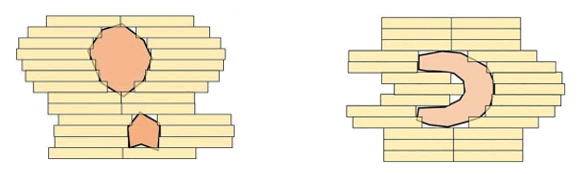
Fig. 1. Real-world examples demonstrating the clinical utility of the multi-leaf collimator, by focusing the X-ray beam only on the tumor volume and protecting as much as possible the surrounding organs-at-risk, thanks to independent moving leaves.
Materials and Methods
Millennium MLC characterization
The High Definition Linac (HDL) Varian Clinac 2300IX linear accelerator in our radiotherapy department is equipped with a Millennium multi-leaf collimator, with 60 thin, 6.5 cm-high leaves per bank [20]. Leaves have widths of 0.5 cm and 0.25, distributed as 14-32-14, with widths 0.5-0.25-0.5 cm, respectively, with a maximum field of 40 cm × 40 cm [21]. This geometry is dedicated to delivering advanced, high-quality treatment plans such as VMAT and SBRT. Millennium MLC is characterized by a rounded leaf end of 8.0cm radius and 2.5 cm/s velocity and 50 cm/s/s acceleration [20]. One of the main characteristics of our accelerator is the nominal dose rate of 400 MU/min (Figure 2).
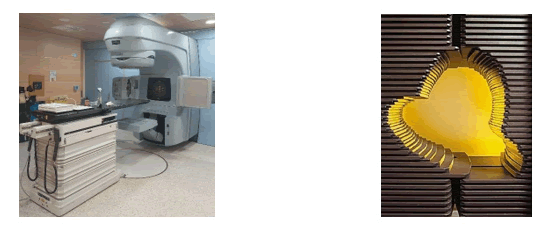
Fig. 2. Real-world demonstration of the Varian Clinac 2300IX linear accelerator, dotted with Millennium MLC with 120 independent leaves. In addition to the aS1000 EPID system.
aS1000 EPID system
Traditional MegaVoltage (MV) on-board imagers, such as the Elekta iViewGT panel, are used to provide 2D images of internal and bony structures for positioning purposes before the start of the treatment session [22]. Recently, these imagers became not only used for positioning purpure but also for dose delivery tracking and control in Patient-Specific Quality Assurance (PSQA) context [23] and can also be used for in vivo dosimetry, that requires a prior calibration between the EPID system and a known absorbed dose [24,25]. The Clinac 2300IX LINAC in the radiotherapy department of our institute is equipped with an aS1000 Electronic Portal Imaging Device (EPID), mainly used for dose delivery control. The aS1000 EPID system, studied in our work, is made amorphous silicon and has a 40 × 30 cm2 active detector area with 1024 × 768 pixels (spatial resolution 0.039 cm) [26].
γ-index for beam output analysis
Gamma-Passing Rate (GPR) is the worldwide-accepted approach for treatment Plan Quality Assurance (PSQA) for intensitymodulated plans [9]. It consists of comparing the TPS-calculated dose distribution with the machine-delivered dose. It is conducted on a 2D detector array plugged into a phantom geometry to simulate patient anatomy, such as PTW Octavius-4D [27] and IBA MatriXX [28]. GPR is obtained by calculating the well-known γ-index first proposed by D. Low et al. in 1998 [29], given by the equation, based on two criteria: Distance-to-Agreement (DTA) Ξ δd, and Dose Difference (DD) Ξ δD.
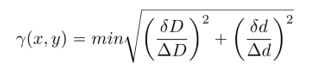
δd and δD are the numerical differences between pixels in terms of distance and dose, respectively. Δd and ΔD distance and dose criteria (e.g. 3%/3 mm, 2%/2 mm).
In our present work, we adopt the same analysis process. We previously calculated all tests we would perform in the TPS as part of normal treatment plans. These plans will be delivered to the EPID and analyzed against TPS calculations. This approach reduces the dependency to user and medical physicist experience- based analysis and make the process more objective.
Study design
Mainly, millennium MLC performance was evaluated using the famous picket fence test, which consists of numerous rectangular sweeping gaps that move from left to right or in reverse. These gaps should have specific widths and motion speeds to investigate the alignment accuracy of the collimator leaves. In this work, we planned the picket fence test in an Eclipse v15.5 Treatment Planning System (TPS) and compared it with the delivered plan, following the same PSQA procedure. The test we planned consists of 9 sweeping gaps, each 10 cm high and 3/5 mm wide. A total of 900 MU was assigned to the entire plan, with equal weighting across all gaps, each receiving 100 MU. The Figure 3 below gives a demonstration of the workflow we adopted. The effect of 3 main optimization parameters was investigated, including progressive dose rate (i.e., 200, 400, and 600 MU/min), collimator rotation angle (i.e., Colli°=0°, 90°, and 270°), and lastly the effect of gantry rotation with G°=0°, 90°, 180°, and 270°. This combination of optimization parameters, usually used for treatment planning, aims to investigate the effects of each component on leaf position accuracy at the hand and in the beam output, compared to TPS calculations.
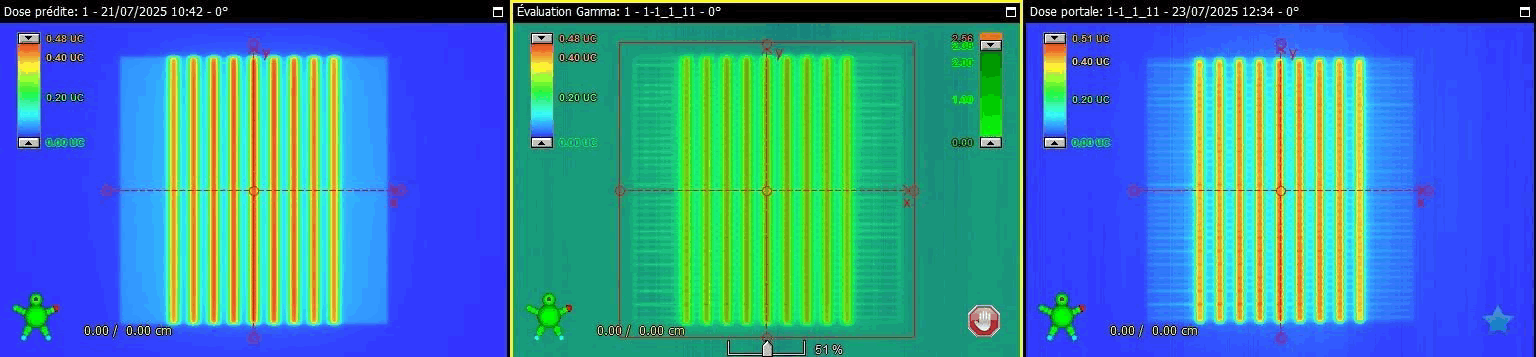
Fig. 3. Demonstration of the proposed methodology that compares the calculated picket fence plan (left) to the delivered dose on the EPID system (right). Then, the resulting gamma-passing rate map (middle) identifies the failure leaves that did not achieve the programmed position.
Once the treatment plans were calculated and approved, they were exported to the Clinac 2300IX LINAC for irradiation using the ARIA v15.13 Record-and-Verify (R&V) system. Plans were delivered on the already calibrated aS1000 EPID for each cohort we programmed. The measured dose was exported to portal dosimetry software v15.1 for analysis. This step compares the measured dose distribution to the TPS-calculated dose using specific GPR criteria. In our work, we chose 3%/2 mm as the GPR criteria, which provide information on the spatial accuracy of IMRT and VMAT plans (i.e., 2 mm) and the percentage difference between measurement and calculation (i.e., 3%). For other clinical implementations, the physicist can choose any criterion based on the test’s purpose.
Results
Effect of dose rate and collimator rotation on leaves positions
Figures 3 and 4 below show the gamma passing rate (GPR) at 3%/2 mm as a function of dose rate and collimator angle for 4 gantry angles. This aims to investigate variation in MLC leaf alignment accuracy across different clinical situations in which collimator and gantry rotation are required at variable dose rates. At gantry 0°, the GPR ranges from 73.9% for the collimator at 270° to 82.0% for the collimator 0°. The same pattern was observed for gantry angles (G°) 90°, 180°, and 270°. For G°=90°, GPR ranges from 66.3% for Colli°=270° to 79.5° at Colli° 0. For G°=180°, GPR ranges from 50.1% for Colli°=270° to 61.3° at Colli° 0. And for G°=270°, GPR ranges from 60.8% for Colli°=270° to 73.8° at Colli°=0°.
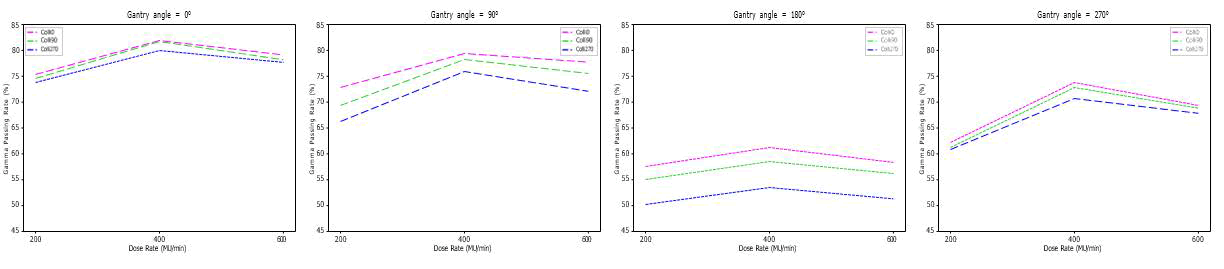
Fig. 4. 3%/2 mm gamma passing rate variation as a function of dose rate under different collimator rotation angles for 3 mm picket fence gaps, from 4 gantry rotation angles.
On the other hand, for a 5mm-wide picket fence, gaps. At G°=0°, the GPR ranges from 69.9% for Colli°=270° to 82.9% at Colli°=0°. At G°=90°, GPR increases from 64.7% for Colli°=270° to 77.2% for Colli°=0°. For G°=180°, it ranges from 55.8% at Colli°=270° to 68.5% at Colli°=0°, and finally it increases from 65.9% at Colli°=270° to 82.5% at Colli°=0° when gantry angle is 270° (Figure 5).
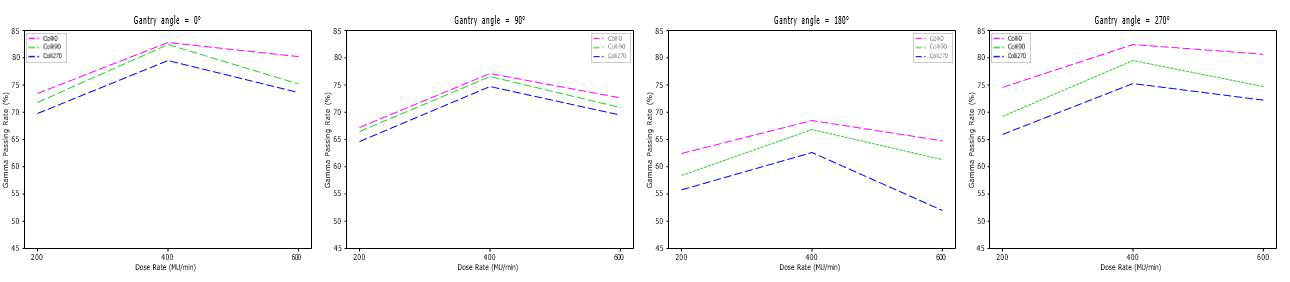
Fig. 5. 3%/2 mm gamma passing rate variation as a function of dose rate under different collimator rotation angles for 5 mm picket fence gaps, from 4 gantry rotation angles.
As a general pattern, we notice that GPR for Colli°=0° is always higher than GPR at Colli°=90°, Colli°=180°, or Colli°=270°, which indicates that GPR and then MLC leave the alignment accuracy decreases with collimator rotation. On the other hand, the EPID system measures the highest GPR at a 400 MU/min dose rate, compared with 200 MU/min and 600 MU/min. This is not explained by leaf accuracy but by accelerator delivery accuracy. Because 400 MU/min is the nominal dose rate of our accelerator. In addition, when comparing GPR variation at different gantry angles, we notice decreased accuracy from G°=0° to G°=180°, followed by an increase at G°=270°. This can be explained by the gravity effects on the entire gantry, which cause the mechanical components to move, resulting in lower position accuracy of the leaves. Furthermore, we notice a small improvement in GPR values comparing 3 mm gaps to 5 mm picket fence gaps. This is due to the delivered dose measurement: The higher the delivered dose, the higher the measurement accuracy.
Effect of gantry and collimator rotation on leaves positions
In this section, we investigate the effect of gantry rotation angle on GPR, which reflects MLC leaf position accuracy, under different collimator angles (i.e., 0°, 90°, and 270°) and 3 dose rates (i.e., 200, 400, and 600 MU/min). Figures 5 and 6 below show GPR variation as a function of gantry rotation angle for both 3 mm and 5 mm picket fence gaps, respectively. At collimator angle Colli°=0°, GPR decreases from 80.1% at G°=0° to 61.3% at G°=180° for 400 MU/min dose rate, and from 81.8% for G°=0° to 58.6% for G°=180° at Colli°=90°. On the other hand, GPR values range from 82.0% at Colli°=0° to 53.4% at Colli°=180°. Furthermore, these values were improved again for G°=270° compared to G°=180°. They were improved to 73.8%, 71.8%, and 70.8% for Colli°=0°, Colli°=90°, and Colli°=270° respectively for 3mm picket fence gaps.
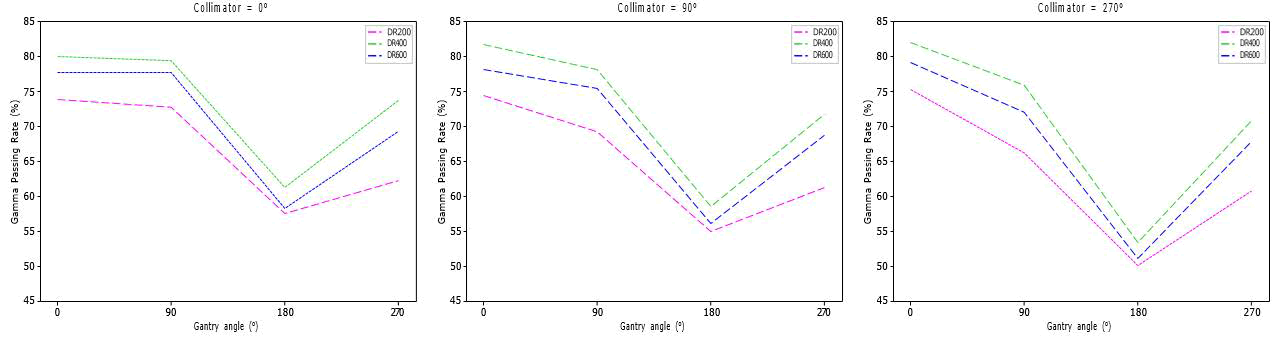
Fig. 6. 3%/2 mm gamma passing rate variation as a function of gantry rotation angle with different beam dose rates, including the nominal 400 MU/min, from different collimator angles in 3 mm picket fence gaps width.
On the other hand, for 5 mm picket fence gaps, 3%/2 mm GPR for 400 MU/min dose rate decreased from 82.9% at G°=0° to 68.5% at G°=180° for Colli°=0°, and from 82.4% at G°= 0° to 66.8% at G°=180° for Colli°=90°. Finally, it decreases from 79.5% at G°=0° to 62.7% at G°=180° for Colli°=270°. Similarly, to the first investigation on 3 mm gap width, GPR improved at G°=270°, increasing to 82.5%, 79.6%, and 75.4% for Colli°=0°, Colli°=90°, and Colli°=270°, respectively (Figure 7).
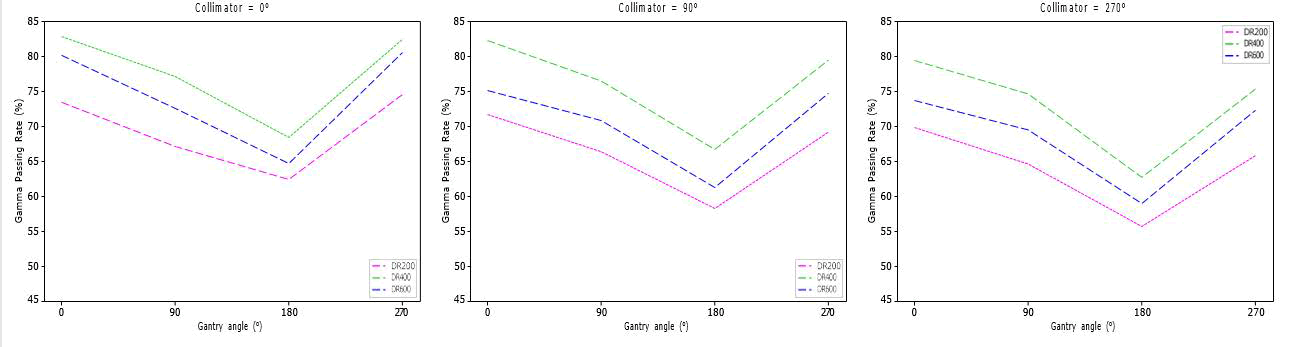
Fig. 7. 3%/2 mm gamma passing rate variation as a function of gantry rotation angle with different beam dose rates, including the nominal 400 MU/min, from different collimator angles in 5 mm picket fence gaps width.
In general, we observe higher accuracy with the 400 MU/min dose rate, followed by 600 MU/min and, lastly, 200 MU/min. It is clear from both Figures 5 and 6 that MLC accuracy decreases when the gantry rotates to G°=180° compared to G°=0° due to gravity. Then it increases again at G°=270°. In addition, leaf alignment accuracy deteriorates as the collimator rotates from Colli°=0° to Colli°=270°. Comparing 3 mm and 5 mm picket fence gap widths, we observe a small improvement in GPR measurements for the 5 mm width, likely due to the higher delivered dose. As we concluded before, the higher the delivered dose, the more accurate the measurement.
Discussion
The current work implements a novel approach for efficient Millennium120 Multi-Leaf Collimator (MLC) Quality Control (QC). This approach consists of using the aS1000 EPID system to quantitatively assess the mechanical performance of the MLC using a 3%/2 mm gamma passing rate, by comparing a TPS calculation with the EPID-measured dose. Our work included 3 main impacting optimization parameters, namely beam dose rate, sweeping gap width, and collimator and gantry rotation angles. This approach is beneficial for daily assessment and performance tracking of both MLC leaves and position accuracy, as well as beam output constancy.
C. Ceylan et al. [30] used the iViewGT as a portal imaging system in the Elekta VersaHD accelerator. The approach has the same objective as ours, but the analysis is performed based on grey level pixels rather than a GPR map. They compared a reference, error-free plan with intentional-error picket-fence plans, then investigated the effect of these errors on the quality assurance of 15 SRS and SBRT treatment plans. C. Kalavagunta et al. [31] performed a global verification of t h e MLC systems of 11 Varian linear accelerators. These tests include absolute MLC leaf position, interdigitation MLC leaf position, picket-fence MLC leaf positions at a static gantry angle, minimum leaf-gap setting, and volumetric modulated arc therapy delivery. In that work, they highlighted the benefit of using the EPID system for quantitative analysis of MLC performance over time and periodic checks. H. Zhang et al. [32] proposed an innovative approach based on EPID measurement. It consists of comparing the planned picket fence to the measured dose distribution using the famous Structural Similarity Index (SSIM), instead of GPR. The performance quantification was conducted synchronously with gantry rotation. Their work assesses sensitivity to MLC positioning errors across 3 Varian accelerators: Trilogy, TrueBeam, and Edge. In this work, they report the highest SSIM sensitivity for MLC error detection compared to the GPR approach. M. Rodr´Ä±guez and co-workers [33] conducted a similar work on aS1000 EPID system to efficiently analyze the performance of the 120-leaf Millennium MLC by comparing a set of calculated and delivered plans based on the GPR approach.
Conclusion
As the multi-leaf collimator is a key component of intensity modulation-based treatment plans. Efficient and powerful quality assurance programs must be clinically implemented to ensure good workflow. Our findings underscore the effects of collimator and gantry rotation on the spatial positions of MLC leaves. In addition to the effect of beam dose rate, it may be beneficial to investigate the beam output's consistency in a specific setup.
Based on our results, we strongly recommend paying close attention during plan optimization when it is necessary to rotate the collimator at multiple irradiation angles or to use an arc therapy scheme. Because leaves' position accuracy dramatically decreases with collimator and gantry rotation. Even if MLC rotation is clinically and dosimetrically recommended, furthermore, the optimal dose rate to be used should be carefully selected, due to variation in GPR as a function of dose rate within the same static beam.
References
- Webster M, Podgorsak A, Li F, Zhou Y, Jung H, et al. New approaches in radiotherapy. Cancers. 2025;17:1980.
[Crossref] [Google Scholar] [PubMed]
- Lin D, Lapen K, Sherer MV, Kantor J, Zhang Z, et al. A systematic review of contouring guidelines in radiation oncology: Analysis of frequency, methodology, and delivery of consensus recommendations. Int J Radiat Oncol Biol Phys. 2020;107:827–835.
[Crossref] [Google Scholar] [PubMed]
- Khan FM. The physics of radiation therapy, Lippincott, Williams & Wilkins. 2010.
- Mayles P, Nahum AE, Rosenwald JC. Handbook of radiotherapy physics: Theory and practice. 2021.
- Boyer A, Biggs P, Galvin J, Klein E, LoSasso T, et al. Basic applications of multileaf collimators. 2001.
- Kim JI, Ahn BS, Choi CH, Park JM, Park SY. Optimal collimator rotation based on the outline of multiple brain targets in VMAT. Radiat Oncol. 2018;13:88.
[Crossref] [Google Scholar] [PubMed]
- Boyer AL, Yu CX. Intensity-modulated radiation therapy with dynamic multileaf collimators. Semin Radiat Oncol. 1999;9:48–59.
[Crossref] [Google Scholar] [PubMed]
- Schmitt D, Blanck O, Gauer T, Fix MK, Brunner TB, et al. Technological quality requirements for stereotactic radiotherapy. Strahlenther Onkol. 2020;196:421–443.
- Miften M, Olch A, Mihailidis D, Moran J, Pawlicki T, et al. Tolerance limits and methodologies for IMRT measurement-based verification QA: Recommendations of AAPM Task Group No. 218. Med Phys. 2018;45:e53–e83.
[Crossref] [Google Scholar] [PubMed]
- Malatesta T, Scaggion A, Giglioli FR, Belmonte G, Casale M, et al. Patient specific quality assurance in SBRT: A systematic review of measurement-based methods. Phys Med Biol. 2023;68:21TR01.
[Crossref] [Google Scholar] [PubMed]
- Karaca S, Kirli Bolukbas M. Time matters: A review of current radiotherapy practices and efficiency strategies. Technol Cancer Res Treat. 2025;24.
[Crossref] [Google Scholar] [PubMed]
- Klein EE, Hanley J, Bayouth J, Yin FF, Simon W, et al. Task Group 142 report: Quality assurance of medical accelerators. Med Phys. 2009;36:4197–4212.
[Crossref] [Google Scholar] [PubMed]
- Hanley J, Dresser S, Simon W, Flynn R, Klein EE, et al. AAPM Task Group 198 Report: An implementation guide for TG 142 quality assurance of medical accelerators. Med Phys. 2021;48:e830–e885.
[Crossref] [Google Scholar] [PubMed]
- Rosca F, Lorenz F, Hacker FL, Chin LM, Ramakrishna N, et al. An MLC-based linac QA procedure for the characterization of radiation isocenter and room lasers’ position. Med Phys. 2006;33:1780–1787.
[Crossref] [Google Scholar] [PubMed]
- Antypas C, Floros I, Rouchota M, Armpilia C, Lyra M. MLC positional accuracy evaluation through the Picket Fence test on EBT2 films and a 3D volumetric phantom. J Appl Clin Med Phys. 2015;16:189–197.
[Crossref] [Google Scholar] [PubMed]
- Bai S, Li G, Wang M, Jiang Q, Zhang Y, et al. Effect of MLC leaf position, collimator rotation angle, and gantry rotation angle errors on intensity-modulated radiotherapy plans for nasopharyngeal carcinoma. Med Dosim. 2013;38:143–147.
[Crossref] [Google Scholar] [PubMed]
- Driouch M, Adib Y, Almaamari AASA, Youssoufi MA, Chakir E, et al. Implementation of PTW 1600SRS detector array for multi-leaf collimator quality assurance: Picket Fence and Spoke Shot tests case study. J Biosci Appl Res. 2025;11:110–120.
- Sumida I, Yamaguchi H, Kizaki H, Koizumi M, Ogata T, et al. Quality assurance of MLC leaf position accuracy and relative dose effect at the MLC abutment region using an electronic portal imaging device. J Radiat Res. 2012;53:798–806.
[Crossref] [Google Scholar] [PubMed]
- Richart J, Pujades MC, Perez-Calatayud J, Granero D, Ballester F, et al. QA of dynamic MLC based on EPID portal dosimetry. Phys Med. 2012;28:262–268.
[Crossref] [Google Scholar] [PubMed]
- Lim TY, Dragojevic I, Hoffman D, Flores-Martinez E, Kim GY. Characterization of the Halcyon™ multileaf collimator system. J Appl Clin Med Phys. 2019;20:106–114.
- French SB, Bhagroo S, Nazareth DP, Podgorsak MB. Adapting VMAT plans optimized for an HD120 MLC for delivery with a Millennium MLC. J Appl Clin Med Phys. 2017;18:143–151.
[Crossref] [Google Scholar] [PubMed]
- Levegrun S, Pottgen C, Abu Jawad J, Berkovic K, Hepp R, et al. Megavoltage computed tomography image guidance with helical tomotherapy in patients with vertebral tumors: Analysis of factors influencing interobserver variability. Int J Radiat Oncol Biol Phys. 2013;85:561–569.
[Crossref] [Google Scholar] [PubMed]
- Dogan N, Mijnheer BJ, Padgett K, Nalichowski A, Wu C, et al. AAPM Task Group Report 307: Use of EPIDs for patient-specific IMRT and VMAT QA. Med Phys. 2023;50:e865–e903.
[Crossref] [Google Scholar] [PubMed]
- Kairn T, Crowe SB, Trapp JV. A simple method for EPID-based in vivo dosimetry for radiotherapy treatments of head-and-neck cancers. In: Long M, editor. World Congress on Medical Physics and Biomedical Engineering; 2012. Berlin, Heidelberg: Springer. 2013;1727–1730.
- Slosarek K, Szlag M, Bekman B, Grzadziel A. EPID in vivo dosimetry in RapidArc technique. Rep Pract Oncol Radiother. 2010;15:8–14.
[Google Scholar] [PubMed]
- Cai B, Goddu SM, Yaddanapudi S, Caruthers D, Wen J, et al. Normalize the response of EPID in pursuit of linear accelerator dosimetry standardization. J Appl Clin Med Phys. 2018;19:73–85.
[Crossref] [Google Scholar] [PubMed]
- Fiagan YAC, N'Guessan KJF, Diakite A, Adjenou KV, Gevaert T, et al. Evaluation of using an Octavius 4D measuring system for patient-specific VMAT quality assurance. Radiation. 2025;5:9.
- Sresty NVNM, Raju AK, Reddy BN, Sahithya VC, Mohmd Y, et al. Evaluation and validation of IBA I’MatriXX array for patient-specific quality assurance of TomoTherapy®. J Med Phys. 2019;44:222.
[Crossref] [Google Scholar] [PubMed]
- Low DA, Harms WB, Mutic S, Purdy JA. A technique for the quantitative evaluation of dose distributions. Med Phys. 1998;25:656–661.
[Crossref] [Google Scholar] [PubMed]
- Ceylan C, Inal SY, Senol E, Yilmaz B, Sahin S. Effect of multileaf collimator leaf position error determined by Picket Fence test on gamma index value in patient-specific quality assurance of volumetric-modulated arc therapy plans. Cureus. 2021;13:e12684.
[Crossref] [Google Scholar] [PubMed]
- Kalavagunta C, Xu H, Zhang B, Mossahebi S, MacFarlane M, et al. Is a weekly qualitative Picket Fence test sufficient? A proposed alternate EPID-based weekly MLC QA program. J Appl Clin Med Phys. 2022;23:e13699.
- Zhang H, Zhang B, Lasio G, Chen S, Nasehi Tehrani J. Assessing quality assurance of multi-leaf collimator using the structural similarity index. J Appl Clin Med Phys. 2024;25:e14288.
[Crossref] [Google Scholar] [PubMed]
- Martin-Rodriguez Z, Ramos-Pacho J, Camino-Martinez JM. Dynamic MLC quality assurance program using EPID. Phys Med. 2019;67:204.