Case Study - Onkologia i Radioterapia ( 2026) Volume 20, Issue 5
Adjuvant Radiation Therapy on Outcomes of G2 Localized Intracranial Ependymoma: A Single Lower-Middle-Income Country Center Report
Mohamed Saad Zaghloul1,2, Eman Eldebawy1, Amal Refaat3,4, Hala Taha5,6, Marwa Magdy5,6, Mohamed El Beltagy7,8 and Marwa Aboalsoud9*2Radiation Oncology Department, Children’s Cancer Hospital, Egypt
3Radiology Department, National Cancer Institute, Cairo University, Cairo, Egypt
4Radiology Department, Children’s Cancer Hospital, Egypt
5Pathology Department, National Cancer Institute, Cairo University, Cairo, Egypt
6Pathology Department, Children’s Cancer Hospital, Egypt
7Neurosurgery Department, Children’s Cancer Hospital, Egypt
8Neurosurgery Department, Faculty of Medicine, Cairo University, Cairo, Egypt
9Clinical Oncology Department, Faculty of Medicine, Tanta University, Tanta, Egypt
Marwa Aboalsoud, Clinical Oncology Department, Faculty of Medicine, Tanta University, Tanta, Egypt, Email: Marwa.alsoud@yahoo.com, Marwa.alsoud@med.tanta.edu.eg
Received: 02-May-2026, Manuscript No. OAR-26-189580; , Pre QC No. OAR-26-189580; Editor assigned: 04-May-2026, Pre QC No. OAR-26-189580; Reviewed: 16-May-2026, QC No. OAR-26-189580; Revised: 23-May-2026, Manuscript No. OAR-26-189580; Published: 30-May-2026
Abstract
Aim: This study aimed to evaluate the impact of ART on survival outcomes in G2 ependymomas, as well as to identify key prognostic factors in children treated at a single institution in a lower-middle-income country (LMIC). Methods: A retrospective study included 131 children with pathologically confirmed grade 2 intracranial ependymoma treated in a single LMIC institution. Children were diagnosed between January 2008 and December 2022. Approval of Scientific and Medical Advisory Committee (SMAC) and the Institutional Review Board (IRB) was obtained. Results: After a median follow-up of 3.7 years, 81.7% were alive, and 70.2% were free of disease. The 5-year event-free survival (EFS) rate was 69% of those who received ART, compared with 57% in those who received surgery alone (P = 0.017). Gross total resection (GTR) was associated with a higher 5-year overall survival (OS) of 85% compared with 64% for subtotal resection (STR) (p=0.045). The 5-year EFS was the highest for children who underwent GTR and received ART. (74% vs 59%, P=0.008). There was no significant difference between ART dose of 5400 and 5940 cGy (p=0.872). The multivariate analysis revealed that total resection and the use of ART were the only independent prognostic factors determining EFS. The overall survival (OS), although higher with ART, did not reach statistical significance (p = 0.1). The RT adverse effects were tolerable without any grade 3 toxicity. Conclusion: ART and GTR are essential to achieve significantly higher EFS. The beneficial effect of ART on EFS remained significant even after GTR. The results showed the availability for LMICs to reach similar levels of results achieved by high-income countries.
Introduction
Ependymomas are malignant glial tumors of the central nervous system arising from the ependymal linings of the ventricles and spinal canal. In children, 80–90% of ependymomas arise intracranially [1]. and grade II (G2) ependymoma accounted for 33.3% of all pediatric ependymomas [2].
Most studies have shown that the extent of resection significantly impacts survival. It is well established that adjuvant radiotherapy (ART) substantially affects clinical results for the high-grade category and is considered the standard of care for grade 3 or incompletely resected grade 2 tumors [3]. Some studies have shown that ART significantly improves event-free survival (EFS), particularly after subtotal resection, in children and adults [4]; others have not shown a clear benefit of ART in grade 2, totally resected supratentorial ependymoma [4-6].
This retrospective study evaluated the impact of ART in G2 ependymomas on survival outcomes, together with the identification of key prognostic factors. In addition, the study illustrates the effect of management performed in a Lower-middle-income (LMIC) country where access to specialized neurosurgical and radiotherapy resources may differ from high-income countries (HIC).
PATIENTS AND METHODS
A retrospective study included 131 children diagnosed with intracranial G2 ependymoma, aged more than 1 year, who were diagnosed between January 2008 and December 2022, and who were treated at Children's Cancer Hospital, Egypt (CCHE). Approval of Scientific and Medical Advisory Committee (SMAC) and the Institutional Review Board (IRB) was obtained.
The electronic medical records were reviewed for all 131 patients, including patient and tumor characteristics, surgical and pathological reports, immediate postoperative MRI results, dates of adjuvant radiotherapy, dates of local failure, distant metastasis, and the date of last follow-up.
All patients underwent surgical procedures at the time of the initial diagnosis. Gross total resection (GTR) was defined as complete tumor resection with no evidence of residual tumor detected on postoperative magnetic resonance imaging MRI obtained within the first 48 hours after surgery. Subtotal resection (STR) is defined whenever any residual tumor detected in MRI. All patients underwent staging spine MRI and cerebrospinal fluid (CSF) analysis. Metastatic cases were excluded from the study. Pathology was reviewed by two independent neuropathologists (HT and MM). A brain MRI was performed within 1 to 2 months after completion of RT, then every 3 to 4 months for the first year, and annually thereafter. MRI examinations of the spine were performed every 6 months for the first 2 years or whenever clinically indicated. Radiological tumor growth on MRI of more than 20% of the residual volume was classified as tumor progression, even in the absence of new neurological symptoms.
Adjuvant radiotherapy
The postoperative MRI data were registered to the CT simulator study. Starting from 2018, the MR simulator was used in conjunction with the CT simulator. The gross tumor volume (GTV) was identified as any gross residual tumor and the postoperative tumor bed. The clinical target volume (CTV) was a 10 mm expansion of the GTV. The planning target volume (PTV) was a 3-5 mm expansion of the CTV.
The prescribed dose was 5400 to 5940 cGy for all patients, except those under 18 months, for whom GTR was achieved; they received 5040 Gy. Treatment was delivered via intensity-modulated radiotherapy (IMRT) or volumetric-modulated arc therapy (VMAT).
Statistical analysis
Analyses were conducted using the R Statistical language (version 4.4.1; R Core Team, 2024) [7]. The distribution of continuous numerical variables was examined using the Shapiro-Wilk test and Q-Q plots. Continuous numerical variables were summarized using the mean, standard deviation (SD), and range. Variables were summarized using median interquartile range (IQR), and range. Comparisons between two groups were performed using a T-test or the Wilcoxon rank-sum test. Categorical variables were summarized as counts and relative frequencies. A p-value of ≤ 0.05 was considered statistically significant. Clinico-pathological factors, the extent of surgical resection, and ART's prognostic impact on EFS and OS were evaluated; univariate analyses using Kaplan-Meier and multivariate analyses using Cox regression. Significant variables with a p-value of < 0.1 in the univariate analysis were included in the multivariate analysis. EFS was calculated from the diagnosis date to recurrence or last follow-up. Patients who developed local recurrence or dissemination were considered failures in its detection time. Those who died due to non-oncologic causes were considered censored. Overall survival (OS) was calculated from the diagnosis date to death date, regardless of the cause.
RESULTS
The study included 131 patients with a median age at diagnosis of 4.6 (IQR 2.7 - 9.7] years. Forty-one (31%) patients were ≤ 3 years old. One hundred and three (78.6%) patients were in the Posterior fossa (PF), while 28 (21.4%) were in the supratentorial region. During the same period, CCHE treated a total of 369 ependymoma patients, with 265 PF, 93 supratentorial, and 11 spinals. All patients in the present study underwent surgical resection, with 92 (70.2%) gross total resection and 39 (29.8%) subtotals [Table 1].
| Characteristic | All patients (N = 131) | |
|---|---|---|
| Age at presentation (years) | 4.6 [2.7 - 9.7] (1.1 - 17.2) | |
| Age groups | ≤3 | 41 (31.3%) |
| >3 - 10 | 59 (45.0%) | |
| >10 | 31 (23.7%) | |
| Site | Infra | 103 (78.6%) |
| Supra | 28 (21.4%) | |
| Extent of resection | GTR | 92 (70.2%) |
| STR | 39 (29.8%) | |
| Radiotherapy | Yes | 112 (85.5%) |
| No | 19 (14.5%) | |
| Chemotherapy | Yes | 15 (11.5%) |
| No | 116 (88.5%) | |
| Progression | Yes | 39 (29.8%) |
| No | 92 (70.2%) | |
| Status at last visit | Dead | 24 (18.3%) |
| Alive | 107 (81.7%) | |
| Radiotherapy (N = 109) | ||
| Total dose (Gy) median (range) | 5,580.0 [5,400.0-5,940.0] (5,040.0 - 5,940.0) | |
| *Treatment duration (days) | 44.0 [42.0 - 47.0] (37.0 - 62.0) | |
| *Time to start radiotherapy (days) | 49.0 [40.0 - 64.0] (11.0 - 312.0) |
Table 1: Patients, tumor characteristics and Radiotherapy details of treatment
*Data is presented as Median [IQR].
Chemotherapy was administered to 15 patients (11.5%) after STR, to improve resectability via second-look surgery. After a median follow-up of 3.7 years (1.2-14.3), thirty-nine patients developed recurrence or progression (whether local or disseminated). Death was reported in 24 (18.3%) patients.
One hundred and twelve patients (85.5%) received ART. The median duration between initial surgery and radiotherapy was 49 days (range 11-134). The delay of ART for some patients contributed to the use of cytoreductive chemotherapy and second-look surgery. The median total dose was 5580 (range, 5040-5940). Only seven patients (aged ≤ 18 months) received 5040 cGy. Five of these seven patients had GTR. The median overall treatment duration was 44 days (range, 37-62). Detailed radiotherapy is shown in Table 1.
Among the 112 who received ART, the median age was 4.2 years, compared to 10.3 years (P = 0.004) for those who did not receive radiation. Ninety-eight children (95.1%) of the PF patients received ART, whereas 14 (50%) of the supratentorial patients did (P < 0.001). Among the 92 patients with totally resected tumors, 74 (66%) received radiotherapy. Nearly all patients who underwent STR received ART (38/39, 97.4%). (Table 2).
| Radiotherapy | ||||
|---|---|---|---|---|
| Characteristic | Overall, N = 1311 | Yes, N = 112 | No, N = 19 | p-value2 |
| Age at presentation (years) | 4.00E+00 | |||
| Median [IQR] (Range) | 4.6 [2.7 - 9.7] (1.1 - 17.2) | 4.2 [2.6 - 7.5] (1.1 - 17.2) | 10.3 [7.4 - 12.0] (1.3 - 15.9) | |
| Age groups, n (%) | 0.2024 | |||
| ≤3 | 41 (31.3%) | 38 (33.9%) | 3 (15.8%) | |
| >3 - 10 | 59 (45.0%) | 53 (47.3%) | 6 (31.6%) | |
| >10 | 31 (23.7%) | 21 (18.8%) | 10 (52.6%) | |
| Site, n (%) | <0.001***5 | |||
| Infra | 103 (78.6%) | 98 (87.5%) | 5 (26.3%) | |
| Supra | 28 (21.4%) | 14 (12.5%) | 14 (73.7%) | |
| Extent of resection, n(%) | 1.20E+03 | |||
| GTR | 92 (70.2%) | 74(66.1%) | 18 (94.7%) | |
| STR | 39 (29.8%) | 38 (33.9%) | 1 (5.3%) | |
| Chemotherapy, n (%) | 0.1265 | |||
| yes | 15 (11.5%) | 15 (13.4%) | 0 (0.0%) | |
| No | 116 (88.5%) | 97 (86.6%) | 19 (100.0%) |
Table 2: Comparison to adjuvant radiotherapy
1n (%), 2*p<0.05; **p<0.01; ***p<0.001, 3Wilcoxon rank sum test, 4Chi-squared Test for Trend in Proportions, 5Fisher's exact test
The median age significantly differed between the PF group (3.8 years) and the supratentorial group (10.3 years)..
Event-free survival (Table 3)
| Characteristic | PFS (95% CI) | OS (95% CI) | ||||
|---|---|---|---|---|---|---|
| 3 Year(s) | 5 Year(s) | p-value1 | 3 Year(s) | 5 Year(s) | p-value1 | |
| Overall | 70% (63%, 79%) | 67% (59%, 77%) | 82% (75%, 89%) | 78% (70%, 86%) | ||
| Radiotherapy | 0.017* | 0.831 | ||||
| Yes | 73% (64%, 82%) | 69% (60%, 79%) | 81% (74%, 90%) | 77% (68%, 86%) | ||
| No | 56% (37%, 84%) | 56% (37%, 84%) | 84% (69%, 100%) | 84% (69%, 100%) | ||
| Age groups | 0.931 | 0.998 | ||||
| ≤3 | 69% (55%, 85%) | 69% (55%, 85%) | 84% (73%, 97%) | 76% (62%, 93%) | ||
| >3 - 10 | 70% (59%, 84%) | 65% (53%, 80%) | 80% (70%, 92%) | 78% (67%, 91%) | ||
| >10 | 73% (59%, 91%) | 73% (59%, 91%) | 82% (68%, 98%) | 82% (68%, 98%) | ||
| Site | 0.182 | 0.536 | ||||
| Infra | 71% (62%, 81%) | 69% (60%, 80%) | 81% (73%, 90%) | 76% (67%, 86%) | ||
| Supra | 67% (52%, 87%) | 59% (41%, 85%) | 85% (72%, 100%) | 85% (72%, 100%) | ||
| Extent of Resection | 0.045* | 0.027* | ||||
| GTR | 76% (68%, 86%) | 72% (62%, 83%) | 87% (79%, 94%) | 85% (77%, 93%) | ||
| STR | 57% (43%, 75%) | 57% (43%, 75%) | 71% (57%, 88%) | 64% (49%, 83%) | ||
| Total dose | 0.019* | 0.059 | ||||
| * 5040 | 29% (8.9%, 92%) | 29% (8.9%, 92%) | 57% (30%, 100%) | 43% (18%, 100%) | ||
| 5400 | 77% (65%, 91%) | 72% (58%, 89%) | Vs. 5040 = 0.029* | 80% (68%, 93%) | 80% (68%, 93%) | |
| Vs. ≥ 5580 = 0.872 | ||||||
| ≥ 5580 | 75% (64%, 89%) | 72% (59%, 87%) | Vs. 5040 = 0.018* | 88% (79%, 98%) | 81% (70%, 95%) | |
| Vs. 5400 = 0.872 | ||||||
| Chemotherapy | 0.327 | 0.221 | ||||
| Yes | 60% (40%, 91%) | 60% (40%, 91%) | 73% (54%, 100%) | 67% (47%, 95%) | ||
| No | 72% (64%, 81%) | 68% (59%, 78%) | 83% (76%, 91%) | 80% (72%, 89%) | ||
| GTR+ART | 80% (71%, 90%) | 74% (63%, 87%) | 0.008* | 87% (79%, 96%) | 85% (76%, 95%) | 0.64 |
| GTR+ No ART | 59% (40%, 88%) | 59% (40%, 88%) | 83% (68%, 100%) | 83% (68%, 100%) | ||
| Supra+GTR | 75% (57%, 100%) | 63% (40%, 99%) | 0.636 | 100%(100%,100%) | 100%(100%,100%) | 0.006* |
| Supra+STR | 56% (34%, 94%) | 56% (34%, 94%) | 60% (36%, 100%) | 60% (36%, 100%) | ||
| Infra+GTR | 76% (66%, 87%) | 74% (63%, 86%) | 0.058 | 84% (75%, 93%) | 81% (72%, 92%) | 0.238 |
| Infra+STR | 57% (41%, 80%) | 57% (41%, 80%) | 75% (60%, 94%) | 65% (47%, 88%) |
Table 3: Event-free survival (EFS) and Overall (OS) for 131 pediatric Ependymoma oatients.
1 Log-rank test * Only 7 children received a radiotherapy dose of 5040.
Recurrence/progression was experienced in 39 (29.8%) patients, with 31 (79.5%) experiencing local recurrence and 8 experiencing disseminated disease. The 5-year EFS for the entire cohort was 67% (95% CI, 59%-77%). The 5-year EFS in the ART group was 69% (CI, 60% - 79%) versus 56% (CI, 37% - 84%) in patients who did not receive ART; p=0.017. The 5-year EFS for GTR patients was 72% (62% - 83%) compared to 57% (43%-75%) in patients with STR (p= 0.045), In the univariate analysis, GTR and ART were the significant prognostic factors, with a (HR) of 0.51 (CI:0.28-1) and HR of 0.41 (95%CI: 0.2-0.87) respectively [Figure: 1].
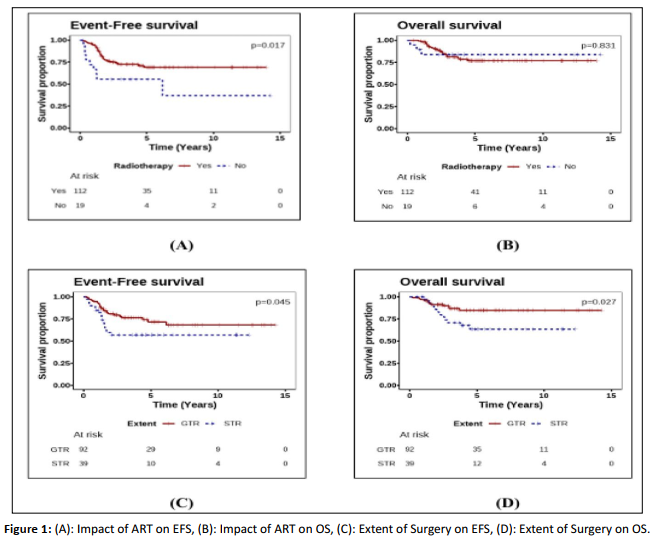
Figure 1: (A): Impact of ART on EFS, (B): Impact of ART on OS, (C): Extent of Surgery on EFS, (D): Extent of Surgery on OS.
The significant benefit of adjuvant radiation was still observed among patients with GTR with a 5-year EFS of 74% (CI, 63% - 87%) in the ART group versus 59% (CI, 40% - 88%) for those with no ART (p=0.008). There was no significant difference between ART dose of 5400 and 5940 cGy (p=0.872). The ART dose of 5040 was associated with a lower 5-year EFS of 29% compared with 72% for those who received 5400 cGy (p=0.029) [Figure: 2].
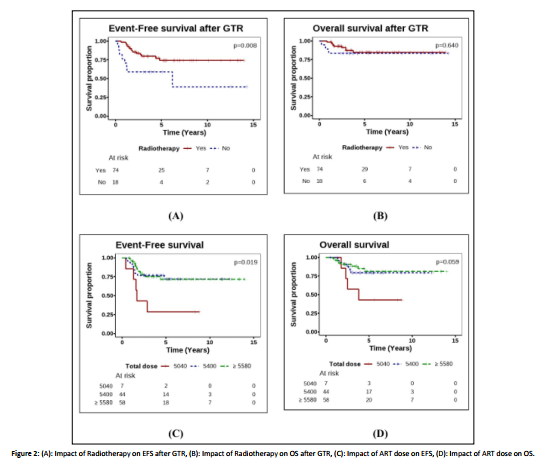
Figure 2: (A): Impact of Radiotherapy on EFS after GTR, (B): Impact of Radiotherapy on OS after GTR, (C): Impact of ART dose on EFS, (D): Impact of ART dose on OS.
The multivariate analysis confirmed the impact of the extent of resection (HR: 0.382, CI: 0.187-0.777, p=0.009) and the ART (HR 0.281, CI, 0.122-0.646, p=0.003) for EFS, and the lower EFS with a dose of 5040 cGy (HR 0.27, CI (0.094 to 0.796), p=0.017).
Overall survival
The 5-year OS of the whole cohort was 78% (CI, 70% - 86%) [Table 3]. Patients who achieved GTR had a 5-year OS of 85% (CI: 77% - 93%) compared to 64% (CI: 49% - 83%) for those with STR (p=0.027). In the univariate analysis, the extent of resection was the only factor that influenced OS (HR=0.41, CI: 0.19 – 0.93).
All other factors, including age, site, ART, time to start RT, RT dose, and chemotherapy, were not statistically significant. It is worth noting that all Patients with supratentorial GTR were alive, with a 5-year OS of 100%, compared with 60% for those who underwent STR (p=0.006). The 5-year OS for GTR infratentorial patients was 81% (CI, 72-92%), whereas it was 65% (CI, 47%-88%) for those who achieved STR (p=0.238). There were not enough patients to statistically evaluate the effect of ART after GTR according to tumor location. In supratentorial tumors with GTR nearly all patients did not receive Rth except for 5 patients, and in PF lesions with GTR all patients were irradiated apart from 3 patients.).
Radiation adverse effects
Twelve (10.7%) patients suffered from headache, 10 (8.9%) nausea & vomiting, lethargy in 4 (3.6%), sleeping disorder in 8 (7.1%), dizziness in 5 (4.5%), agitation in 2 (1.8%), anxiety 8 (7.1%), confusion in 4 (3.6%), and depression in 9 (8.0%). These side effects (62/62) were grades 1- 2, and none were grade 3 or higher.
DISCUSSION
The present study reports the long-term results of 131 children with Grade 2 ependymoma treated in a single LMIC center. The 5-year OS rate of 78% and EFS of 67% are encouraging and comparable to those reported by the Children's Oncology Group [8] in high-income countries. Their children enjoyed a 5-year EFS of 61.4% to 68.5%, depending on the extent of resection and use of immediate postoperative conformal radiation therapy. The present study highlights the capability of a well-equipped LMIC pediatric oncology center with well-trained staff to achieve results comparable to those reported in HIC [9]. These results encourage LMIC centers to follow international guidelines, overcome obstacles, and aim to achieve outcomes similar to those of HICs. In a recent study from the same LMIC center, the 5-year OS and EFS for all pediatric ependymoma grades were 69.7% and 53.2%, respectively [2].
Furthermore, the present study revealed that patients who received ART were significantly younger and more likely to have PF tumors. This pattern reflects the higher incidence of PF ependymomas in younger children and the more aggressive treatment approach often adopted for such patients. Nevertheless, there was no effect of age (p=0.338) or site (p=0.422) on OS or EFS.
Our cohort's demographic and clinical characteristics of grade 2 ependymoma align with those reported in the HIC studies [10]. The higher frequency of PF tumors in pediatric populations underscores the importance of considering age-specific treatment approaches, as tumor location can significantly impact surgical resectability and potential complications of therapy. Our high GTR rate (70.2%) is noteworthy and aligns with current treatment goals. This rate again is comparable to that reported in Western studies [4, 11], highlighting that GTR is the cornerstone of treatment and is associated with the best prognosis. Notably, achieving GTR can be more challenging for PF tumors [4]. However, in the present study, GTR reached 73.8% in PF compared to 57.1% in supratentorial tumors. Despite Rudà et al. [5] finding that GTR is more feasible for adult supratentorial ependymomas, we observed the opposite in our pediatric cohort. The impact of GTR on both 5-year OS (85% vs. 64%, p=0.027) and EFS (72% vs. 57%, p=0.045) in the present study reinforces the extreme importance of maximal safe resection in ependymoma treatment.
The high proportion of patients receiving ART in our study (85.5%) reflects the current standard of care for pediatric Ependymoma at the CCHE. All patients were discussed in multidisciplinary team weekly meetings, where protocol Violations were reported regularly. The median total radiation dose in our cohort (5,580 cGy; IQR: 5,400-5,940) falls within the range commonly reported in the literature [11], with a median total dose of 5940 cGy (range: 54.0-62.0 Gy) using either photons or protons. The slight variations across studies reflect the debates about optimal radiation doses, especially for younger patients. We reported a similar 5-year EFS and OS in those who received 5400 and ≥ 5580 cGy, respectively. Those who received 5040 cGy experienced lower EFS and OS rates (29% and 43%, respectively, P=0.019), however, the patients’ number was limited (only 7 patients received a dose of 5040 cGy). It is worth noting that our median treatment duration of 44 days (IQR: 42-47) and median time to start RT after surgery of 49 days are within the acceptable HIC ranges, as per current guidelines [12, 13]. Furthermore, Shah et al. found no significant difference in overall survival (OS) among patients who started RT ≤5 weeks, 5-8 weeks, or >8 weeks after surgery [14]. This finding suggests that while timely RT initiation is essential, scheduling may be flexible without compromising outcomes. This flexibility may be crucial for patient recovery and treatment planning.
The higher rate of subtotal resection in the ART group (33.9% vs. 5.3%, p = 0.012) is a significant finding that aligns with current treatment paradigms. ART is being appropriately utilized as a compensatory strategy for patients with residual tumors after surgery. Chemotherapy did not improve event-free survival (EFS) in our cohort (p = 0.657), consistent with the Children's Oncology Group trial ACNS0121 [8]. However, it increased the number of patients who underwent complete resection.
The significant improvement in 5-year EFS for patients who received ART (69% vs. 56%, p = 0.017) supports the adoption of ART in G2. The finding is consistent with several studies, including those by Pejavar et al. [15], who found that ART was associated with improved EFS, even after adjusting for the extent of resection. However, the improvement in EFS with the ART was not translated into an OS benefit. The same finding was observed by Napieralska et al. [4], with the GTR being the only factor that improved OS (p = 0.004).
Furthermore, our findings showed that a lower total radiation dose of 5040 cGy was associated with a worse 5-year EFS (29% vs. 72%, p = 0.019), with no difference between the 5400 and 5940 cGy groups.
This was confirmed by Rose et al. [16], in a recent systematic review and meta-analysis, there was no significant difference in local control, event-free survival, or OS between doses ≤5400 cGy and >5400 cGy. On the contrary, a recent multi-institutional retrospective study by Liu et al. reported on 45 pediatric and adolescent patients with PF ependymoma who were treated with ART, including 34 with grade 2 and 11 with grade 3 pathology. Although they reported similar results to those of the present study, they reported a trend towards worse 5-year OS and PFS among patients with grade II ependymoma who received less than 5940 c Gy (OS 48.8% vs. 88.9%, p = 0.06, PFS 40.0% vs. 83.1%, p = 0.08) [17].
Our univariate and multivariate Cox regression analyses provide valuable insights into the prognostic factors for ependymoma outcomes. ART significantly improved EFS (HR: 0.41, 95% CI: 0.20- 0.87, P = 0.021). Subtotal resection significantly increased the risk of progression (HR: 1.90, 95% CI: 1.00-3.60, p = 0.049) and mortality (HR: 2.40, 95% CI: 1.08-5.35, p = 0.032). This finding aligns with many HIC studies emphasizing the importance of maximal safe resection [4, 10]. Napieralska et al. [4] reported that radical surgery (R0 vs. R1/2) and the use of ART were the only factors that improved EFS in multivariate analysis (p = 0.006 and 0.007). They added that GTR was the only factor that improved OS (p = 0.004).
Additionally, the significant effect of ART on EFS was evident even after GTR, with a 5-year EFS of 74% versus 59% in patients who did not receive ART (p = 0.008).
One significant limitation of this study is its retrospective design, which increases the risk of selection bias. We conducted a multivariate analysis to identify the fundamental independent prognostic factors. Furthermore, the lack of routine molecular subtyping represents another significant limitation. Jünger et al. [12] highlight the importance of incorporating molecular markers into risk assessment. Future prospective studies integrating clinical, radiological, and molecular data may provide more refined prognostic models and guide personalized treatment strategies for Grade 2 ependymoma.
CONCLUSION
ART significantly improved EFS, even after GTR, in patients with G2-localized intracranial Ependymoma. Although OS improved, it did not reach statistical significance. GTR was associated with significantly better EFS and OS, with minimal acceptable toxicity. LMIC center that is specialized and dedicated to improving pediatric tumor outcomes can achieve outcomes similar to those reported by well-established Western centers and study groups. A prospective randomized study including various molecular markers is still warranted.
ACKNOWLEDGEMENTS
Nil
CONFLICT OF INTEREST
The authors have no financial or proprietary interest in any material discussed in this article.
FUNDING
No funding was received to conduct this study.
DATA AVAILABILITY
All data are available at reasonable request to the first author.
ETHICS DECLARATION AND CONSENT TO PARTICIPATE DECLARATION
The study is a retrospective one following the Declaration of Helsinki. The ethical committees of the Children’s Cancer Hospital (SMAC & IRB) approved the study before starting. Patients’ parents or guardian consent was waved for having a retrospective nature.
CONSENT TO PUBLISH DECLARATION
Not applicable.
References
- Gerstner ER, Pajtler KW. Ependymoma. Semin Neurol. 2018;38:104-11.
- Maher E, Kamal M, El-Ayadi M, Refaat A, Enayet A, et al. Epidemiology and clinical outcomes of childhood central nervous system cancers in a large low-middle income country pediatric oncology center: a report on 5051 kids. Cancer Epidemiol Biomarkers Prev. 2024.
- Hübner JM, Kool M, Pfister SM, Pajtler KW. Epidemiology, molecular classification and WHO grading of ependymoma. J Neurosurg Sci. 2018;62:46-50.
- Napieralska A, Majewski W, Miszczyk L. Do we need radiotherapy in grade ii ependymoma? Front Oncol. 2022;12:800505.
- Rudà R, Bruno F, Pellerino A, Soffietti R. Ependymoma: Evaluation and Management Updates. Curr Oncol Rep. 2022;24:985-93.
- Ghia AJ, Mahajan A, Allen PK, Armstrong TS, Lang FF, Jr., et al. Supratentorial gross-totally resected non-anaplastic ependymoma: population based patterns of care and outcomes analysis. J Neurooncol. 2013;115:513-20.
- Team RC. RA language and environment for statistical computing, R Foundation for Statistical. Computing. 2020.
- Merchant TE, Bendel AE, Sabin ND, Burger PC, Shaw DW, et al. Conformal radiation therapy for pediatric ependymoma, chemotherapy for incompletely resected ependymoma, and observation for completely resected, supratentorial ependymoma. J Clin Oncol. 2019;37:974-83.
- Zaghloul MS. Single pediatric neuro-oncology center may make difference in low/middle-income countries. Child's Nervous System. 2016;32:241-2.
- Patteson BE, Baliga S, Bajaj BV, MacDonald SM, Yeap BY, et al. Clinical outcomes in a large pediatric cohort of patients with ependymoma treated with proton radiotherapy. Neuro-oncology. 2021;23:156-66.
- Massimino M, Barretta F, Modena P, Witt H, Minasi S, et al. Second series by the Italian association of pediatric hematology and oncology of children and adolescents with intracranial ependymoma: An integrated molecular and clinical characterization with a long-term follow-up. Neuro Oncol. 2021;23:848-57.
- Jünger ST, Zschernack V, Messing-Jünger M, Timmermann B, Pietsch T. Ependymoma from benign to highly aggressive diseases: a review. Advances and Technical Standards in Neurosurgery: Volume 50. 2024:31-62.
- Peters S, Merta J, Schmidt L, Jazmati D, Kramer P-H, et al. Evaluation of dose, volume, and outcome in children with localized, intracranial ependymoma treated with proton therapy within the prospective KiProReg Study. Neuro-oncology. 2022;24:1193-202.
- Shah S, Gates K, Mallory C, Rubens M, Maher OM, et al. Effect of postoperative radiation therapy timing on survival in pediatric and young adult ependymoma. Advances in radiation oncology. 2021;6:100691.
- Pejavar S, Polley M-Y, Rosenberg-Wohl S, Chennupati S, Prados MD, et al. Pediatric intracranial ependymoma: the roles of surgery, radiation and chemotherapy. Journal of neuro-oncology. 2012;106:367-75.
- Rose ML, Sachdeva R, Mezgueldi Y, Yen RW, Serraj LA, et al. Systematic review and meta-analysis of adjuvant radiation dose for pediatric patients (≤ 22 years) with nonmetastatic intracranial ependymomas. International journal of radiation oncology* Biology* Physics. 2025;121:667-76.
- Liu KX, Salans M, Easwaran TP, Phuong C, Yeo KK, et al. The association between postoperative photon radiotherapy dose and disease control and salvage treatment in pediatric and adolescent ependymoma: a multi-institutional investigation. J Neurooncol. 2025;173:167-77.