Targeted and Controlled Drug Delivery Using Lipid Vesicular Systems for Cancer Therapy
Abstract
Author(s): Gundeti Praveen Kumar* and Varalaxmi S
Cancer remains one of the leading causes of morbidity and mortality worldwide, and its effective treatment continues to be limited by poor drug selectivity, systemic toxicity, multidrug resistance, rapid drug clearance, and inadequate accumulation of therapeutic agents at the tumour site. Conventional chemotherapy often affects both malignant and healthy cells, resulting in severe adverse effects and reduced patient compliance. In this context, targeted and controlled drug delivery systems have gained significant attention as promising approaches to improve the therapeutic outcome of anticancer agents. Lipid vesicular systems, including liposomes, niosomes, transferosomes, ethosomes, phytosomes, and cubosomes, offer several advantages such as biocompatibility, improved drug solubility, enhanced cellular uptake, protection of drugs from degradation, prolonged circulation time, and controlled release behaviour. These vesicular carriers can encapsulate both hydrophilic and lipophilic drugs and can be modified with specific ligands to achieve active targeting toward tumour cells. In addition, lipid vesicular systems can respond to tumour microenvironmental conditions such as acidic pH, enzymatic activity, redox potential, and temperature changes, allowing site-specific and controlled drug release. This review discusses the fundamental concepts, major types, formulation approaches, characterisation parameters, targeting mechanisms, and therapeutic applications of lipid vesicular systems in cancer therapy. It also highlights their role in improving the delivery of chemotherapeutic drugs, natural anticancer compounds, gene-based therapeutics, and immunotherapeutic agents. Despite their potential, challenges related to stability, large-scale production, sterilisation, regulatory approval, and clinical translation remain important concerns. Overall, lipid vesicular drug delivery systems represent a promising platform for targeted and controlled cancer therapy, with strong potential to improve treatment efficacy, reduce toxicity, and support the future development of precision oncology.
Share this article

Editors List
-
RAOUi Yasser
Senior Medical Physicist
-
Ahmed Hussien Alshewered
University of Basrah College of Medicine, Iraq
-
Sudhakar Tummala
Department of Electronics and Communication Engineering SRM University – AP, Andhra Pradesh
-
Alphonse Laya
Supervisor of Biochemistry Lab and PhD. students of Faculty of Science, Department of Chemistry and Department of Chemis
- Fava Maria Giovanna
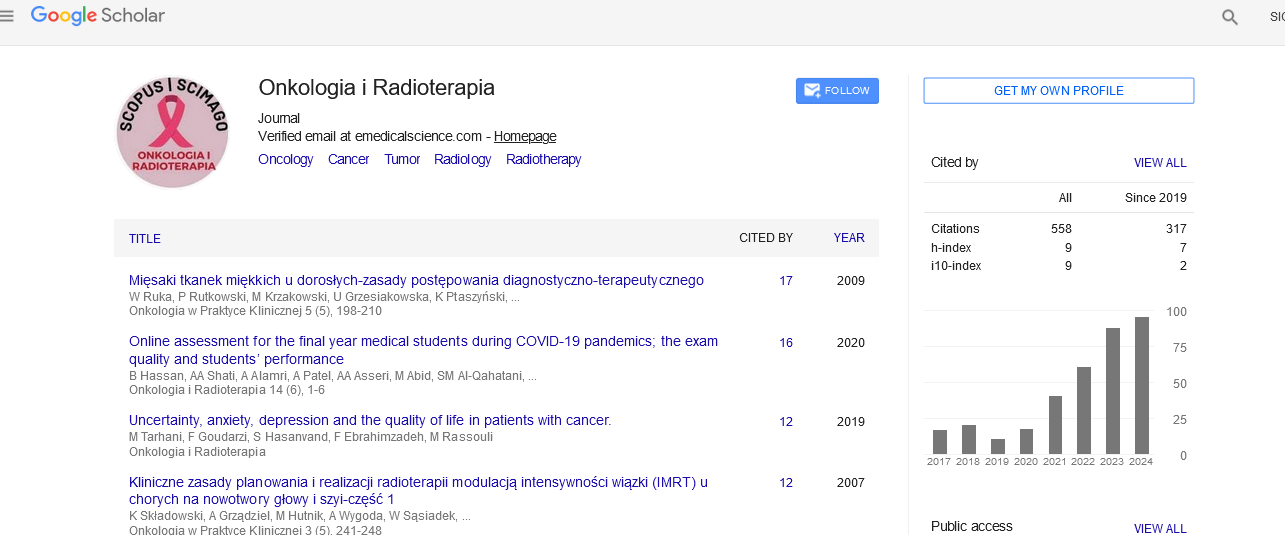
Google Scholar citation report
Citations : 650
Onkologia i Radioterapia received 650 citations as per Google Scholar report
Onkologia i Radioterapia peer review process verified at publons
Indexed In
- Directory of Open Access Journals
- Scimago
- SCOPUS
- EBSCO A-Z
- MIAR
- Euro Pub
- Google Scholar
- Medical Project Poland
- PUBMED
- Cancer Index
- Gdansk University of Technology, Ministry Points 20