Hypo fractionated versus conventional fractionated intensity modulated radiotherapy for intermediate & high risk localized prostate cancer
Abstract
Author(s): Nada Samir Shams El-Din El-Behiri*, Mohamed Elshebeny, Mohamed Abdel Hamid Alam El Din, Asmaa Mohamed Alkady and Rabab Mahmoud Moussa
Background: Hypo fractionated radiotherapy emerged as a promising alternative to conventional fractionation for localized prostate cancer, particularly given the low α/β ratio of prostate tumors. However, evidence remains limited in unfavorable intermediate- and high-risk patients. This study compared the efficacy and safety of hypo fractionated versus conventional fractionated radiotherapy in this high-risk population. Purpose: This prospective study compared the efficacy, toxicity, and dosimetric profiles of hypo fractionated versus conventional fractionated radiotherapy in patients with intermediate- and high-risk localized prostate cancer. The primary endpoints included biochemical relapse-free survival, disease-free survival, overall survival, and treatment-related toxicities. Methods: Sixty patients diagnosed with unfavorable intermediate- or high-risk localized prostate cancer were enrolled between June 2022 and June 2024. They were equally divided into two groups: 30 received hypo fractionated radiotherapy (60 Gy in 20 fractions over 4 weeks), and 30 underwent conventional fractionated radiotherapy (74–80 Gy in 37–40 fractions over 7.4–8 weeks). All patients received concurrent androgen deprivation therapy. Results: At a median follow-up of 17 months, both groups exhibited comparable overall survival (96.7%) and biochemical relapse-free survival. Hypo fractionated radiotherapy demonstrated dosimetric benefits, with lower doses to the bladder and rectum. Acute genitourinary and gastrointestinal toxicities were slightly higher in the hypo fractionated radiotherapy group but remained manageable; late toxicities showed no significant difference between the groups. Conclusions: Hypo fractionated radiotherapy provided similar biochemical control, disease free survival, and overall survival as conventional fractionated radiotherapy in patients with intermediate- and high-risk localized prostate cancer. Its shorter course and dosimetric advantages supported its role as an effective, patient-friendly alternative.
Share this article

Editors List
-
RAOUi Yasser
Senior Medical Physicist
-
Ahmed Hussien Alshewered
University of Basrah College of Medicine, Iraq
-
Sudhakar Tummala
Department of Electronics and Communication Engineering SRM University – AP, Andhra Pradesh
-
Alphonse Laya
Supervisor of Biochemistry Lab and PhD. students of Faculty of Science, Department of Chemistry and Department of Chemis
- Fava Maria Giovanna
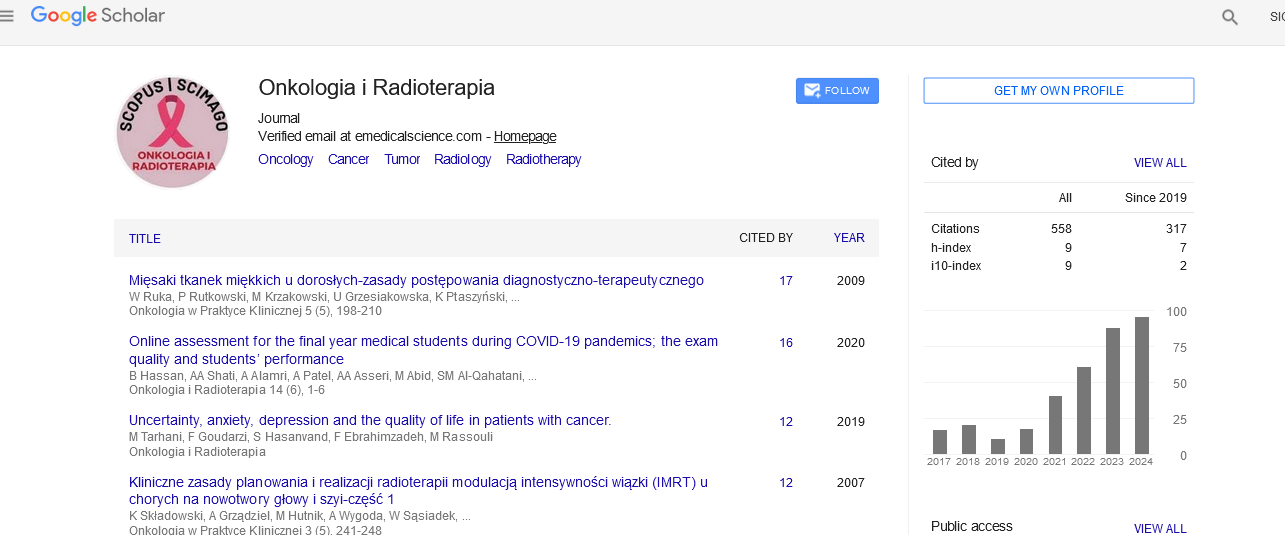
Google Scholar citation report
Citations : 650
Onkologia i Radioterapia received 650 citations as per Google Scholar report
Onkologia i Radioterapia peer review process verified at publons

Indexed In
- Directory of Open Access Journals
- Scimago
- SCOPUS
- EBSCO A-Z
- MIAR
- Euro Pub
- Google Scholar
- Medical Project Poland
- PUBMED
- Cancer Index
- Gdansk University of Technology, Ministry Points 20