Endocrine enigma: Game based learning in metabolic and hormonal disorders applicable to oncology practice
Abstract
Author(s): Neetha Kundoor*, Srilatha Bashetti, Krishnaveni Desai
Background: Effective teaching strategies in oncology and radiotherapy education require approaches that enhance clinical reasoning, interdisciplinary understanding, and long-term knowledge retention. Traditional didactic methods often fail to adequately engage students or support higher-order cognitive development. Game-Based Learning (GBL), particularly puzzle-based approaches, offers a promising strategy to promote active learning and clinical application of biochemical and physiological concepts relevant to cancer and metabolic disorders.
Objective: This study aimed to evaluate the effectiveness of puzzle-based learning in improving undergraduate medical students’ understanding of hormone regulation in metabolic conditions, with potential relevance to oncological and radiotherapeutic contexts, while fostering critical thinking, engagement, and collaborative learning. Methods: A structured, case scenario–based puzzle learning intervention was implemented, aligned with Bloom’s taxonomy to facilitate higher-order cognitive processes such as analysis and application. Learning preferences were assessed using the VARK model, and student perceptions were collected through structured feedback questionnaires following the intervention.
Results: Kinesthetic learning emerged as the predominant preference, followed by aural and visual modalities. A majority of students reported positive outcomes, with 62% expressing strong satisfaction in puzzle-solving activities and over 50% indicating enhanced engagement and subject interest. Approximately 42-45% of participants demonstrated perceived improvements in critical thinking, problemsolving, and creativity. Notably, 70% agreed that puzzle-based learning promoted meaningful understanding and was more effective than conventional lectures. Students also reported improved knowledge retention, communication skills, and collaborative learning, with all participants expressing willingness to engage in similar methodologies.
Conclusion: Puzzle-based game learning represents an effective, student-centered educational strategy with potential applications in oncology and radiotherapy training. By enhancing analytical thinking, clinical reasoning, and engagement, such innovative approaches can complement traditional teaching methods and contribute to improved competency in complex biomedical and cancer-related education.
Share this article

Editors List
-
RAOUi Yasser
Senior Medical Physicist
-
Ahmed Hussien Alshewered
University of Basrah College of Medicine, Iraq
-
Sudhakar Tummala
Department of Electronics and Communication Engineering SRM University – AP, Andhra Pradesh
-
Alphonse Laya
Supervisor of Biochemistry Lab and PhD. students of Faculty of Science, Department of Chemistry and Department of Chemis
- Fava Maria Giovanna
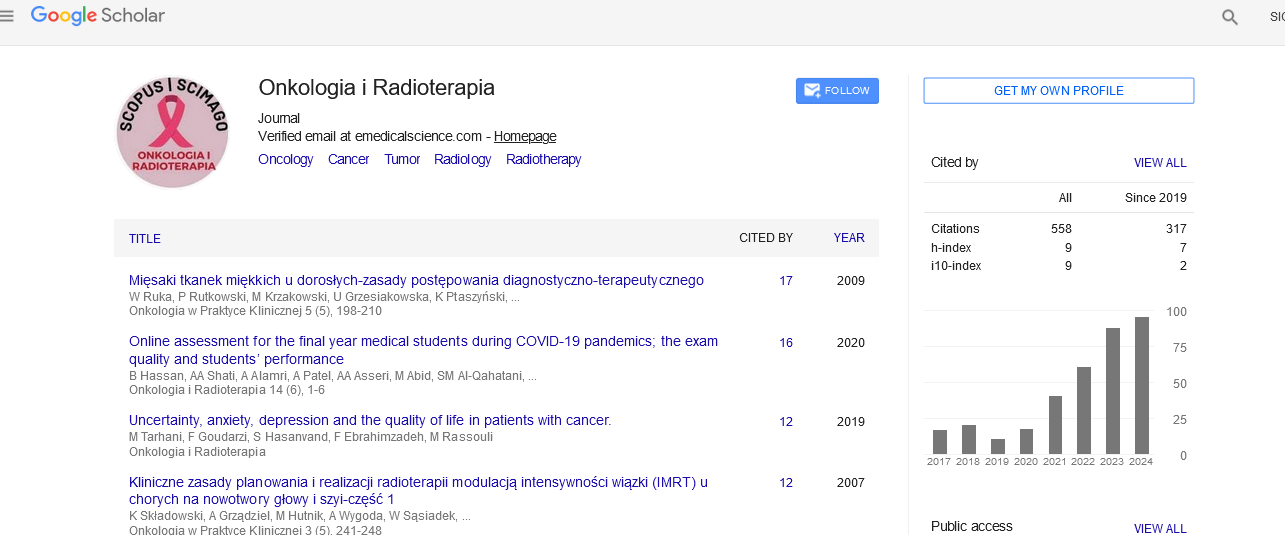
Google Scholar citation report
Citations : 650
Onkologia i Radioterapia received 650 citations as per Google Scholar report
Onkologia i Radioterapia peer review process verified at publons
Indexed In
- Directory of Open Access Journals
- Scimago
- SCOPUS
- EBSCO A-Z
- MIAR
- Euro Pub
- Google Scholar
- Medical Project Poland
- PUBMED
- Cancer Index
- Gdansk University of Technology, Ministry Points 20