Assessment of the impact of Tridax procumbens on coagulation parameters in Sprague-Dawley rats: Implications for oncology supportive care
Abstract
Author(s): Ramesh Bandla, Mymuna Begum, Abdul Qadeer Mohammed, Nanda Kishore Yerram, Praveen Boddana, Rajesh Medisetty and Raghu Gogada*
Background: Tridax procumbens, a medicinal plant known for its diverse pharmacological properties, has been traditionally used in various folk medicines. This study aims to evaluate the anticoagulant effects and safety profile of Tridax procumbens Extract (TPE) in rats, with potential relevance to coagulation disturbances encountered in oncology supportive care.
Methods: Male Sprague-Dawley rats were divided into four groups (n=8 per group): Control (0.5% CMC), Enoxaparin (100 IU/kg), TPE-LD (100 mg/kg), and TPE HD (200 mg/kg). The treatments were administered orally for 14 days. Coagulation parameters (prothrombin time, activated partial thromboplastin time, thrombin time, and platelet count) were measured. Haematological indicators, liver and kidney function tests, and glucose levels were also assessed to evaluate the safety profile of TPE, particularly in the context of supportive therapeutic use.
Results: TPE at both low and high doses resulted in a mild, non-significant prolongation of coagulation parameters compared to the control group, suggesting a slight anticoagulant effect. Enoxaparin significantly prolonged these parameters as expected. Platelet count remained unaffected across all groups. Haematological parameters, including differential leukocyte counts and reticulocyte counts, showed no significant changes, indicating no haematological toxicity. Liver function tests (AST, ALT, ALP), kidney function tests (creatinine, BUN), and glucose levels were consistent across all groups, demonstrating no hepatic, renal, or glucose metabolism impairment, which is relevant for agents considered in oncology supportive care settings.
Discussion: The study indicates that TPE exhibits a mild anticoagulant effect without causing significant alterations in hematological, liver, kidney, or glucose metabolism parameters. The lack of adverse effects supports the potential use of Tridax procumbens as a safe natural anticoagulant, particularly as an adjunct in supportive care where coagulation balance is clinically important in oncology and radiotherapy patients.
Conclusion: Tridax procumbens extract shows promise as a safe and mild anticoagulant agent. Further studies are warranted to elucidate the detailed mechanisms of its anticoagulant action and explore its potential clinical applications, including its possible role in oncology supportive care.
Share this article

Editors List
-
RAOUi Yasser
Senior Medical Physicist
-
Ahmed Hussien Alshewered
University of Basrah College of Medicine, Iraq
-
Sudhakar Tummala
Department of Electronics and Communication Engineering SRM University – AP, Andhra Pradesh
-
Alphonse Laya
Supervisor of Biochemistry Lab and PhD. students of Faculty of Science, Department of Chemistry and Department of Chemis
- Fava Maria Giovanna
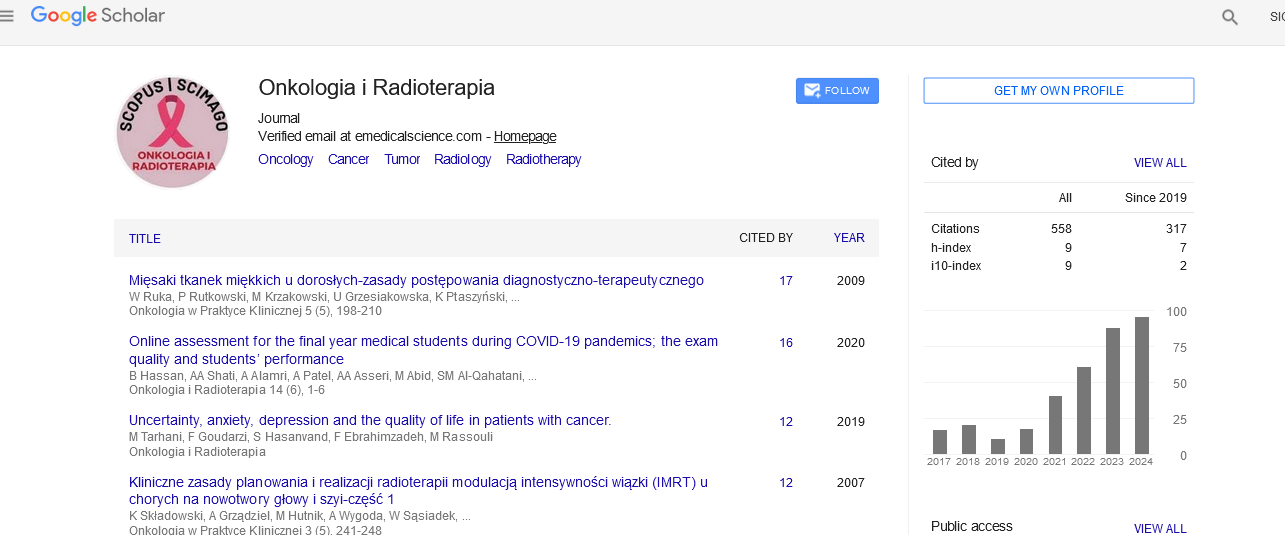
Google Scholar citation report
Citations : 650
Onkologia i Radioterapia received 650 citations as per Google Scholar report
Onkologia i Radioterapia peer review process verified at publons
Indexed In
- Directory of Open Access Journals
- Scimago
- SCOPUS
- EBSCO A-Z
- MIAR
- Euro Pub
- Google Scholar
- Medical Project Poland
- PUBMED
- Cancer Index
- Gdansk University of Technology, Ministry Points 20