Neoadjuvant Modified FOLFIRINOX Regimen followed by Stereotactic Body Radiation Therapy (SBRT) in Non-Metastatic Pancreatic Adenocarcinoma
Abstract
Author(s): Maha Alaa El Din Abd El Fatah*, Mostafa Mahmoud El Serafi, Hanan Ramadan Nassar, Fouad Abd El Shahed Fouad, Yasser Anwar Abd Al Azim
Background: Pancreatic ductal adenocarcinoma (PDAC) is a highly lethal cancer, with a 5-year survival of approximately 10%. Most patients present with advanced disease, and only 10–20% have resectable tumors at diagnosis. As surgery remains the only potentially curative treatment, neoadjuvant therapy aims to improve resectability and identify treatment failures early. Multidisciplinary management is essential for borderline resectable and locally advanced PDAC. Objectives: To evaluate neoadjuvant modified FOLFIRINOX (mFOLFIRINOX) for four months followed by stereotactic body radiotherapy (SBRT) in non-metastatic, borderline resectable and locally advanced pancreatic ductal adenocarcinoma (PDAC), focusing on resectability, progression-free survival (PFS), overall survival (OS), toxicity, and prognostic factors. Methods: This single-arm prospective phase II trial included 28 patients with non-metastatic, borderline resectable or locally advanced PDAC treated at the National Cancer Institute and Fayoum University from June 2022 to December 2023. Patients received four months of mFOLFIRINOX followed by SBRT. Treatment response, R0 resection, PFS, OS, toxicity, and associations with clinical factors were assessed. Results: The mean age was 51.3 years (range, 38–69), 67.9% were male, 57.1% were smokers, and 50% had diabetes. Abdominal pain (50%) and jaundice (46.4%) were the most common presenting symptoms, while 64.3% reported weight loss. Only one patient (3.6%) achieved resectability. PFS was significantly longer among non-smokers (p=0.012) and patients with tumors <4 cm (p=0.046). Females had significantly longer OS than males (p=0.017), and non-smokers had better OS than smokers (p=0.029). Conclusion: In this cohort, mFOLFIRINOX followed by SBRT did not substantially improve resectability or survival in non-metastatic unresectable PDAC. Treatment was associated with considerable toxicity despite supportive care. These findings highlight the need for multidisciplinary management and individualized treatment strategies, particularly in patients with poor treatment tolerance.
Share this article

Editors List
-
RAOUi Yasser
Senior Medical Physicist
-
Ahmed Hussien Alshewered
University of Basrah College of Medicine, Iraq
-
Sudhakar Tummala
Department of Electronics and Communication Engineering SRM University – AP, Andhra Pradesh
-
Alphonse Laya
Supervisor of Biochemistry Lab and PhD. students of Faculty of Science, Department of Chemistry and Department of Chemis
- Fava Maria Giovanna
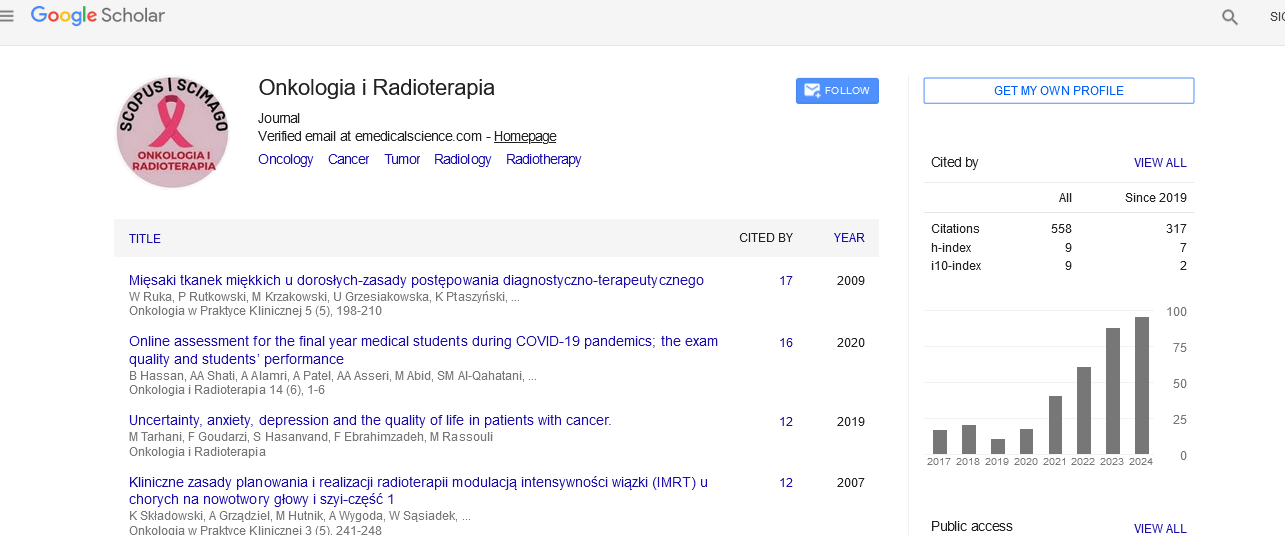
Google Scholar citation report
Citations : 650
Onkologia i Radioterapia received 650 citations as per Google Scholar report
Onkologia i Radioterapia peer review process verified at publons
Indexed In
- Directory of Open Access Journals
- Scimago
- SCOPUS
- EBSCO A-Z
- MIAR
- Euro Pub
- Google Scholar
- Medical Project Poland
- PUBMED
- Cancer Index
- Gdansk University of Technology, Ministry Points 20